Construction Hoarding Visuals: AI Illustration Guide
April 12, 2026
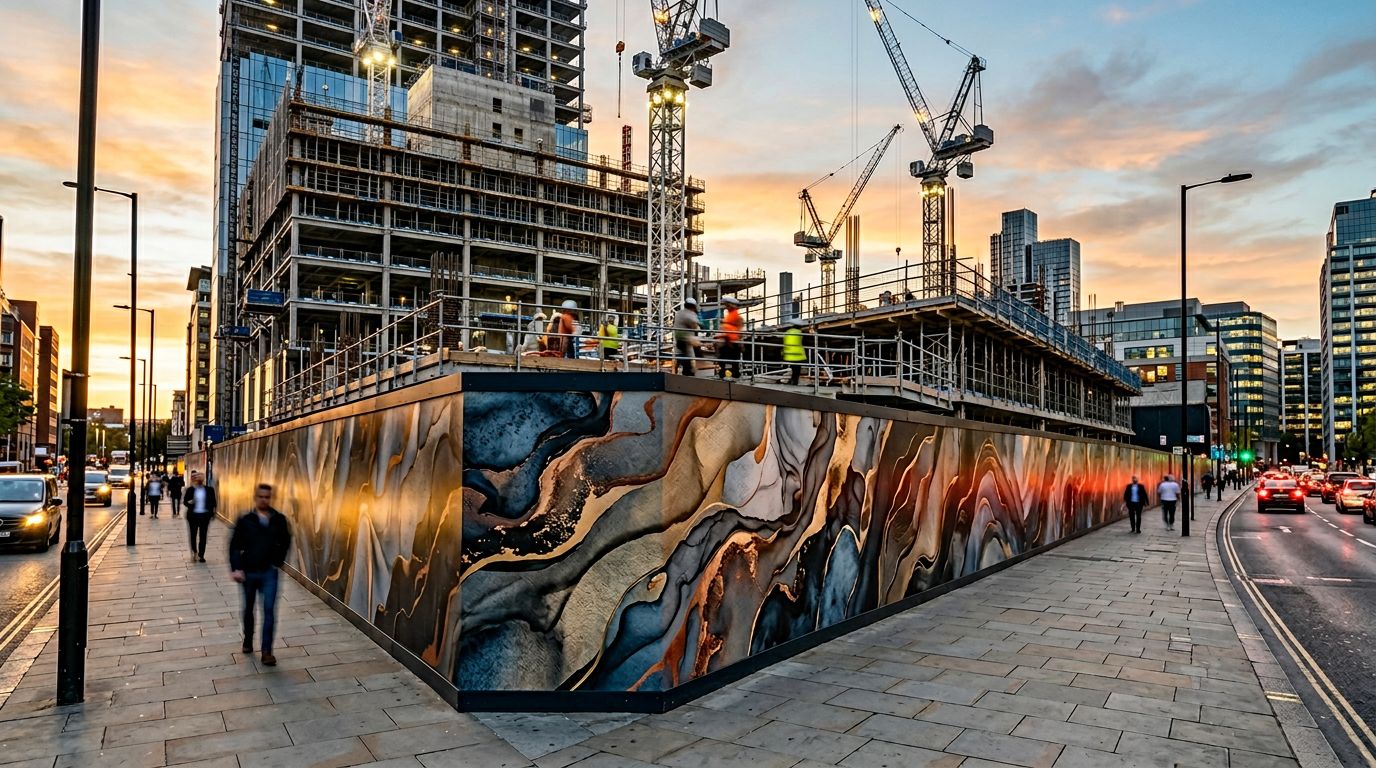
The use of construction hoarding visuals AI has moved from a niche experiment to a standard requirement for Tier 1 property developers. Site hoardings were once simple physical barriers for safety and containment. In 2026, these structures are high-performance marketing assets. By adding generative AI to the design phase, developers create site-specific, high-resolution imagery that meets local regulations while keeping brand consistency. This shift is clear in the market data, as the global market for AI in construction reached a value of $4.86 billion in 2025.
Technical leads and project managers are adopting AI workflows to reduce the high costs and long wait times of traditional architectural rendering. Generating complex, diverse visuals allows for quick changes to site signage. This ensures that the public elements of a project match the quality of the final building. This guide looks at the use of AI tools for site visuals, focusing on rules, branding, and high-resolution needs in the current property development industry.
#01Economic Drivers and Generative AI Market Growth
The financial reason for using construction hoarding visuals AI is backed by strong market growth. Generative AI in the construction sector is reaching about $404.63 million in 2026 and is expected to grow to $6.07 billion by 2035, with a yearly growth rate of 48.30%. This growth comes from the need for cheap, scalable visual content. Companies that use old rendering methods often hit delays during the pre-construction phase when design changes require immediate marketing updates.
By using automated design tools, development firms reduce the costs of hiring external graphic agencies. These systems allow for the creation of AI Property Developer Off-Plan Marketing Illustrations that can be used for site-wide signage. The accuracy of generative models ensures that the technical details of the hoarding (including panel dimensions and material texture) are included during the design phase. This prevents expensive misprints or blurry images during installation.
#02Transforming Site Boundaries into Strategic Brand Assets
In 2026, professionals agree that hoardings are active communication tools rather than passive walls. AI design creates custom visuals that show project milestones and community benefits. Using platforms like HouseIllustrator (Our Store), developers turn standard property photos or architectural frames into detailed illustrations. Styles like copper linework or classic villa sketches provide a premium look that sets a development apart from competitors using basic stock photos.
Strong graphics are necessary for community engagement and managing stakeholders. AI tools look at site imagery to automate progress reports and safety visuals, which are then put onto the hoarding design. This transparency builds trust within the local community. Current best practices require professional graphics that focus on layout, material rules, and safety messages. For a list of how these parts work together, see our Property Development Hoarding AI Illustration Guide.
#03Technical Workflows: From Prompt to Physical Print
Using construction hoarding visuals AI requires a specific technical process to ensure quality. Specialized prompt libraries, such as those from LogicBalls, let users create designs that follow regional rules. In the UK, hoarding designs must follow strict safety and visibility standards. AI prompts help developers create visuals that include safety icons and exit signs while keeping the look of the property brand.
After the AI creates the design, high-resolution output is vital. Tools like HouseIllustrator (Our Store) provide the professional resolution needed for large-format printing. Basic AI image generators often fail to provide the pixel density needed for a 2.4-meter high hoarding panel. Dedicated real estate AI tools focus on high-quality changes that stay sharp when enlarged. This high-resolution ability ensures that artistic styles, like minimalist line drawings, stay clear for people walking or driving by.
#04Optimizing Marketing ROI with Artistic Illustrations
Adding artistic illustrations to construction sites helps with both beauty and marketing. Traditional 3D renders can feel cold or clinical. AI-generated illustrations feel more like craftsmanship. HouseIllustrator (Our Store) lets real estate professionals pick from many artistic styles to match a development. A luxury residential block might use a classic villa sketch, while a commercial space could use copper linework. This flexibility ensures the visuals match the brand.
This variety is useful for New Build Site Hoarding AI Illustrations: Developer Guide. Marketing teams use a slider tool to compare original site photos with AI versions to pick the best visual for the hoarding. This fast prototyping allows for different marketing sets that can be swapped during construction, keeping the site appearance interesting for the whole project.
#05Compliance, Safety, and Site Visual Integration
Beyond marketing, AI construction software is changing site safety and monitoring. AI platforms process images from 360 cameras and drones to create progress reports. This live data can be shown on site hoardings to keep the public informed about construction stages. Putting live data into physical signs is a major trend in 2026 smart-city projects.
Safety remains the main priority for site managers. AI design tools make sure safety symbols, fire exits, and contact details are part of the hoarding graphics in a way that is legal and looks good. By automating where these parts go, developers reduce the risk of human error. Modern AI tools are updated with the latest regional rules, so every panel meets the safety needs for public paths.
#06Data-Driven Site Management and AI Implementation
Site management in 2026 depends on how AI processes data. Using AI construction software to track progress without more manual work makes site visualization simpler. When this data goes into hoarding design, it creates an information loop that helps project managers and marketing leads. Generating professional visuals in seconds (instead of waiting weeks for traditional renders) allows for faster responses to project changes.
HouseIllustrator (Our Store) enables this with a three-step process: upload, pick a style, and download. This ease of use is important for on-site teams who need to update visuals quickly for a new phase of construction. Because property photos are processed safely and are not stored without permission, firms keep their architectural secrets private while using the speed of generative AI.
The change of construction hoarding from a safety barrier to a marketing tool is finished. By using construction hoarding visuals AI, developers improve project branding while following safety rules and lowering marketing costs. To get the high-resolution, artistic quality needed for large site signs, professionals use specialized tools. Improve your project's physical presence by using HouseIllustrator (Our Store) to turn site photos into architectural illustrations. Upload your property photos today and pick from styles like copper linework or villa sketches to create hoarding visuals that turn pedestrians into buyers.
Frequently Asked Questions
In this article
Economic Drivers and Generative AI Market GrowthTransforming Site Boundaries into Strategic Brand AssetsTechnical Workflows: From Prompt to Physical PrintOptimizing Marketing ROI with Artistic IllustrationsCompliance, Safety, and Site Visual IntegrationData-Driven Site Management and AI ImplementationFAQ