AI Architectural Illustration From Photos: Complete Guide
April 20, 2026
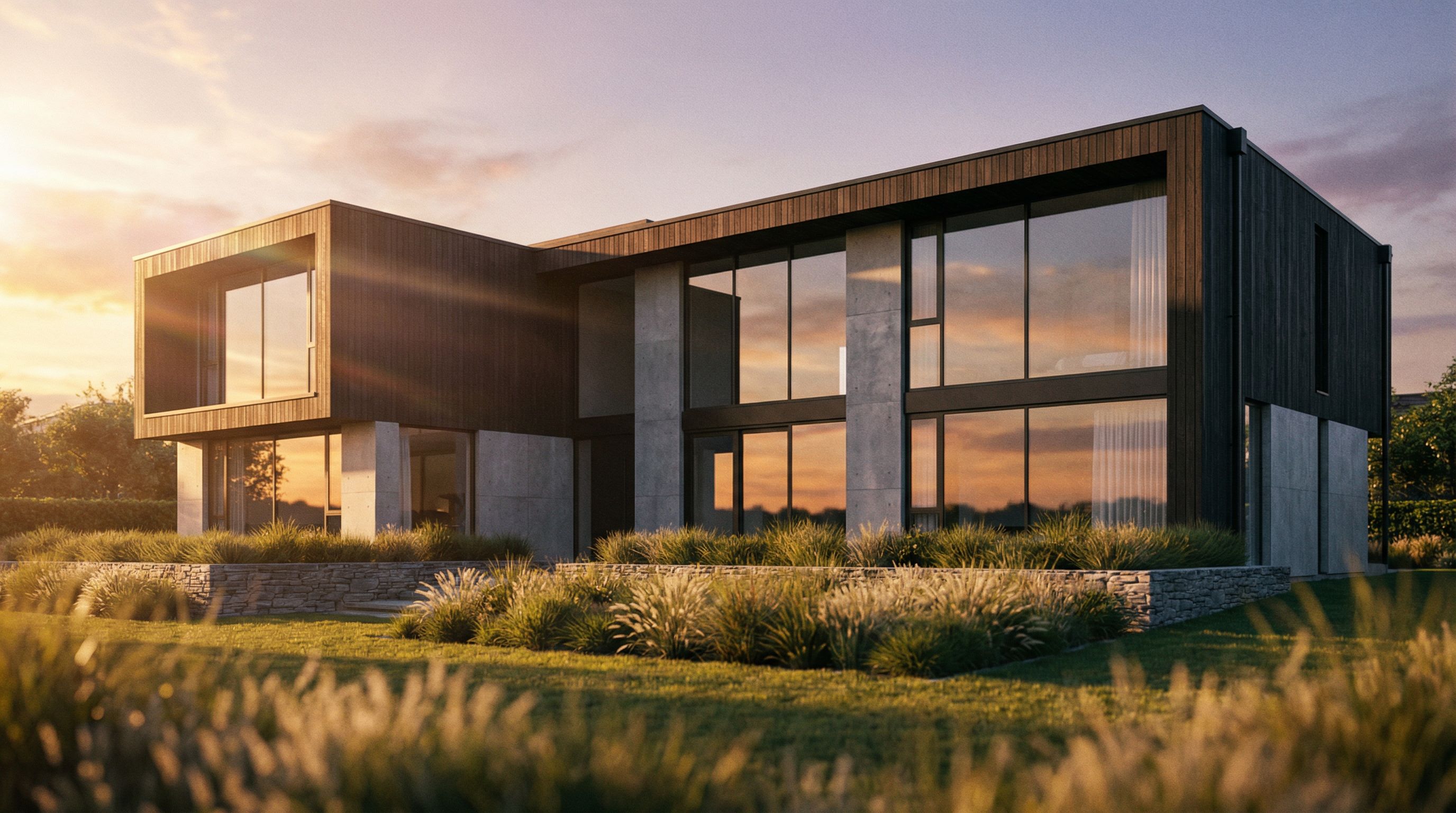
A real estate agent in London uploads a photo of a Victorian terrace at 9 a.m. By 9:01, she has a copper linework illustration ready for the brochure. No designer. No briefing call. No 48-hour turnaround. That is what AI architectural illustration from photos looks like in 2026, and it is no longer a novelty reserved for tech-forward agencies.
The global AI for architecture design market is projected to grow at a CAGR of 57.4% from 2026 to 2030 (Infinity Market Research, 2026). Over 75% of architectural professionals now incorporate AI image generation into their workflows, with many reporting rendering costs dropping from hundreds of dollars per image to as low as $0.30 (Image2Image.ai, 2026). The technology is not maturing slowly. It is moving fast.
This guide covers how the conversion process works technically, which tools are worth your time, where the technology genuinely helps versus where it falls short, and how to build a workflow that produces consistent, professional results. If you are a real estate agent, developer, or architect who has heard the term but never committed to a tool, this is the resource to change that.
#01How AI converts a property photo into an illustration
The mechanism behind AI architectural illustration from photos is not magic. It is diffusion models trained on vast datasets of architectural imagery, photographs, and hand-drawn illustrations. Here is what actually happens when you upload a photo.
First, a convolutional neural network analyzes the spatial relationships in the image. It identifies structural elements: rooflines, window placements, door frames, landscaping, and material textures. This spatial parsing is what separates a purpose-built architectural AI from a generic image filter.
Second, a diffusion model takes that parsed spatial data and generates a new image guided by a style target. The style target might be "copper linework", "classic villa sketch", or "minimalist line illustration". The model iteratively refines a noisy image toward that target, constrained by the structural information extracted in step one. The result is an illustration that matches the architecture of the original photo, not a generic building that vaguely resembles it.
Third, the output is upscaled and sharpened to produce a high-resolution file suitable for print.
The entire process takes seconds. Tools like Architect AI deliver photorealistic exterior renders in under 10 seconds (XLLab, 2026). ZSky AI generates interior and exterior visualizations from photos with no expensive hardware required (ZSky AI, 2026). The speed is not a gimmick. It is a direct consequence of cloud-based GPU inference replacing local rendering pipelines.
One distinction worth understanding: AI architectural illustration from photos is different from AI rendering from scratch. Rendering from scratch (using tools like Midjourney or a parametric model) starts from a text prompt or a 3D model. Illustration from photos starts from a real image of an existing building. The photo acts as an anchor. This matters enormously for real estate, where the property already exists and you need the illustration to be recognizable as that specific building.
#02Why traditional rendering workflows are too slow for real estate
Traditional architectural rendering has a workflow problem that no amount of skilled labor fixes. A professional 3D render requires a modeler to build the structure in software like Revit or SketchUp, apply materials, set lighting, and then queue the render job. Even with a fast workstation, that process takes hours. Outsourced to a rendering studio, it takes days and costs $150 to $500 per image (AI Property Illustration Cost vs Traditional Rendering).
Real estate does not operate on those timelines. An agent who wins a listing on Friday needs marketing materials by Monday. A developer launching an off-plan campaign needs 20 illustrations, not one. The economics of traditional rendering simply do not fit the volume and pace of property marketing.
AI architectural illustration from photos collapses that timeline. You upload the photo, select a style, and download the result. No 3D model required. No rendering queue. No invoice from a visualization studio.
There is also an access problem with traditional rendering. Small agencies and independent agents cannot afford a rendering retainer. Mid-sized developers cannot justify a full-time visualization team for occasional projects. AI tools remove that barrier entirely. ZSky AI, for example, offers free credits to get started (ZSky AI, 2026), and many platforms offer per-image pricing well below $1.
The objection you will hear is quality. Traditional renders, done well, are photorealistic and precisely accurate. AI illustrations are artistic interpretations. That is true. But for real estate marketing, artistic illustration often outperforms photorealism. An elegant line drawing on a brochure communicates character and aspiration in a way that a sterile render does not. The goal is not technical accuracy. The goal is a buyer picking up that brochure and wanting to view the property.
#03The tools that actually matter in 2026
Not every tool that claims AI architectural illustration from photos delivers the same quality or workflow fit. Here is an honest assessment of what is available.
Architect AI allows users to upload a photo or sketch and receive photorealistic exterior renders in under 10 seconds. It offers style presets, environment controls, and material customization (XLLab, 2026). Good for architects who want a rapid concept visualization layer on top of existing photos.
Archilip uses Google's Gemini Pro model to generate renders with style consistency and support for detailed prompts (Archilip, 2026). The Gemini backbone means strong language-to-image coherence, which helps when you need to describe a specific aesthetic.
ZSky AI provides free credits and generates interior and exterior visualizations directly from photos or sketches, with no expensive hardware required (ZSky AI, 2026). Solid entry point for firms testing AI illustration for the first time.
Image2Image.ai converts blueprints, sketches, or photos into renders within seconds, with a stated cost reduction that brings per-image pricing to fractions of a dollar (Image2Image.ai, 2026). The speed is real. The quality varies by input photo quality.
HouseIllustrator takes a different approach, focusing on the real estate marketing use case. It transforms property photos into illustrated artwork designed for brochures and marketing materials, with multiple artistic styles including copper linework, classic villa sketch, and minimalist line illustration. The workflow is deliberately simple: upload a photo, choose a style, download the result. High-resolution output is included, and photo processing is handled securely without storing images without permission. For agents who need illustration-ready assets rather than photorealistic renders, HouseIllustrator is built for that specific problem.
The choice between these tools depends on your use case. If you are an architect presenting concepts to clients, photorealistic renders matter more. If you are an agent producing brochures and listing materials, artistic illustration styles often perform better. Match the tool to the output, not to the spec sheet.
#04Style choices that change how buyers respond
The style you choose for an AI architectural illustration from photos is not a cosmetic decision. It affects how buyers emotionally respond to a listing, how the material performs across different formats, and whether the illustration fits the property's market positioning.
Copper linework works well for period properties and luxury listings. The warm metallic tone reads as premium without feeling clinical. It prints beautifully on heavy stock brochures.
Classic villa sketch suits country homes, large detached houses, and properties where the architectural detail deserves prominence. The sketch aesthetic is traditional and conveys craftsmanship.
Minimalist line illustration fits contemporary apartments, new builds, and urban properties. Clean lines align with modern brand identities and work well on digital platforms where detail gets lost at small sizes.
Watercolor styles perform well in lifestyle marketing. A property photo to watercolor AI output has warmth and softness that makes a property feel like a home rather than an asset.
Pencil sketches are versatile. They reproduce well in both print and digital formats and carry an artisanal quality that buyers associate with craftsmanship and authenticity.
The practical rule: match the style to the buyer profile. A first-time buyer looking at a two-bedroom flat responds differently to marketing materials than a family buying a five-bedroom country house. Illustration style is part of your targeting, not an afterthought.
43% of architects report AI significantly impacting early design and concept development (ArchDaily, 2026). For real estate professionals, the implication is direct: the style decisions you make at the illustration stage shape the entire marketing narrative for a property. Choose deliberately.
#05Building a repeatable workflow: upload to download in under five minutes
The mistake most agents make when adopting AI architectural illustration from photos is treating it as a one-off experiment. The value compounds when it becomes a repeatable workflow embedded in your listing process.
Here is a workflow that works.
Step 1: Shoot or source a clean exterior photo. The AI model needs clear architectural features. Shoot at a slight angle to show depth. Avoid heavy shadows across the facade. Morning or late afternoon light is ideal. This is the highest-leverage input variable: better photos produce better illustrations, every time.
Step 2: Upload and select your style. On HouseIllustrator, you upload the photo in any common format, select from the available artistic styles, and submit. The AI analyzes the photo instantly.
Step 3: Review and download. Use the before/after comparison tool to verify the illustration has captured the key architectural features. Download the high-resolution output.
Step 4: Drop into your brochure template. The high-resolution output is ready for print. No post-processing required.
The entire workflow takes under five minutes once you have your source photo. For a typical listing with one exterior and one interior illustration, you are looking at ten minutes of active work to produce assets that would have taken a design studio two days.
For agents handling high volumes, the math is significant. If you list 40 properties per year and each previously required $200 in design costs for illustrations, switching to an AI workflow at $1 to $5 per image saves over $7,500 annually, before factoring in time saved.
For a deeper look at the technical process, see our photo to architectural illustration AI guide.
#06Where AI illustration outperforms photography alone
Photography is the default for real estate listings. It is also insufficient for certain marketing situations. AI architectural illustration from photos solves problems that photography cannot address.
Off-plan sales. The building does not exist yet. You cannot photograph it. AI illustration from architectural drawings or renders lets developers produce marketing materials before groundbreaking. This is standard practice for developers in London, Dubai, and Sydney. See how this works in detail with our architectural illustrations for real estate marketing overview.
Renovation potential. A buyer looking at a tired 1960s bungalow cannot visualize the post-renovation result from a photograph. An AI illustration showing the renovated exterior, generated from the current photo with style adjustments, makes that vision concrete.
Print advertising. Photographs often reproduce poorly in newsprint or low-resolution print formats. A line illustration holds its quality at any size and in any print format. For newspaper advertising, magazine placements, and property hoarding, illustrations are technically superior.
Brand differentiation. Every competing listing uses photography. An illustrated brochure is immediately distinctive in a property portal scroll or a physical brochure stack. Buyers form opinions about listings within seconds, and differentiation at first impression matters.
Luxury positioning. High-end properties marketed with elegant illustrations signal a level of attention and care that mass-produced photography cannot match. A copper linework illustration on a prime London property brochure communicates that the listing agent takes the property seriously.
None of this means photography is obsolete. Floor plan photography, interior photography, and aerial drone shots all serve specific functions. Illustration and photography are not competitors. They are complements, and agents who use both outperform agents who use only one.
#07Quality red flags: when an AI illustration tool is not good enough
Not all AI architectural illustration from photos tools produce output you can actually use. Here are the failure modes to test for before committing to a platform.
Feature distortion. The illustration should preserve the actual window count, door positions, and roof geometry of the original photo. If the AI is inventing architectural features or dropping real ones, the output is useless for marketing a specific property. Run a direct before/after comparison on a complex facade before you trust a tool.
Low resolution output. An illustration destined for a printed A4 brochure needs to be at least 300 DPI at the print size. If a tool only outputs web-resolution images (72 DPI), it cannot serve print marketing. Check the output resolution specification before you sign up.
Style inconsistency. If you run the same photo through the same style preset twice and get noticeably different results, the model is unstable. Consistency matters when you are building a suite of illustrations for a development or a brand.
No privacy controls. Property photos contain identifiable building information. Ask explicitly whether uploaded photos are stored, used for training, or shared. Reputable platforms state their data handling clearly. HouseIllustrator processes photos securely and does not store them without permission.
Slow turnaround on cloud platforms. If a cloud tool takes more than 60 seconds to produce a result, it is not optimized for production workflows. The leading platforms in 2026 deliver results in under 10 seconds (XLLab, 2026). Anything slower suggests underprovisioned infrastructure.
The test to run: upload a photo of a property with a distinctive architectural feature, like a bay window or a specific chimney configuration. If the illustration preserves that feature accurately, the spatial parsing is working. If it does not, the tool is applying a generic style filter, not genuine architectural illustration.
#08What 2026 and 2027 will bring to AI architectural illustration
The direction of AI architectural illustration from photos is clear. The tools are getting faster, cheaper, and more integrated with existing real estate workflows.
Real-time rendering integration is the next step. Predictions for 2026 and 2027 point to AI illustration tools that connect directly with design software, allowing architects to generate illustration options during client meetings rather than presenting pre-prepared assets (XLLab, 2026). For real estate, the equivalent is an agent running an illustration on-site during a listing presentation.
Sketch-to-illustration pipelines are maturing fast. AI models now convert hand-drawn sketches or basic floor plan diagrams into photorealistic or illustrated outputs within seconds (XLLab, 2026). This closes the gap between early concept and client-ready visual, which currently requires a full rendering pass.
Cost will continue to drop. The AI art market alone is projected to reach $9.85 billion by 2030 (WifiTalents, 2026), and competitive pressure among platforms is already pushing per-image pricing below $1. Professional-grade illustration will become a commodity cost for real estate agents within two years.
64% of architects are currently experimenting with AI tools in their workflows (Chaos Blog, 2026). That figure will be 90%+ by 2028. The agents and developers who build the workflow habit now will have a compounding advantage over late adopters. The tools are not going to wait for the industry to catch up. They are improving every quarter.
For agents evaluating where to start, the recommendation is direct: pick one tool, run 10 listings through it, and measure the response rate against your photography-only baseline. The data will tell you whether to scale the workflow or switch tools. Do not wait for the perfect platform. The good-enough platform you use consistently beats the perfect platform you are still evaluating.
AI architectural illustration from photos is not a future capability. It is a current workflow that takes under five minutes and costs less than a coffee. The agents running it now are producing illustrated brochures that stand out in property portals, print better than photographs, and communicate property character in a way that raw photography cannot replicate.
If you have a listing coming up and want to test what this looks like in practice, upload your property photo to HouseIllustrator. Select a style that fits the property type (copper linework for a period home, minimalist line for a contemporary apartment) and download the high-resolution result. Run the before/after comparison. Then put that illustration on your next brochure and measure the response. The data from your own listings is more useful than any market projection.
Frequently Asked Questions
In this article
How AI converts a property photo into an illustrationWhy traditional rendering workflows are too slow for real estateThe tools that actually matter in 2026Style choices that change how buyers respondBuilding a repeatable workflow: upload to download in under five minutesWhere AI illustration outperforms photography aloneQuality red flags: when an AI illustration tool is not good enoughWhat 2026 and 2027 will bring to AI architectural illustrationFAQ