Photo to Architectural Illustration AI: 2026 Expert Guide
April 11, 2026
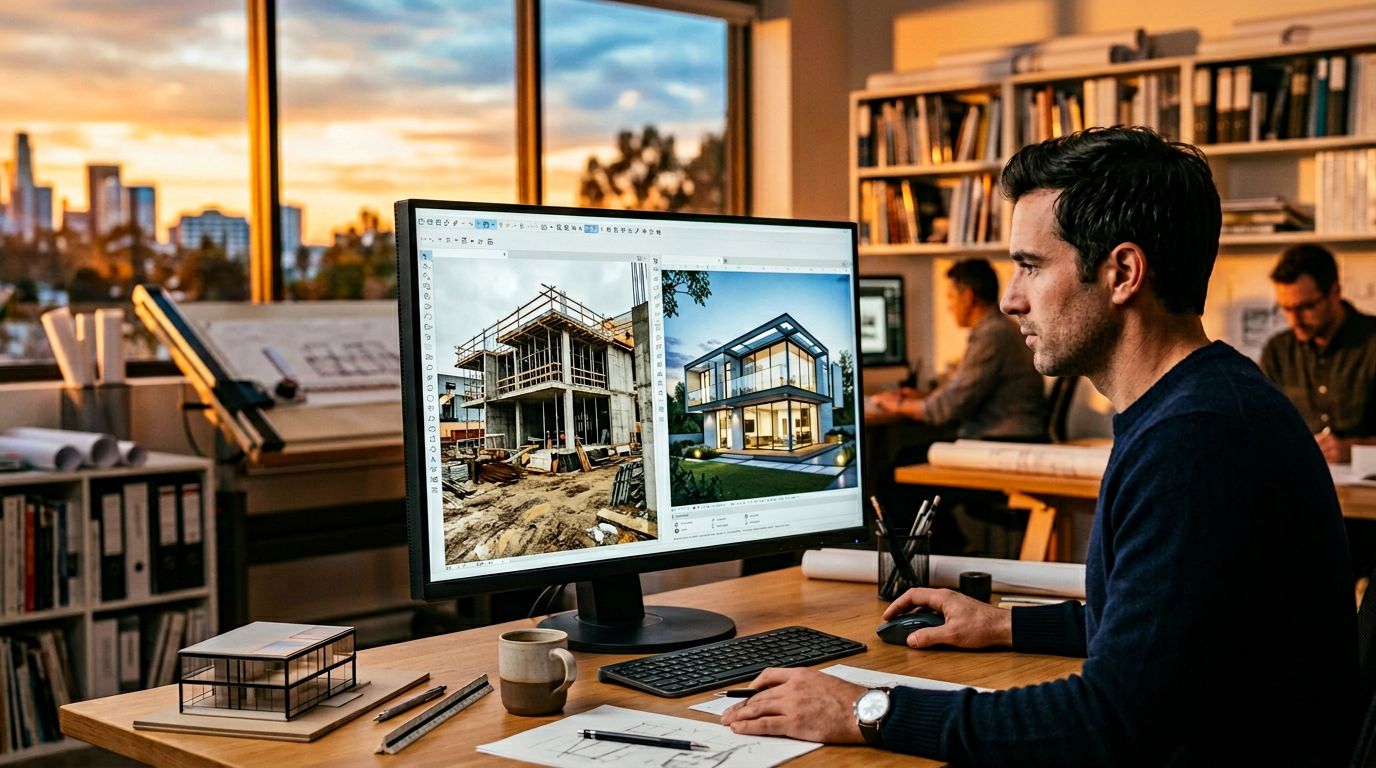
The integration of generative artificial intelligence into architectural visualization has moved from experimental curiosity into a primary production requirement. By mid-2026, data indicates that 64% of architects use AI tools in their daily work, with 74% of industry professionals planning to increase their investment in these technologies over the next year. This rapid adoption is driven by the need for high-quality visual assets produced at a fraction of the traditional cost and time.
Central to this shift is the emergence of photo to architectural illustration AI, a technology that allows users to convert standard property photographs into artistic renders. This workflow removes the heavy labor required for manual line work or complex 3D modeling, offering a fast path for real estate agents and developers to create marketing materials. As the AI image generator market is projected to reach $60.8 billion by 2030, understanding the details of these conversion tools is important for staying competitive in property marketing.
#01The Evolution of Image-to-Illustration Workflows
In previous technical cycles, converting a physical photograph into a refined architectural illustration required a mix of site photography, CAD tracing, and digital painting. This manual process often took days or weeks to complete for a single property. However, the current state of AI architectural illustration from photos has shortened this timeline to seconds. Advanced neural networks now analyze the structural geometry of a photo (identifying load-bearing elements, window patterns, and site context) to apply artistic filters that keep the original design intact.
Market data from 2026 reveals that 85% of users who use these AI workflows report efficiency gains. The most substantial time savings are found in the concept design and ideation phases, where 48% of respondents noted that AI-generated visuals reflect their intent with professional accuracy. Platforms like HouseIllustrator help by offering an instant AI transformation feature, allowing professionals to upload raw property photos and receive high-resolution illustrations immediately. This capability is vital for the high-volume needs of modern real estate listings, where speed often determines success.
#02Analyzing the 2026 Technical Environment
The current market for photo to architectural illustration AI is split between general-purpose models and specialized architectural engines. General-purpose tools like Midjourney, which reached over 10 million active users by mid-2026, are good at mood-board generation but often lack the structural precision required for technical files. In contrast, specialized platforms such as Architect AI and LookX AI provide structural logic that understands architectural geometry, making them better for transforming massing models or building photos into accurate renders.
For professionals needing scalable assets, tools like Recraft have become industry standards because they output native SVG vector files rather than simple raster images. This distinction is vital for architectural illustrations for real estate marketing that must be scaled for large signs or high-resolution print brochures. Furthermore, the integration of specialized models like Google Imagen 4 and Nano Banana has set new benchmarks for realism and depth, ensuring that the illustrations keep the high-end look demanded by luxury developers.
#03HouseIllustrator: Improving Property Marketing
HouseIllustrator is a dedicated solution for real estate professionals who want to improve their visual presentations without the high cost of traditional rendering houses. The platform specializes in a secure and private photo-to-illustration workflow, ensuring that property data is handled with the secrecy required in high-stakes deals. Users can select from multiple artistic styles, such as copper linework, classic villa sketch, and minimalist line illustration, to ensure the visual output matches the agency branding or the character of the property.
One of the most valuable parts of this technology is the ability to provide an interactive comparison via a slider tool. This feature allows stakeholders to see the transformation from a standard, cluttered property photo into a clean architectural illustration. This transparency builds trust with clients and provides a clear demonstration of the marketing value added. By focusing on high-resolution output, HouseIllustrator ensures that the final products are ready for immediate use in digital property portals or high-quality print marketing materials.
#04Specialized Integration and Model Selection
The success of a photo to architectural illustration AI workflow depends on model selection and integration. Industry experts in 2026 recommend specific models for different needs. For example, Seedream models are often used for artistic renderings, while Google Imagen 4 is preferred for high-fidelity, cinematic visuals. Specialized tools like Veras operate directly within existing modeling software such as Revit or SketchUp, allowing for a smooth transition between the technical model and the artistic illustration.
When comparing AI illustration vs traditional architectural rendering, the primary difference is the speed of changes. Modern professionals now put AI conversion directly into their production work. This involves using AI to generate the base illustration, which is then refined through manual design judgment. This hybrid approach addresses the challenges cited by 48% of architects who find inconsistent quality in fully automated systems. By keeping a human involved in the process, studios ensure structural accuracy while benefiting from the fast asset generation of AI.
#05Best Practices for Professional Results
Achieving professional results with photo to architectural illustration AI requires more than a simple upload. Professionals must use precise prompts and model tuning. This includes describing specific materials, lighting, and architectural styles to guide the AI. Negative prompts are also used to exclude unwanted elements such as blur, lens distortion, or incorrect proportions that can sometimes occur in generative processes.
Refining the work is the mark of a professional. This involves uploading a reference photo or sketch and then adjusting the style strength and aspect ratio until the output meets the project requirements. High-resolution upscaling, provided by tools like getimg.ai or the native processing in HouseIllustrator, is a necessary final step to ensure the illustration stays clear when used in brochures. As architectural visualization matures, the ability to balance these automated tools with professional design standards will define the next generation of real estate marketing.
#06Economic Impact and ROI of AI Visualization
The economic reason for using photo to architectural illustration AI is found in the reduction of cost per image. Traditional rendering services can cost several hundred dollars per image and take days for revisions. AI-driven platforms operate on models that allow for near-instant generation at a very low cost. This efficiency allows agencies to provide high-quality illustrations for every listing, rather than saving them only for expensive properties.
Furthermore, the ability to generate multiple artistic styles (from minimalist sketches to detailed watercolor renders) allows agents to tailor their marketing to specific groups. Data suggests that listings using high-quality illustrations see higher engagement on property portals compared to those using standard photography alone. By using HouseIllustrator to create property brochures in minutes, firms can focus their staff on closing deals and client relations rather than technical asset production. The shift toward AI is a strategic move for resources in the real estate sector.
The move to AI-enhanced visualization is now an industry standard. By using photo to architectural illustration AI, professionals can connect technical site data with marketing visuals. HouseIllustrator offers the tools required to make this change, providing instant transformations into multiple artistic styles like copper linework and villa sketches. To improve your property listings and secure your position in the 2026 market, add HouseIllustrator to your marketing workflow and transform your property photos into professional illustrations today.