Affordable Housing AI Illustration Marketing Guide
April 11, 2026
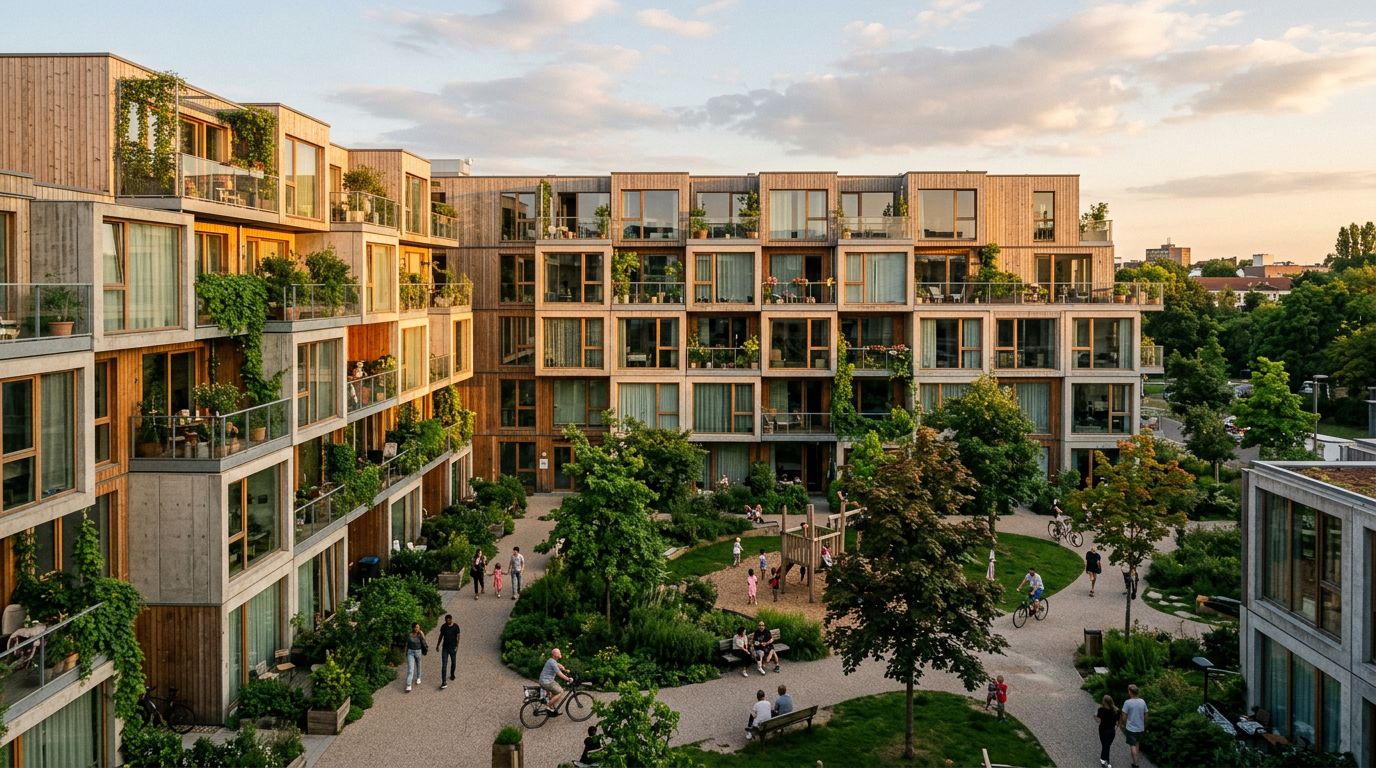
The global affordable housing market is changing fast and is expected to reach $63.29 billion by 2026. This 5.4% compound annual growth rate comes from a major need to fix housing shortages, such as the 56 million unit gap in Africa, and the growing value of affordable assets in the West. Property developers and housing associations must market these projects professionally despite budget limits. Using AI for affordable housing illustrations has become a practical way to meet community goals and institutional needs.
Standard architectural rendering is often too expensive for social housing budgets, frequently costing thousands of dollars for a single view. However, new AI tools allow organizations to create high-quality visuals that improve community perception and investor confidence without high costs. Using automated tools, stakeholders can produce high-end marketing materials that were once only for luxury developments. This shift is more than just visual; it is a data-driven move to increase net operating income (NOI) by keeping residents longer and leasing units faster.
#01The Economics of Visual Excellence in Social Housing
Statistics from 2025 show that affordable properties performed better than market-rate ones in several financial areas. U.S. affordable assets saw an 8.7% growth in net operating income (NOI), which was higher than the 2.2% seen in market-rate properties. This is partly because average income in these communities grew by 5.7%. To use this stability, marketing must go beyond basic photos. Quality visuals help attract residents and secure the support needed for new projects.
Using affordable housing development AI illustration marketing helps developers show projects as high-quality architecture rather than just basic utility. When photos become artistic renders, people see a home instead of just a building. This is particularly important in Difficult Development Areas (DDAs), where rents rose 32.8% over the last decade. In these environments, making high-resolution marketing materials for hundreds of units is a major advantage for all developers.
#02Optimizing LIHTC Compliance and Community Approvals
The Low-Income Housing Tax Credit (LIHTC) program is the main driver of affordable development, creating over 3.5 million units so far. Recent changes, like a 12% increase in 9% credits and lower bond thresholds, have led to more projects. For development managers, getting approvals is often the slowest part of the job. AI design platforms now help firms test thousands of options for zoning, energy, and costs in seconds.
After the technical work is done, the focus moves to community support. This is where AI architectural illustrations for developers are useful. Technical drawings can feel cold to a planning board and cause friction. Using HouseIllustrator to turn site photos or models into a 'classic villa sketch' or 'minimalist line illustration' makes the presentation more approachable. This style helps projects look like they belong in the neighborhood, which is a key factor in reducing local opposition during public meetings.
#03Scalable Content Generation for Housing Associations
Housing associations with large portfolios face a specific challenge: keeping a consistent brand across many property types. When managing modern high-rises or historic flats, marketing must match the organization's mission. AI helps these groups produce high volumes of content, providing professional images for every listing, newsletter, and post.
Organizations can use a housing association AI illustration marketing guide to set visual standards. With HouseIllustrator, teams upload photos and apply styles, such as 'copper linework,' to create a single brand identity on their website. This removes the need for expensive photoshoots at every site. Because the AI works instantly, marketing teams can finish brochures in minutes. This speed helps keep occupancy high and allows teams to respond to the 5% plus rent increases allowed by HUD in many areas during 2024 and 2025.
#04The Tech Stack for Modern Affordable Marketing
Building a budget-friendly AI marketing setup in 2026 requires a focused approach. For efficiency, platforms like AppFolio now use AI to handle HUD Section 8 and LIHTC paperwork, providing the data for marketing. However, visuals need different tools. A high-performance workflow might use Collov AI for virtual staging (adding furniture to empty units for about 23 cents per image) and then improving those images for campaigns.
Virtual staging fills empty rooms, but it might not create the right feeling for a community. Artistic changes are the solution. HouseIllustrator lets users turn staged photos into illustrations that fit the property style. Secure processing keeps property data safe, which is a requirement for technical leads in social housing. By using a before-and-after slider, managers can check the quality before printing or sharing brochures.
#05Future-Proofing Social Housing Visuals
As the real estate AI market grows toward $303 billion by late 2025, the gap between those using automated tools and those using manual work will grow. In the affordable sector, the goal is 'agentic AI,' which involves tools that perform specialized tasks on their own to support a lean operation. In cities like Edmonton and San Jose, AI has already cut permit times from 20 days to almost nothing.
Marketing in this sector needs to be just as efficient. Future-proofing means moving from one-off renders to AI-driven styles that can be updated when buildings change. Exporting illustrations in many formats for site signs or investment documents ensures a project reaches its audience without a huge budget. Because expenses per unit are rising by 3.3%, saving money on architectural illustration while keeping a high-end look is a smart financial choice.
Marketing affordable housing does not mean choosing between a small budget and a professional look. Using HouseIllustrator in your workflow lets you turn photos into elegant illustrations to get more engagement and faster approvals. If you are handling LIHTC rules or a large portfolio, making high-resolution renders in seconds is a major benefit. Improve your listings and presentations by checking the styles at HouseIllustrator.