AI Architectural Illustrations for Developers: 2026 Guide
April 11, 2026
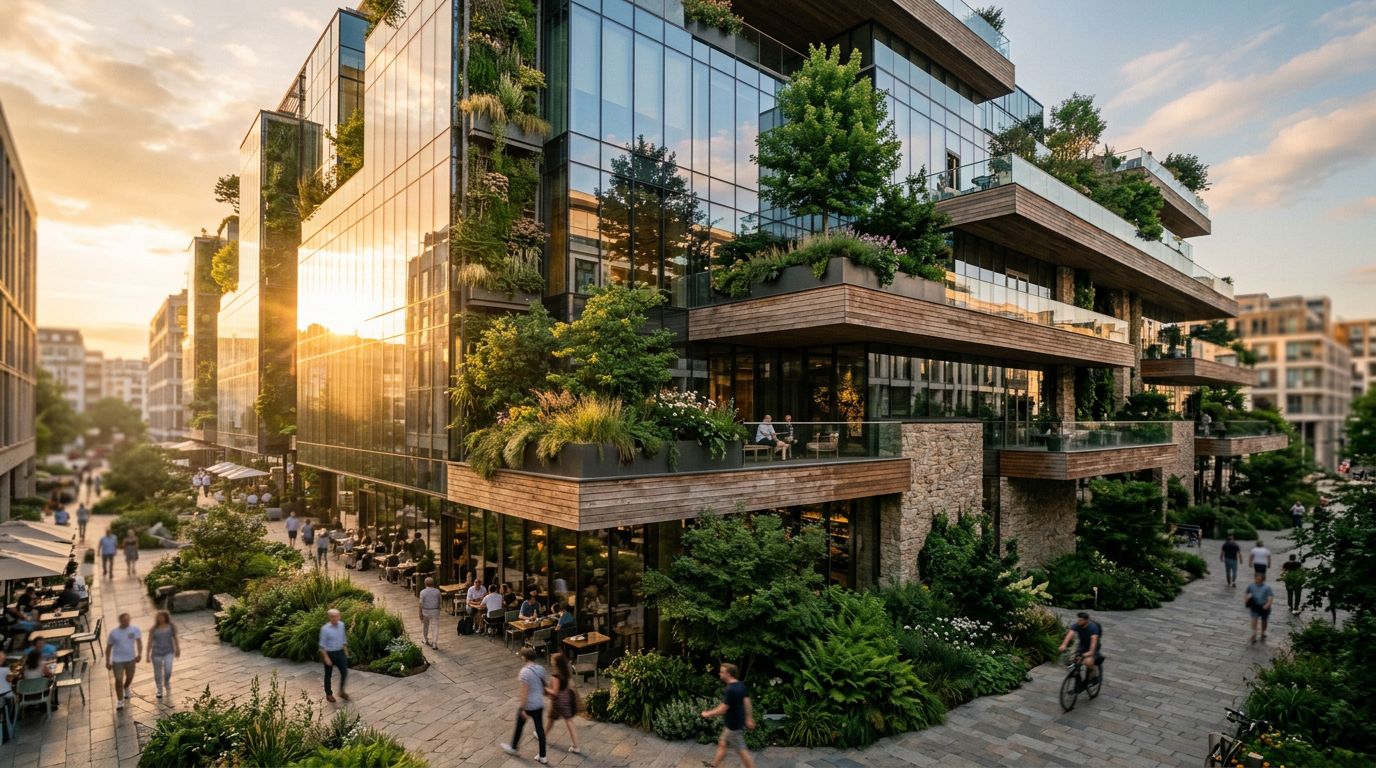
Property development in 2026 centers on a shift from static representation to dynamic, generative intelligence. As projects grow more complex and timelines shorten, developers now use AI architectural illustrations to bridge the gap between site acquisition and occupancy. These tools are now necessary for checking project viability and securing investor support before construction starts.
Recent data shows that 64% of architectural and design professionals have integrated AI into their workflows, with 74% planning to expand this use soon. For the developer, this marks a major change in how firms produce feasibility studies and marketing assets. By using diffusion-based models and specialized architectural AI, firms can create professional visuals in seconds, a process that once took weeks of manual work by specialized agencies.
#01Accelerating Feasibility and Site Analysis
One major use of AI architectural illustrations for developers is the early feasibility phase. US-based development firms use AI to shorten feasibility timelines from weeks to just a few hours. This happens through platforms that analyze local zoning regulations, setbacks, height limits, and climate conditions at the same time. Rather than waiting for a manual massing study, developers can generate programs that follow code standards like IBC and ADA.
Tools like Snaptrude and LookX AI provide the technical support for this speed. While generic image generators often struggle with structural logic, these systems are trained on architectural geometry. They allow developers to upload site data and receive versions of a proposed structure that follow the physical limits of the lot. This ability is important during the bidding process, where visualizing the maximum potential of a site determines if an acquisition succeeds. Fast AI-driven visualization ensures developers can change their strategy based on current data rather than waiting for slow rendering cycles.
#02Transforming Marketing Collateral with Our Store
Once a project moves past the feasibility stage, the focus shifts to marketing and pre-sales. Our Store offers a specific benefit for property developers. Our Store converts property photos or site captures into detailed architectural illustrations quickly. This helps developers who need to create marketing materials without the high costs of traditional 3D rendering studios.
Our Store offers several artistic styles for professional real estate marketing, including copper linework, classic villa sketch, and minimalist line illustration. These styles allow developers to keep a consistent brand across their new build property illustration AI marketing guide. By using the interactive before/after slider, marketing teams can check the illustration against the original photo, keeping the visual grounded in reality while achieving an artistic look. The high-resolution files from Our Store work for brochures, digital listings, and site signs, supporting a smooth homebuilder pre-sale marketing AI illustrations guide workflow.
#03Establishing Visual Mood and Design Direction
In the pre-construction phase, setting a clear design direction helps align stakeholders. General-purpose image generators such as Midjourney v7 and Adobe Firefly are standard for creating mood boards and conceptual environments. Developers can use text prompts to create realistic scenarios, depicting the same building during golden hour, under overcast skies, or during storms. This fast visual feedback allows teams to test how different materials and lighting impact the perceived value of a property.
Research shows that 43% of professionals find AI has the highest impact in this concept design phase. By setting the feel of a development early, developers can reduce the number of expensive revisions requested during later technical CAD phases. This method of rapid style exploration ensures that the final architectural direction is tested and approved by investors before significant money is spent on detailed blueprints. It connects imagination with the structured reality required for construction.
#04Comparative Analysis: AI Illustrations vs. Traditional Rendering
Choosing between AI-generated illustrations and traditional 3D rendering depends on speed, cost, and intent. Traditional rendering is the standard for final technical accuracy, but it is often too slow and expensive for the repetitive nature of property development. AI architectural illustrations give developers an 85% time-saving advantage. While 48% of users still mention inconsistent quality as a challenge in some generic tools, specialized platforms have narrowed this gap in 2026.
| Feature | AI Architectural Illustrations | Traditional 3D Rendering |
|---|---|---|
| Time to Delivery | Seconds to Minutes | Days to Weeks |
| Cost per Iteration | Minimal (SaaS/Pay-as-you-go) | High (Agency Fees) |
| Flexibility | Instant style swapping | Requires full re-render |
| Use Case | Feasibility, Marketing, Mood | Construction Documents |
For developers managing multiple AI property developer off-plan marketing illustrations across different regions, the scalability of AI is high. Producing fifty high-quality versions of a site plan or building facade in the time it takes to render a single traditional frame allows for a better exploration of project possibilities.
#05Technical Integration and 2026 Workflow Standards
Integration is the final part of development workflows in 2026. Modern AI tools connect directly to BIM (Building Information Modeling) and CAD environments. For instance, the Archicad AI Visualizer allows developers to convert massing studies into material-rich images using natural language. Changes made to the underlying 3D model update the illustration automatically, ensuring that marketing assets match the engineering reality.
Furthermore, secure and private processing is now a requirement. Developers dealing with sensitive pre-launch data need platforms that guarantee photos and models are never stored without permission or used to train public models. This focus on data control is a feature of professional tools like Our Store, which processes property photos securely. As the global AI image generation market grows toward $1.2 billion by 2031, the winning developers will be those who combine these high-speed visual tools with a strict, data-secure framework.
Using AI architectural illustrations for developers is a strategy for firms in the 2026 real estate market. By automating the change from site photos to polished marketing assets, developers can shorten sales cycles and reduce pre-development costs. Our Store offers the tools needed for this change, providing high-resolution illustrations that attract investors and buyers. Improve your next project by changing your property photos into professional illustrations with the secure, AI-powered platform from Our Store today.