Affordable Housing Development AI Illustration Marketing
April 11, 2026
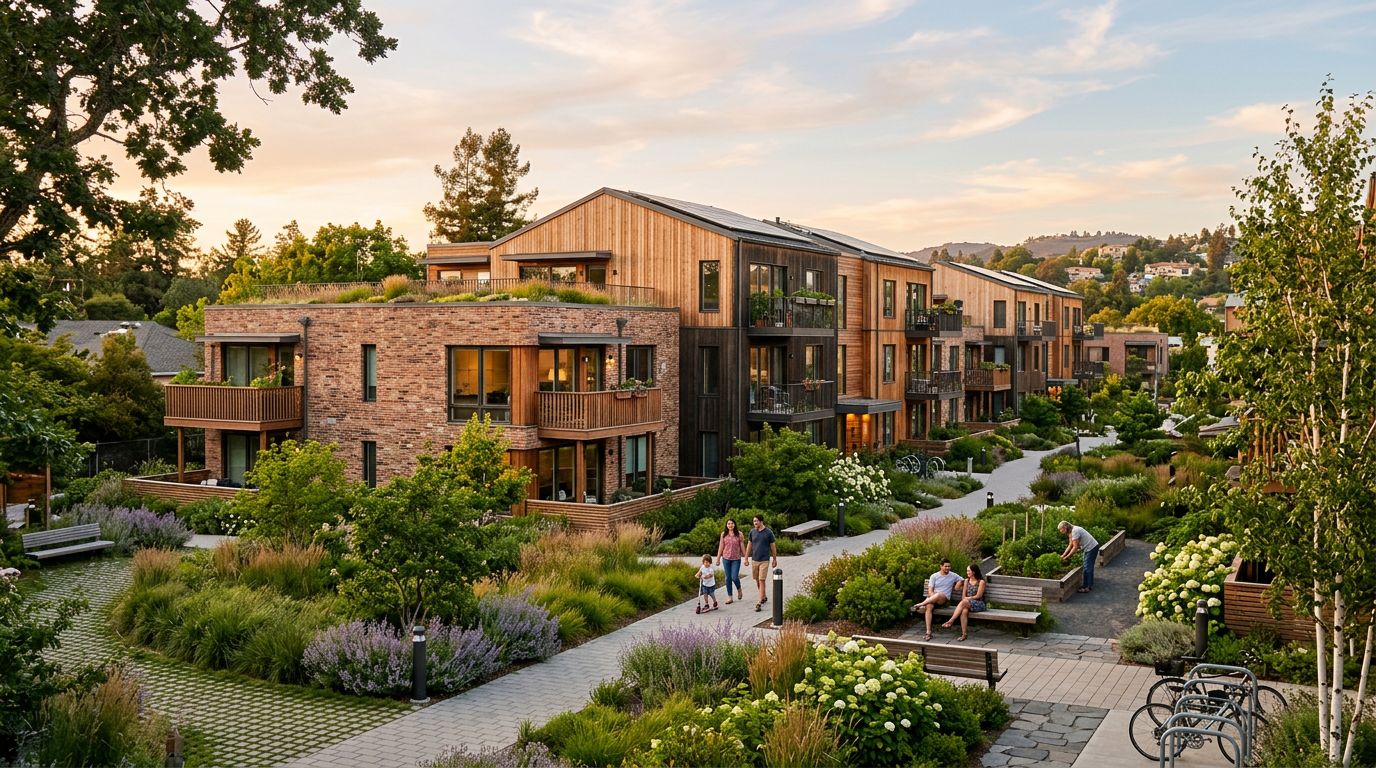
The global affordable housing market is entering a phase of expansion, projected to grow to $63.29 billion by 2026 from $60.02 billion in 2025. This 5.5% compound annual growth rate (CAGR) is driven by an urgent need to address housing deficits, including Africa’s 56 million unit shortage and the backlog of over 23 million homes in Latin America. For developers and agencies operating in this sector, the challenge involves more than construction; it requires securing the public-private partnerships and community support necessary to move projects forward. This is where affordable housing development AI illustration marketing becomes a critical strategic asset.
Traditional architectural renderings often feel clinical or imposing, which can trigger local resistance during zoning hearings. Conversely, AI-powered artistic illustrations provide a softer, more community-centric aesthetic that emphasizes human-focused design and neighborhood integration. By using advanced visualization tools, developers can address the $16 trillion global finance gap by presenting projects that appear both feasible and aspirational to investors and regulatory bodies.
#01The Strategic Role of AI in Scaling Housing Solutions
The scale of the global housing crisis requires a shift from traditional, slow marketing and design workflows. With 200 million people in Southeast Asia residing in informal settlements and massive investment needs in emerging markets, AI is the primary tool for data collation and market transparency. In the context of affordable housing development AI illustration marketing, the integration of AI allows for the rapid generation of property visuals that align with demand forecasting and building footprint mapping.
Organizations are increasingly using AI to detect and map footprints (such as the 1.5 million detected in South Africa via the UN BEAM tool) to identify where development is most needed. For marketing teams, this data-driven approach means visuals are evidence-based representations of how a project fits into an existing urban setting rather than simple aesthetic choices. By using tools like HouseIllustrator, developers can take current site photos and transform them into artistic renderings in seconds, allowing for immediate changes during early planning stages when community feedback is most active.
#02Visualizing LIHTC and HUD Compliance for Stakeholders
Marketing affordable housing is complex due to the heavy reliance on Low-Income Housing Tax Credit (LIHTC) and HUD Project Based Section 8 programs. These projects require strict adherence to compliance scenarios, including LIHTC Form 8823 and state-specific guidelines. AI-driven visualizations allow developers to simulate these compliance scenarios in real-time, demonstrating unit configurations and energy performance to auditors and state agencies.
Professional teams in 2026 are moving away from off-the-shelf graphics in favor of specialized solutions. By incorporating AI tools for real estate agents 2025, developers can ensure their marketing materials reflect actual site constraints and zoning requirements. The ability to produce high-resolution, professional-quality illustrations ensures that even under budget constraints, a project can maintain a competitive edge when bidding for limited government bonds. High-end visuals such as copper linework or villa sketches help bridge the gap between technical compliance and visual appeal.
#03Using Predictive Personalization in Marketing Campaigns
The AI real estate market expanded by 36% between 2024 and 2025, reaching $303 billion. A significant portion of this growth is attributed to predictive marketing and intent-based targeting. For affordable housing, this means using AI platforms to analyze digital footprints and homeowner data to identify potential sites for redevelopment or to find qualifying residents.
Affordable housing development AI illustration marketing works best when it is personalized. Predictive analytics tools like Fello’s Property Intelligence allow marketing teams to tailor their messaging to specific demographic needs. When combined with AI powered real estate illustrations for agents, this results in highly targeted digital campaigns. Instead of generic flyers, developers can distribute illustrations that resonate with the cultural and architectural features of the specific neighborhood, reducing acquisition costs and increasing the quality of leads for new multifamily developments.
#04Cost-Effective Illustration Tools for Housing Developers
Budget constraints are a defining characteristic of affordable housing projects. Therefore, the adoption of low-cost or free AI tools is a major trend for 2026. Canva AI and REimagineHome are frequently recommended for their accessibility, offering non-designers the ability to create brochures and flyers with minimal upfront investment. However, for specialized property transformation, HouseIllustrator offers a focused approach by converting property photos directly into illustrated artwork.
This specific subset of affordable housing development AI illustration marketing focuses on 'before and after' scenarios. Using an interactive slider tool, developers can show a derelict site alongside an illustrated vision of the completed development. This approach is more cost-effective than physical staging or traditional 3D rendering. It allows teams to provide several style options, like minimalist line illustrations, without the cost of hiring a full-scale architectural visualization firm. For more details on the evolution of these visuals, see our comparison of AI illustration vs traditional architectural rendering.
#05Human-AI Hybrids: Managing 2026 Regulatory Shifts
While AI provides the speed and scalability necessary for modern property marketing, expert human intervention remains vital for handling the political and community-specific aspects of affordable housing. Expert recommendations for 2026 emphasize a 'human-AI hybrid' model. In this model, AI generates the foundational visuals and compliance simulations, while human experts provide the context required for local politics and construction impacts.
As regulatory shifts occur, such as the recent policy-aligned visuals gaining traction in US-based projects, marketing materials must stay dynamic. AI-powered property management platforms are already automating maintenance and accounting, but the visual front-end must remain flexible. HouseIllustrator supports this by offering secure and private processing, ensuring that sensitive project photos remain protected while the AI analyzes them to produce brand-consistent illustrations. This blend of technical security and artistic flexibility allows developers to remain agile in a shifting regulatory environment.
To succeed in the $63 billion affordable housing market of 2026, developers must prioritize visual clarity and stakeholder trust. Affordable housing development AI illustration marketing is a necessity for addressing complex compliance and community hurdles. By transforming standard site photos into elegant, brand-aligned artwork, you can communicate the potential of your development to investors and the public. Use HouseIllustrator to instantly generate high-resolution property illustrations and improve your next project brochure or LIHTC proposal today.