Relocation Agent AI Property Visuals: 2026 Guide
April 10, 2026
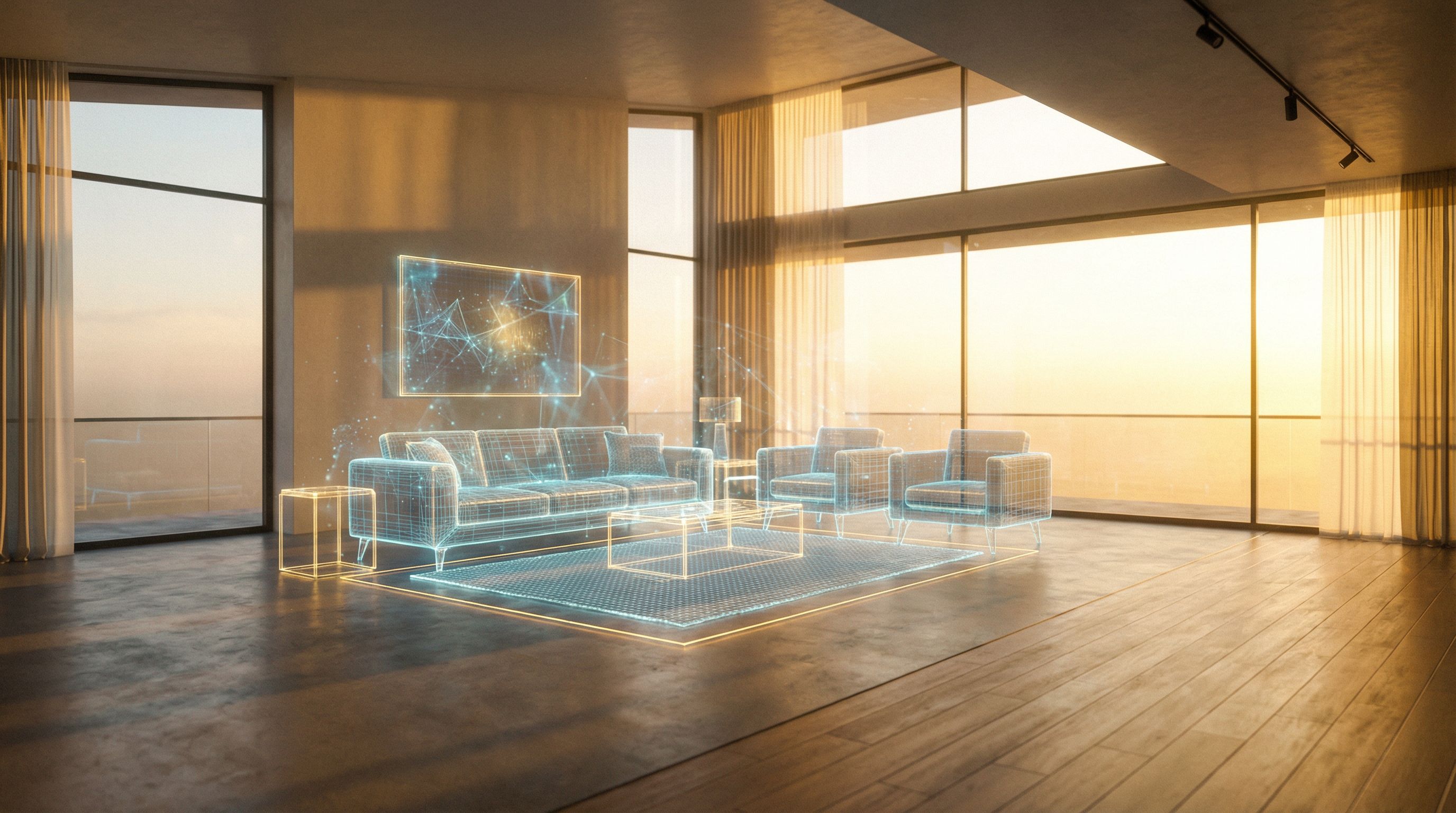
The relocation industry in 2026 has transitioned from a high-touch, physically-intensive sector to a model driven by digital-first infrastructure. Relocation agents now manage clients across continents, where the primary barrier to transaction is the psychological and physical distance between the buyer and the asset. Success in this environment depends on the strategic deployment of relocation agent AI property visuals to bridge this gap, providing transparency and immersive detail without the need for immediate site visits.
Data indicates that 82% of Americans utilized AI for housing information in 2025, a trend that has solidified as a market standard. For relocation professionals, these technologies are no longer speculative tools; they are essential for reducing physical viewings and accelerating decision-making cycles. By integrating photorealistic virtual staging, 3D immersive tours, and automated image enhancement into their core workflows, agents can demonstrate property potential to remote stakeholders with unprecedented precision.
#01The Distance Gap: Overcoming Remote Buyer Hesitation
The most significant challenge for a relocation agent is the 'uncertainty factor' associated with remote acquisitions. Buyers moving for corporate transfers or international investments often lack the context of the local market and the tactile experience of the property. Traditional photography frequently fails to capture the spatial nuances required for a high-stakes move.
The Solution: Immersive 3D Digital Twins Relocation agents are increasingly utilizing 3D immersive technologies, such as Matterport, to create digital twins of properties. These visuals provide more than just a gallery; they offer a 'Dollhouse View' that allows clients to understand the home's structural flow and spatial relationships from their current location.
Research shows that properties featuring AI-assisted 360-degree virtual tours receive 87% more views than those without. For the relocation agent, this translates to higher engagement from qualified leads. These tools also include measurement capabilities, allowing clients to virtually place their existing furniture into the new space, further reducing the friction of a long-distance move. By offering AI powered real estate illustrations for agents, professionals provide a layer of technical transparency that static images cannot match.
#02Mitigating High Costs: Virtual Staging vs. Physical Inventory
Vacant listings are common in the relocation sector, as families often move out before the property is listed or sellers are corporate entities holding empty assets. However, vacant homes are notoriously difficult to market; they lack emotional resonance and make it difficult for buyers to judge room scale. Historically, physical staging was the only solution, often costing upwards of $2,000 per month in furniture rentals.
The Solution: AI-Powered Virtual Staging Modern relocation agent AI property visuals have revolutionized this cost structure. Tools like REimagineHome and Rendair AI allow agents to generate photorealistic furniture overlays in under a minute, achieving a 97% reduction in staging costs compared to physical alternatives.
Beyond cost, the primary benefit is versatility. An agent can generate multiple styles—such as Scandinavian, Modern, or Traditional—to suit the specific tastes of different relocation clients. This hyper-personalization ensures that a corporate executive and a young family can see the same property through different aesthetic lenses. Industry data from the National Association of REALTORS® indicates that 81% of buyers find it easier to visualize a property as a future home when it is staged, leading to a 1-5% increase in offer prices. For a detailed comparison of these methodologies, agents should review the AI virtual staging vs architectural illustration guide to determine which visual asset best serves their specific listing.
#03Visualizing Potential: Solving the Fixer-Upper Dilemma
Relocation clients often avoid 'fixer-upper' properties because they lack the local network of contractors and the vision to see past outdated interiors. This significantly limits the inventory available to them, especially in competitive urban markets where renovated stock is scarce.
The Solution: AI Renovation Vision Tools Advanced computer vision AI now analyzes property photos to simulate renovations. Agents can use these tools to instantly update flooring, remove outdated wallpaper, or visualize a complete kitchen remodel. Approximately 15% of buyers in 2026 now use AI 'renovation vision' tools to assist in their decision-making.
By presenting a 'potential' view alongside the 'current' view, relocation agents can broaden their clients' search criteria to include properties that offer better value but require cosmetic updates. This capability is particularly effective when integrated into luxury real estate marketing illustrations, where high-net-worth clients expect to see bespoke design possibilities before committing to a purchase.
#04Operational Efficiency: Automated Image Enhancement and Speed to Market
In a fast-moving market, the time it takes to process professional photography can result in lost opportunities. Relocation agents need to upload high-quality listings quickly to capture the attention of remote searchers who are often making rapid decisions.
The Solution: Real-Time AI Image Editors AI tools like Imagen AI and Autoenhance.ai have automated the complex 'flambient' (flicker and ambient) editing process. These systems handle sky replacement, perspective correction, and window pulls—balancing interior and exterior lighting—automatically.
This technology enables agents to capture photos on a smartphone and have them professionally enhanced within seconds. For high-volume relocation firms, this automation supports faster listing uploads and ensures a consistent visual brand across all platforms. Organizations that utilize these AI tools for real estate agents report significant improvements in listing throughput and click-through rates on property portals.
#05Strategic Workflow Integration for 2026
The competitive advantage in 2026 is no longer derived from simply using AI, but from how these tools are integrated into a cohesive marketing infrastructure. A recommended workflow for relocation agents includes:
- Capture: Utilize high-resolution 360-degree cameras to document the property state.
- Enhancement: Run raw images through Autoenhance.ai for immediate color and light correction.
- Transformation: Use Rendair AI to virtually stage empty rooms based on the target demographic's profile.
- Immerse: Generate a digital twin using Matterport for remote walk-throughs.
- Distribute: Link these visuals within CRM systems and property portals to ensure remote buyers have immediate access to all data points.
This systematic approach addresses the psychological distance of relocation by providing a 'transparency stack' that builds trust between the agent and the client. For professionals looking to pitch these services to high-end developers or corporate clients, the AI illustration tools for architects: client pitch guide provides a framework for presenting these technical capabilities effectively.
#06Market Trends and ROI of AI Visuals
The global AI real estate market is projected to reach $41.5 billion by 2033, growing at a CAGR of 30.5%. Within the relocation niche, the ROI of AI visuals is measured through decreased 'time-on-market' and reduced travel expenses for both the agent and the client.
With 85% of real estate agents regularly using AI in 2026, the absence of these tools is a professional liability. Property valuation tools are now 81% AI-enhanced, often incorporating visual data to provide accurate pricing comps. For relocation agents, these visuals serve as the primary evidence in a valuation report, justifying asking prices to remote investors who cannot perform their own on-site due diligence. This data-driven approach to visuals ensures that every marketing asset serves a dual purpose: emotional engagement and technical verification.
Relocation agent AI property visuals have fundamentally altered the mechanics of long-distance real estate transactions. By leveraging 3D digital twins, virtual staging, and renovation visualization, agents can provide remote clients with the confidence required to execute high-value moves without the need for multiple physical viewings. As we move through 2026, the integration of these tools into a standard operational workflow is the most effective way to scale a relocation business, reduce overhead, and increase listing conversion rates in an increasingly digital global market.
Frequently Asked Questions
In this article
The Distance Gap: Overcoming Remote Buyer HesitationMitigating High Costs: Virtual Staging vs. Physical InventoryVisualizing Potential: Solving the Fixer-Upper DilemmaOperational Efficiency: Automated Image Enhancement and Speed to MarketStrategic Workflow Integration for 2026Market Trends and ROI of AI VisualsFAQ