Property Development Hoarding AI Illustration
April 12, 2026
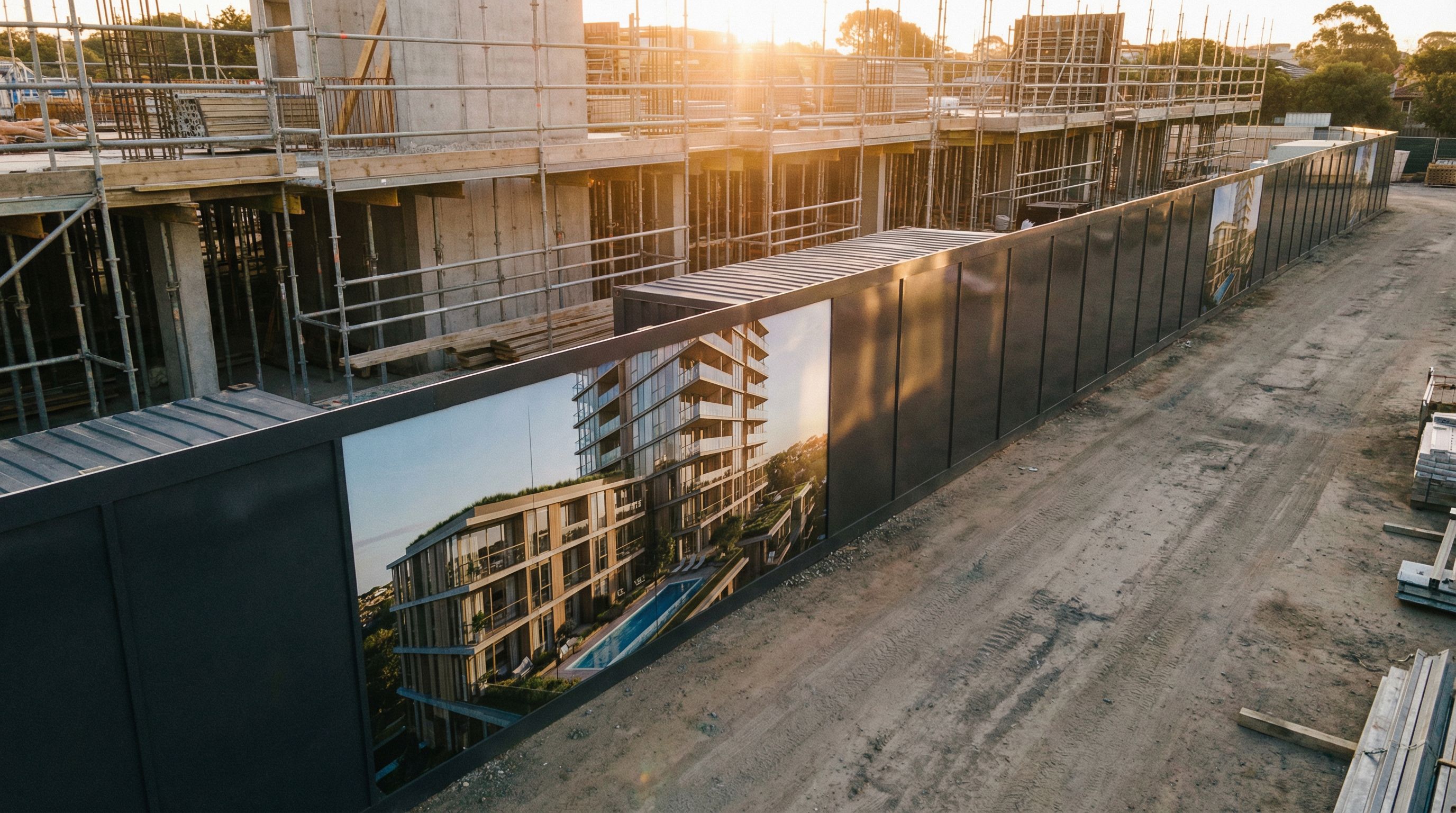
Property development in 2026 has seen a major shift where physical site boundaries are more than just utility structures. Modern site hoardings now act as high-performance marketing assets. They are the first contact point between a multi-million dollar development and its future residents or investors. Proptech AI investment reached $16.7 billion in 2025, which was a 67.9% increase from the previous year. This growth means the demand for high-quality, large-scale visual communication now requires automated design workflows. In this environment, property development hoarding AI illustration is the industry standard for creating clear, high-resolution visuals that attract interest and drive pre-launch inquiries.
Organizations are moving away from generic stock photography or expensive manual rendering. They use AI-native proptech solutions, which are growing at a 42% annual rate, to turn architectural concepts into public art. A property development hoarding AI illustration connects a construction site's current state to its future potential. It provides a clean, artistic representation that builds brand value before construction begins. This guide covers how to use AI illustrations in large signage, the technical requirements for 2026, and the results seen in the global real estate market.
#01The Evolution of Site Hoardings as Marketing Infrastructure
In the past, site hoardings were seen as a cost center. They were temporary barriers used for safety, security, and dust control. By 2026, the industry has changed these structures into vital marketing tools. Top firms now use marketing resources to turn hundreds of meters of perimeter fencing into brand experiences. Moving from basic plywood to high-impact hoardings is done because of the engagement they create. High-profile UK developments recorded over 40,000 website hits and 200 inquiries in one year because of site signage.
This change happens as AI enters construction and property management workflows. Professionals suggest creating visual communications that help community engagement while following safety rules. Using the hoarding as a space for AI architectural illustrations for developers allows firms to show the project's vision to urban areas without traditional rendering delays. This method ensures the development gets interest before the sales center opens. It expands the 'pre-sell' window and shortens the marketing cycle.
#02Technical Standards for AI-Generated Hoarding Illustrations
The main difficulty in creating a property development hoarding AI illustration is the size of the final print. Hoarding panels often cover hundreds of meters. They need clear, high-resolution visuals so they do not look blurry when people walk past them. In 2026, the standard for these illustrations is high-resolution output that stays sharp on large prints. Tools like HouseIllustrator meet this need by providing professional illustrations for large-format printing. This keeps the quality the same for a digital brochure or a three-meter-high board.
The different artistic styles available with AI let developers match the visuals to the project branding. Developers can use a copper linework style for luxury projects or a minimalist line illustration for modern complexes. The style choice affects how the community sees the project. AI technology analyzes property photos or site plans quickly. This allows a three-step process: upload, select style, and download. This speed helps developers update visuals as construction moves through different stages or for specific marketing campaigns.
#03Integrating AI Workflows with Industry-Leading Platforms
Effective hoarding illustration strategies often use several platforms. Leading tools like Prophetic and Cadastral set the standard for AI real estate tasks in 2026. Prophetic handles site analysis, mapping, and zoning, providing the data needed for property visuals. Cadastral automates the creation of diagrams and visuals for hoardings. It connects these visuals with real estate documents and analysis. This system lets technical leads create visuals that look good and are correct.
HouseIllustrator works with these platforms by turning property photos into marketing illustrations. Using HouseIllustrator to turn site photos into artistic styles helps developers show a 'before and after' story to the public. The platform uses secure processing to protect site data while making the high-resolution files needed for panels. Combining site planning and AI art allows for high-quality design that mid-sized developments could not get before.
#04Material Innovation and High-Impact Visual Execution
The success of an AI-generated illustration depends on the material it is printed on. In 2026, experts suggest using materials like reflective vinyl and 3D surface coverings. One example is the One Blackfriars development in London, which used reflective vinyl on 250 meters of panels. This choice created a strong visual effect and lowered safety risks like reflections that could distract drivers. When used with a property development hoarding AI illustration, these materials create a visual effect that changes with the light and the viewer's position.
Digital advertising trends also affect hoarding design. Developers now include lights and LED parts in their physical hoardings. This lets them show AI illustration for real estate billboard advertising, which they can update quickly. Using AI to design these signs helps developers make sure their messages reach the local audience. Using high-quality AI illustrations with high-tech materials improves the look of the site and shows the developer's focus on innovation and the environment.
#05Strategic Branding and Community Engagement
Hoardings are also a tool to manage how the community sees the project. A good property development hoarding AI illustration can turn a construction site into a local landmark. Experts recommend using hoardings to show masterplan illustration AI for property development. This gives the public a clear idea of the project's size and benefits to the area. This openness builds community support and can reduce problems during construction.
In 2026, more developers are using AI to design these community signs. Developers are moving from simple sales messages to artistic and helpful content. For example, some sites use AI sketches to show historical features or future green spaces. This matches the trend of using hoardings for storytelling. The site boundary becomes a space for marketing. Giving people artistic views of the future site helps developers connect with the community. This is important for the project's long-term success.
#06Proptech AI Investment and the Future of Property Design
Proptech AI grew quickly, with a $1.7 billion investment in January 2026 alone. This shows that AI visualizations are now a permanent part of real estate development. Since AI is used from site selection to construction monitoring, companies will rely more on automated visuals. For business leaders, using property development hoarding AI illustration is a requirement to stay competitive. Organizations that use these tools protect their brand and make sure their site looks as high-quality as their project.
By 2027, the industry expects AI illustration tools and site-planning software to work together easily. Creating 3D renders and sketches instantly allows for a faster marketing strategy. If a project phase changes or a specific unit needs attention, the hoarding visuals can be updated quickly. This speed and the quality from HouseIllustrator help property developments stay visible in a crowded market. The results from 2026 show that using AI in property signage is an effective way to grow project awareness and get early interest.
Property development hoardings are the largest physical marketing surfaces for a developer. By using a property development hoarding AI illustration strategy, firms can make these surfaces as effective as digital campaigns. HouseIllustrator provides high-resolution output and different artistic styles, such as classic villa sketches or copper linework. These styles turn large-scale signage into a brand asset. To improve your site's perimeter and get inquiries before the official launch, use HouseIllustrator's AI engine to create your next site illustration today.