AI Illustration for Real Estate YouTube Thumbnails
April 10, 2026
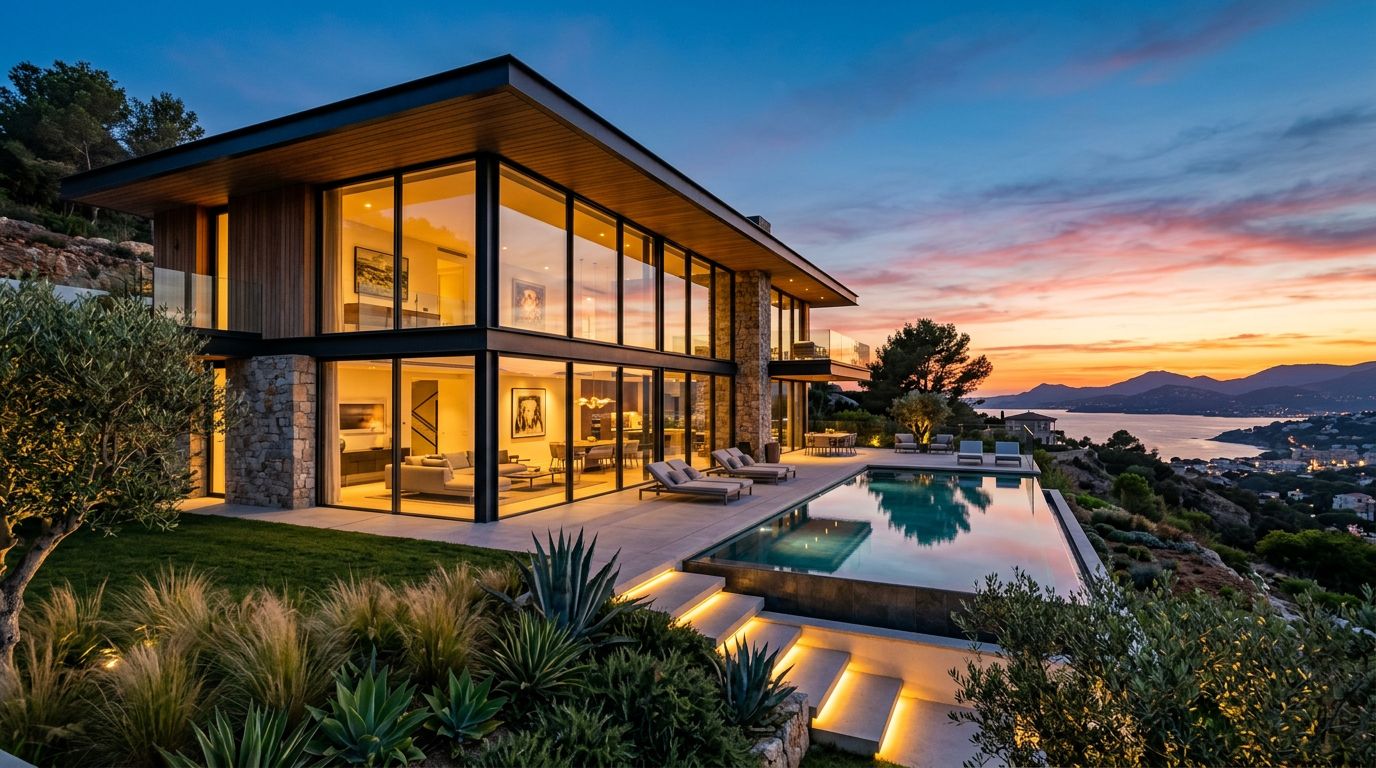
The visual landscape of property marketing has shifted toward video-first strategies, making the YouTube thumbnail the most critical 'ad for an ad' in an agent's toolkit. Data indicates that listings featuring video content receive 403% more inquiries and sell approximately 31% faster than those without. Despite these compelling figures, only 9% of real estate professionals currently produce video content, creating a significant competitive advantage for those who leverage modern visual tools. The emergence of high-fidelity AI illustration for real estate YouTube thumbnails has lowered the barrier to entry, allowing agents to generate professional, high-conversion visuals without a dedicated design department.
A high-performing thumbnail dictates the Click-Through Rate (CTR), which serves as the primary metric for YouTube's recommendation algorithm. For real estate content, a CTR of 5–10% is considered the industry standard for successful lead generation. Achieving these numbers requires more than a simple property photo; it demands a strategic blend of human psychology, vibrant color theory, and precise text overlays. AI-driven illustration tools now enable the rapid generation of these assets, ensuring that every video upload is optimized for maximum viewer engagement and lead capture.
#01The Economics of High-CTR Property Thumbnails
In the 2026 real estate market, a thumbnail is a performance asset rather than a decorative image. High-CTR visuals directly correlate with increased property inquiries and reduced days-on-market. Research suggests that 73% of homeowners are more likely to list with an agent who uses video marketing, yet the gap between consumer demand and agent execution remains wide. By utilizing AI illustration for real estate YouTube thumbnails, professionals can bridge this gap with minimal overhead. The objective is to stop the scroll by providing immediate value and emotional resonance through a single image.
Statistical benchmarks highlight that thumbnails emphasizing human emotion—such as an agent's 'Just Sold' reaction—combined with high-contrast property views drive the highest engagement. AI models like Flux 2 allow agents to create these high-impact visuals by generating photorealistic portraits with specific emotional cues. This level of customization was previously only available through expensive professional photography sessions. Now, an agent can generate multiple variations of a thumbnail to test which specific angle or expression yields the highest inquiry rate. Organizations that integrate these automated visual workflows report a more consistent brand presence across social channels, leading to higher long-term ROI in their digital marketing spend.
#02Top AI Illustration Tools for 2026 Real Estate Workflows
Selecting the appropriate tool is critical for maintaining professional standards. The current market landscape features several specialized AI models that excel in different aspects of thumbnail production. Agents must prioritize tools that offer photorealistic property rendering, accurate text integration, and brand consistency.
| Tool | Primary Strength | Use Case |
|---|---|---|
| Ideogram v3 | Precision Text Rendering | Thumbnails requiring bold, integrated text like '$1.2M Luxury Tour' |
| Flux 2 | Photorealistic Human Portraits | Personal branding, reaction shots, and agent-focused trust building |
| CapCut | Workflow Automation | Batch processing and engagement-optimized templates |
| Leonardo.Ai | Layered Visual Control | Custom interior renders and complex architectural lighting |
| Thumbmagic | Viral Style Mimicry | Rapidly testing styles that are currently trending on the platform |
Ideogram v3 has become a favorite for agents who need 'hook' thumbnails. It renders crisp, styled text directly into the background, eliminating the need for post-production in Photoshop. For instance, a thumbnail for a renovation project can feature the text 'Before & After' rendered in 3D typography that matches the lighting of the property. Meanwhile, Flux 2 is the industry benchmark for generating agent portraits that are indistinguishable from professional photography, allowing for 'face-forward' marketing that builds immediate rapport with potential buyers.
#03Prompt Engineering for Real Estate Visual Impact
The quality of an AI-generated thumbnail is directly linked to the precision of the underlying prompt. Effective prompts for real estate must specify lighting, composition, and emotional tone. In 2026, the trend has moved away from generic 'house' images toward dramatic, atmospheric scenes that suggest a specific lifestyle. When creating an AI illustration for real estate YouTube thumbnails, practitioners should focus on 'Golden Hour' lighting and wide-angle perspectives to simulate the high-end photography used in luxury brochures.
Key prompt components for real estate include:
- Luxury Exteriors: 'Vertical composition of a modern mansion at golden hour, sleek architecture with pool reflection, dramatic sky, high-contrast lighting, inviting luxury mood, 9:16 optimized, bold text overlay space.'
- Emotional Reactions: 'Photorealistic medium shot of a professional female realtor, joyful expression, holding a "SOLD" sign, blurred modern home background, cinematic lighting, 8k resolution.'
- Detailed Interiors: 'Ultra-wide angle of a minimalist kitchen, marble countertops, natural sunlight streaming through floor-to-ceiling windows, high-end staging, warm inviting atmosphere.'
By treating the prompt as a creative brief, agents can generate visuals that align with their specific market segment. This level of detail ensures that the AI doesn't just produce a generic image, but a targeted marketing asset designed to attract a specific demographic, whether they are first-time buyers or high-net-worth investors looking for waterfront properties.
#04Design Principles: Text, Contrast, and Hierarchy
A successful thumbnail must be legible at 300 pixels on a mobile device. This technical constraint requires a strict adherence to visual hierarchy. The primary subject—usually the property or the agent—should occupy at least 40% of the frame. Text overlays should be limited to 3–5 words to ensure readability at a glance. Using contrasting colors, such as yellow text on a blue 'Golden Hour' sky, creates a 'pop' that naturally draws the eye.
AI tools like CapCut are specifically designed to optimize these hierarchies. They use predictive algorithms to suggest text placement based on current engagement patterns. For example, placing text in the upper left quadrant often yields better results because it is the first place a viewer's eye lands in Western cultures. Furthermore, high-contrast lighting—specifically top-down lighting for interiors—helps define the architectural features of a home, making the image feel more professional. For agents looking to maximize their property listing conversion rate, mastering these design basics is as important as the AI tool itself.
#05A/B Testing and Iterative Workflows
The most successful real estate YouTubers do not rely on a single thumbnail; they test multiple variations. AI illustration for real estate YouTube thumbnails enables this at scale. Tools like Thumbmagic and vidIQ allow creators to generate and test different versions of a thumbnail to see which generates more clicks. An agent might test a 'property-only' thumbnail against an 'agent + property' version.
This iterative process is essential for long-term growth. If a video is underperforming, the first step should always be changing the thumbnail. Modern workflows involve generating 3–5 variations for every video. These might vary by color scheme (e.g., vibrant vs. moody), text hook (e.g., 'Take a Tour' vs. 'Price Drop!'), or the featured room (e.g., curb appeal vs. primary suite). Organizations that treat their thumbnails as scientific experiments often see a significant lift in inquiries. This approach also integrates well with AI tools for real estate agents, as the data collected from YouTube can inform the visual style of print brochures and social media ads.
#06Synergy Between Thumbnails and Social Content
While YouTube is a primary driver for long-form content, the assets generated for thumbnails should be repurposed across the marketing stack. The high-resolution AI illustrations used for YouTube can be formatted into 9:16 aspect ratios for Instagram Reels and TikTok. This creates a cohesive real estate social media AI illustration strategy that reinforces personal branding across platforms.
Consistency in visual style—such as using the same color palette or font across YouTube and Instagram—builds trust. When a potential lead sees a consistent aesthetic, they perceive the agent as more organized and professional. Furthermore, these AI-generated scenes can be used in architectural illustrations for real estate marketing materials. For instance, a high-quality interior render created for a thumbnail can also serve as a featured image in an email newsletter or a digital property brochure. This multi-channel approach ensures that the investment in AI tools yields the highest possible utility for the agent's business.
The adoption of AI illustration for real estate YouTube thumbnails represents a fundamental shift in how property professionals engage with digital audiences. By moving beyond static, low-engagement photography and embracing high-impact, AI-enhanced visuals, agents can significantly improve their CTR and inquiry rates. The tools available in 2026—from Flux 2 for photorealistic portraits to Ideogram v3 for precision text—provide the technical capability to compete with major media productions on a fraction of the budget. To remain competitive, real estate professionals must view their YouTube thumbnails as strategic marketing assets that require the same level of attention as a physical property staging. Starting with specialized AI tools and maintaining a data-driven approach to A/B testing will ensure sustained growth in an increasingly visual digital marketplace.