AI Illustration for Real Estate Outdoor Advertising
April 11, 2026
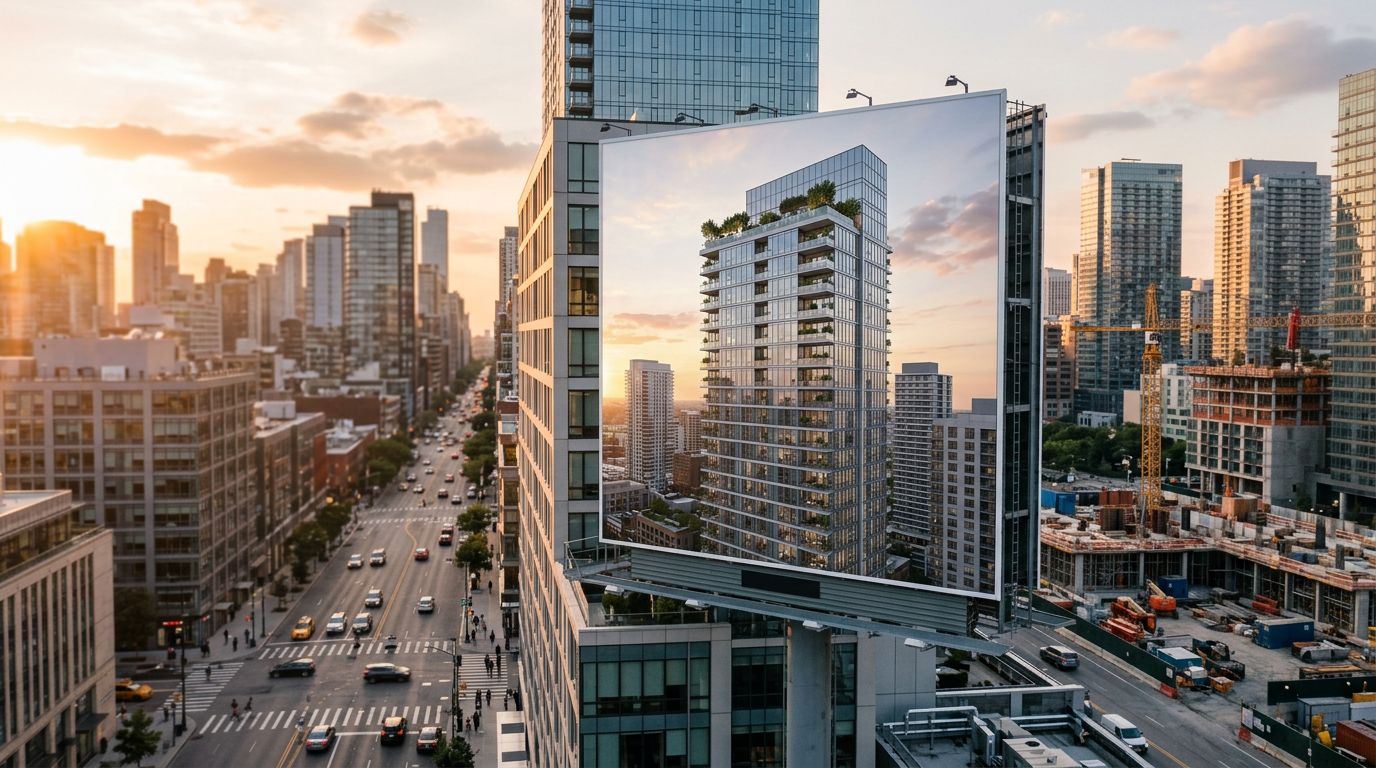
The global AI real estate market was valued at $303 billion in 2025, and estimates suggest it will reach $989 billion by 2029. This 34.4% CAGR growth reflects a major change in property visualization. For decades, outdoor advertising (including billboards, development hoarding, and large-format signage) depended on expensive photography or slow 3D rendering. By 2026, AI illustration for real estate outdoor ads became the standard for high-impact, affordable visuals in busy areas.
With 85% of real estate agents now using AI in marketing, stylized illustrations provide a clear advantage. These images offer artistic clarity and emotional appeal that photography often misses, especially for construction projects or buildings needing upgrades. By using advanced tools, firms can create professional imagery at scale that keeps every physical ad consistent with their brand.
#01The Economic Imperative for AI in Outdoor Marketing
The main reason firms adopt AI illustration for outdoor real estate ads is the clear effect on sales and costs. National Association of Realtors (NAR) data shows that quality visual staging helps sell properties in as little as one day, while listings without good visuals take six months on average. Additionally, listings with better tools often see offers 1% to 5% higher than traditional listings.
Standard outdoor ads usually need expensive photoshoots or complex 3D models that take weeks. Conversely, AI systems save 70-90% of the time and show architectural plans with 95% accuracy. This speed is vital in the 2026 market because agents want materials immediately. By using architectural illustrations for real estate marketing, companies avoid the logistics of photography and launch campaigns faster.
#02High-Resolution Visuals for Large-Format Display
A major technical problem in outdoor advertising is keeping images clear on large surfaces like billboards. Low-resolution graphics might look fine on a phone but pixelate on a three-meter display. Our Store fixes this by providing high-resolution files made for professional brochures and large ads.
Marketing leads must think about viewing distances during planning. According to luxury real estate marketing illustrations: 2026 guide standards, visuals must grab a driver's attention at 60 mph while looking sharp for pedestrians nearby. Tools like Our Store instantly change standard photos into high-resolution illustrations, so billboard assets keep their sharp edges. This reliability is needed to protect the reputation of luxury listings.
#03Creative Styles and Brand Consistency in 2026
By 2026, real estate moved past generic images to focus on visual storytelling. Choosing a style is a strategic choice based on the audience and property type. Our Store supports this by offering various styles like copper linework, villa sketches, and minimalist illustrations.
For historic estates, a villa sketch shows elegance that photos might miss in bad weather. Meanwhile, minimalist lines work better for modern buildings to highlight their shape. This flexibility helps maintain a consistent brand look across all materials. Users can upload any photo format for an instant AI analysis, turning basic phone photos into premium renders for city billboards.
#04Integrating AI Illustrations into Hybrid Physical Campaigns
Modern outdoor ads are often hybrid, mixing physical billboards with digital parts. Experts in 2026 suggest adding QR codes to all signs to connect physical views with online engagement. These codes lead potential buyers to 3D tours that build on the AI illustration seen on the street.
By using the three-step process at Our Store (uploading, picking a style, and downloading), teams can create a billboard visual that is the main "hook." After a person scans the code, they enter a digital funnel where AI visuals continue the story. This multi-channel approach makes sure one billboard works with social media and email marketing. Professionals find these formats get more engagement than static images because they capture leads immediately.
#05Workflow Optimization for Property Developers
For developers, AI illustration is very effective during off-plan sales. Before construction starts, developers have to sell the idea of a finished home to buyers. Property development hoarding AI illustration guide strategies suggest using AI renders to turn construction fences into sales galleries.
Our Store lets developers turn early site photos or drawings into illustrations in seconds. An interactive slider helps investors see the change during meetings. This reduces the need for expensive firms for early assets, so developers can spend more on big ads and lead generation. Secure processing keeps pre-development images private.
#06Mitigating Environmental Constraints with AI Enhancements
Outdoor photography is often difficult because the environment is unpredictable. Clouds, construction gear, or messy grounds can hurt a photo. AI tools in 2026, like those at Our Store, solve these problems by focusing on the building instead of background noise.
Styles like copper linework show the building's shape while leaving out distractions. Advanced tools also offer sky replacement and new lighting, so ads look good no matter when the photo was taken. This keeps billboards bright and inviting, which helps get the higher offer prices mentioned in recent research. By turning the property into an illustration, marketers show an "ideal" version that connects with the audience.
Using AI illustration for outdoor ads is a strategic requirement for agencies and developers in 2026. High-resolution, stylized images speed up sales and raise property values by helping buyers visualize the home. Our Store offers the tools for this change with a three-step process to turn photos into professional illustrations. The artistic styles and high-resolution files from Our Store help billboards and site hoarding stand out. Visit Our Store today to improve your physical marketing and turn property photos into high-impact outdoor ads in seconds.
Frequently Asked Questions
In this article
The Economic Imperative for AI in Outdoor MarketingHigh-Resolution Visuals for Large-Format DisplayCreative Styles and Brand Consistency in 2026Integrating AI Illustrations into Hybrid Physical CampaignsWorkflow Optimization for Property DevelopersMitigating Environmental Constraints with AI EnhancementsFAQ