AI Illustration for Real Estate Investor Presentations
April 12, 2026
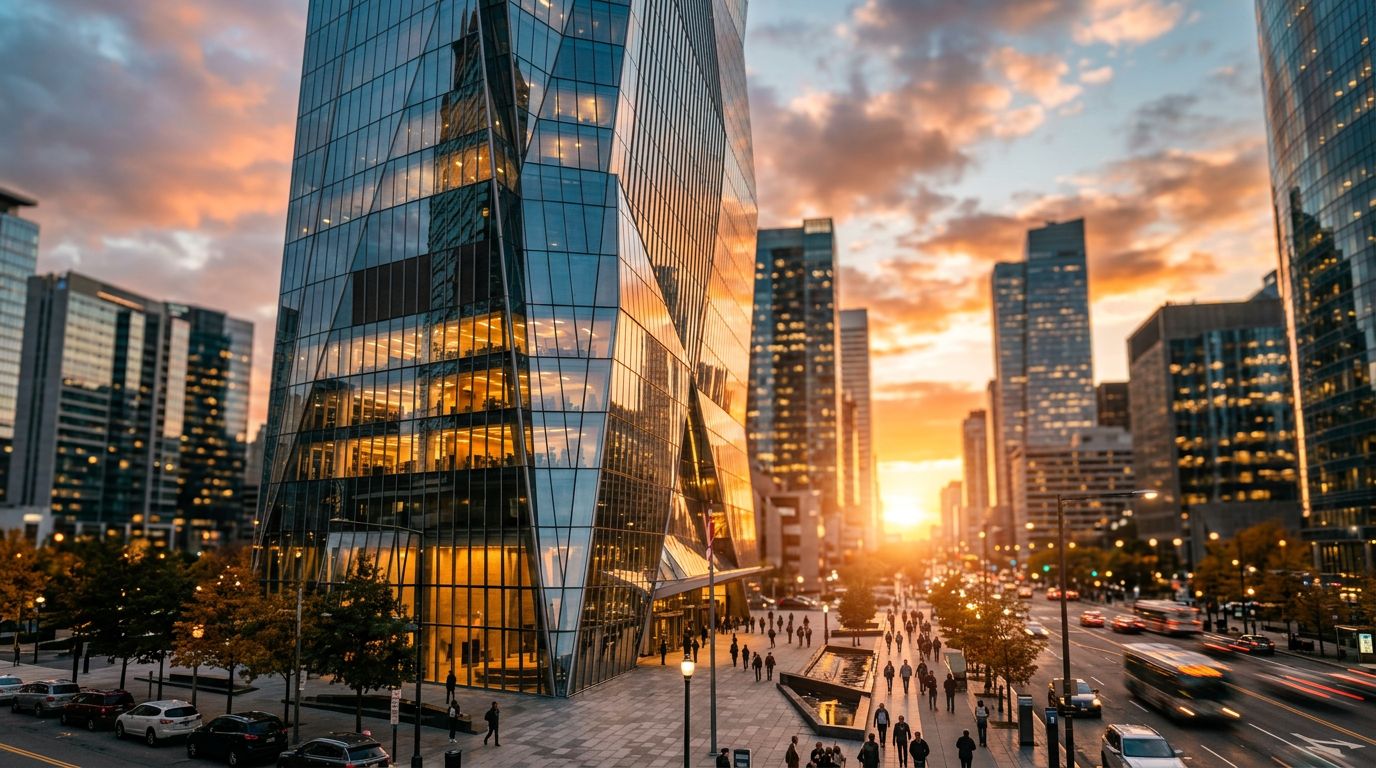
The commercial real estate (CRE) sector in 2026 centers on data-driven visual storytelling. As institutional firms and developers compete for capital in a fast-paced market, the ability to explain property value through high-quality media is a strategic need. AI illustration for real estate investor presentations is now a core part of the modern fundraising process. It allows firms to replace static photography with artistic renders that highlight potential and vision.
Recent data shows a shift in capital toward firms that prioritize transparency and clear communication. By using automated visual tools, analysts produce detailed, dynamic reports that reflect real-time market conditions. This move from static documents to 'living documents' allows investors to view property potential through a persuasive lens, connecting current site conditions with future asset performance.
HouseIllustrator is a tool in this change, giving real estate professionals the ability to turn standard property photos into high-resolution illustrations in seconds. By providing professional output for luxury brochures and investment decks, the platform allows technical leads and business leaders to improve their presentation standards without the costs of traditional design agencies.
#01The Economics of AI Implementation in 2026 Investment Workflows
As of April 2026, the global AI market for real estate is expected to reach USD 41.5 billion by 2033, up from USD 2.9 billion in 2024. This is a yearly growth rate of about 44.4%. For institutional investors, these stats show a major restructuring of industry costs. Organizations using AI illustration for real estate investor presentations see a 60-80% drop in production time compared to manual renders or outside design work.
Efficiency gains in 2026 are clear in the preparation of Offering Memorandums (OMs). In the past, creating visuals for a 20-slide investment deck took several days of work between analysts and creative teams. Modern AI workflows generate professional illustrations, like the copper linework or classic villa sketch styles on HouseIllustrator, in seconds. This speed gives a competitive edge in deal sourcing, as firms can review deals and present visuals up to 70% faster than others.
Also, the cost-to-value ratio of AI has leveled out. By using high-resolution output from automated platforms, firms remove the high costs of custom architectural rendering for every version of a proposal. This efficiency allows for the creation of multiple visual scenarios for underwriting and deal screening in volatile markets.
#02Enhancing Narrative Quality with Artistic Renders
Standard property photos often fail to show the strategic vision of a development or the hidden value of an asset. In an investor presentation, the main goal is to build a story of growth and return. AI-powered illustrations help by removing clutter and focusing attention on architectural form, site layout, and renovation outcomes.
Using artistic property renders for agents allows for a steady style that is hard to get with different photos. For example, a portfolio of different assets can be grouped under one brand look, like a minimalist line style. This creates a unified identity for the fund or developer. This consistency shows professional care and attention to detail, which are key factors in getting institutional backing.
HouseIllustrator helps with this control by letting users pick from several styles for specific property types. A user might present a heritage project with a 'Classic Villa Sketch' or a modern commercial hub with 'Copper Linework.' The AI looks at the photo and makes a version that shows the project's best points. This makes the visuals a primary part of the investment case rather than a secondary addition.
#03Automating the Pitch Deck Workflow: Tools and Integration
The 2026 market has many specialized AI tools to simplify creating investor materials. While sites like Beautiful.ai offer automated presentations with templates and data charts, image stylizers provide the final look. Modern CRE firms treat AI as a partner for analysis rather than a replacement for people.
Workflow automation in 2026 usually follows a three-step process:
- Data Collection: AI agents find market data, rent comps, and financial numbers.
- Visual Change: Property photos go through HouseIllustrator to create high-resolution illustrations that match the brand look.
- Assembly: The visuals and data go into presentation builders for a final pitch deck.
This approach cuts manual work by 40-70%, as seen in the 2026 software guide for real estate investors. By automating routine content, investment teams can focus on strategy, relationships, and underwriting. This shift is necessary to stay efficient and accurate as real-time updates become the standard for investor meetings.
#04Case Studies: AI-Driven Success in Institutional CRE
Large agencies and developers already show the return on investment for AI-driven storytelling. In the UK, Microland added generative AI to their materials to build better visual stories, leading to more engagement. Similarly, firms in global cities use AI illustrations for London homes to make high-end listings stand out in crowded markets.
Data from the AI Consulting Network shows that AI-powered reports and presentations get higher engagement than old methods. This is due to better structure and the use of 'living documents' (visuals and data that update in real-time as markets change). For instance, a developer presenting a project can use AI illustrations to show stages of completion or design options without needing new 3D models for every pitch.
Solutions like Datagrid have automated models for million-dollar decisions, while HouseIllustrator provides the visual interface to make those models easy to see for everyone. These examples show that AI is a standard tool for real estate marketing in 2026.
#05Security and Precision in Professional Visuals
For business leaders and technical leads, the safety of private data and property images is required. When using AI illustration for investor presentations, firms must ensure their work is protected. HouseIllustrator handles these concerns with secure processing, making sure property photos are kept private.
Accuracy is also vital. Unlike general AI that might create fake details or wrong architecture, specialized real estate AI stays true to the structure of the photo. The 'Before/After Comparison' tool lets analysts check that the illustration keeps the architectural truth of the asset while adding style. This control is needed to keep trust with investors who want accurate views of physical assets.
Quality is also about resolution. In 2026, presentations appear on high-definition screens and in printed books. HouseIllustrator gives high-resolution illustrations that stay clear at any size, avoiding the blurriness of low-quality tools. This reliability lets firms use AI art for all marketing, including digital decks and large site signs.
#06The Strategic Advantage: AI Illustration vs. Traditional 3D Rendering
Choosing between AI illustrations and traditional 3D rendering is a choice based on cost, speed, and the project stage. In many cases, like early pitches or re-positioning, AI illustration is more efficient. An AI illustration vs 3D rendering real estate guide shows that AI can make visuals in seconds that would take weeks and thousands of dollars in 3D pipelines.
While 3D rendering is still used for construction details, AI illustrations provide a 'visionary' look that works well for high-level engagement. The hand-drawn feel can create a sense of timelessness that photoreal renders sometimes lack. This approach works well for luxury villas, heritage sites, and urban projects where the 'feel' of the space matters.
By using HouseIllustrator, developers and managers can provide different visuals for different investor tastes. The ability to switch between styles, such as a technical 'minimalist line' or an evocative 'copper linework,' allows for a presentation that fits the target investor's goals and the project's brand.
Using AI illustration for real estate presentations is a standard requirement for professionals in 2026. As competition grows and investors expect better data and visuals, tools like HouseIllustrator provide the speed and quality needed to stay ahead. By turning property photos into high-resolution illustrations in seconds, you can speed up OM production, improve your story, and get more capital. Improve your next pitch by visiting HouseIllustrator to see our artistic styles and change your property visuals today.