AI Off-Plan Development Hoarding Illustrations Guide
April 12, 2026
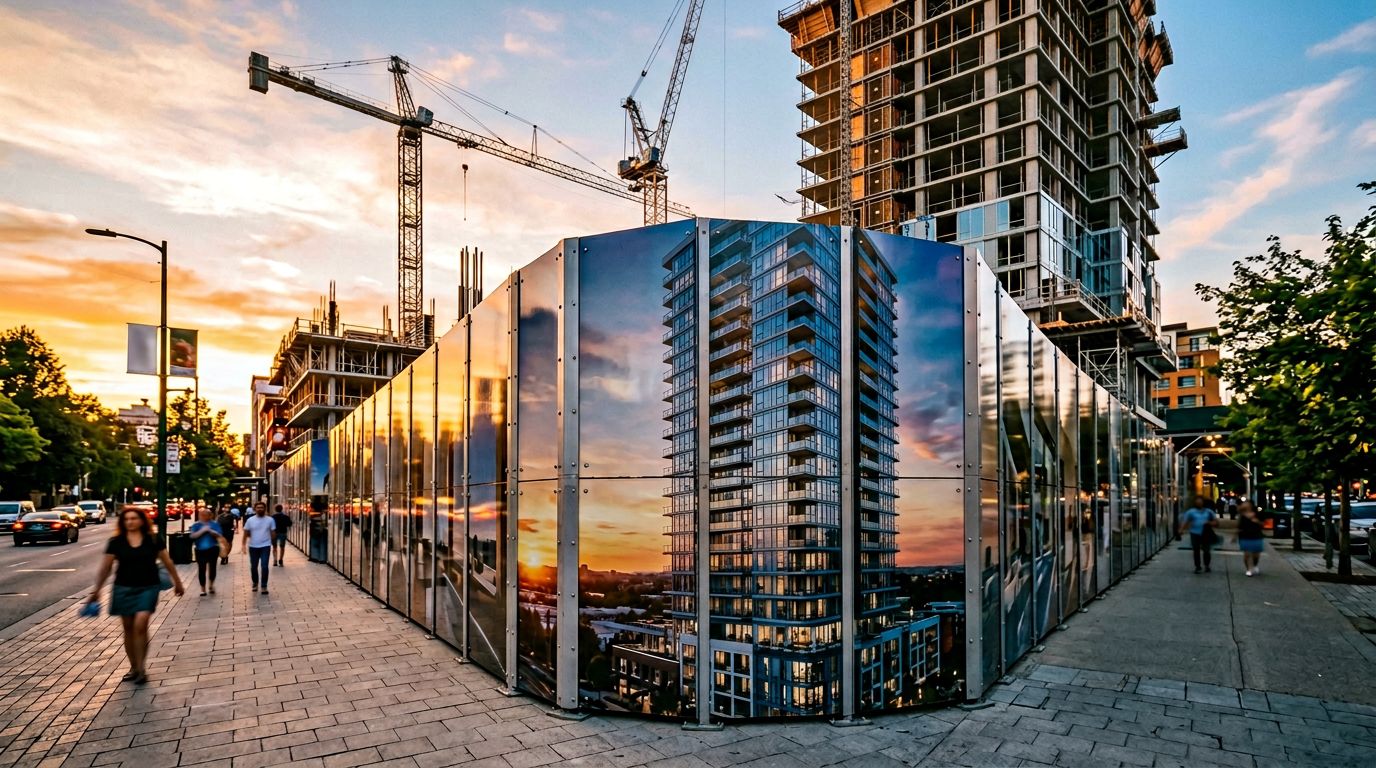
The construction perimeter is more than a safety requirement; in 2026, it is the primary storefront for high-capital real estate projects. For developers managing off-plan sales, physical site hoarding is the first tangible interaction a potential investor has with a project. Using off-plan development hoarding illustrations AI is a standard procedure for organizations that want to connect architectural blueprints with investor confidence. By adding high-fidelity AI visuals to site signage, developers change vacant lots into immersive previews of future luxury living.
Market data from early 2026 shows a major change in buyer behavior. In hubs like Dubai, 65% of residential sales in 2025 were off-plan, representing over 132,000 transactions. This surge links to the improved results of pre-sale marketing. When developers use realistic, AI-generated imagery on site hoardings, they provide the visual proof needed to secure deposits before the first stone is laid. Using advanced visualization tools improves pre-sale marketing efficiency by about 23% among architecture and real estate professionals.
Our Store and the HouseIllustrator platform provide the technical setup to run these visual strategies. By converting site photos or conceptual images into stylized architectural illustrations, developers keep brand consistency across large physical areas. The AI ensures that the hoarding acts as a 24/7 sales agent, whether for a minimalist line illustration of a future penthouse or a detailed villa sketch for a suburban development.
#01The Strategic Importance of Hoarding in 2026 Pre-Sales
Property developers now recognize hoarding boards as important marketing assets. Industry experts at KGK Genix note that well-designed hoarding graphics ensure site security while building brand awareness and community interest. A blank or poorly designed perimeter fence suggests a lack of progress. A perimeter with high-quality off-plan development hoarding illustrations AI indicates a project of prestige and technical skill.
Hoarding design in 2026 focuses on high-resolution output and material durability. Printing on substrates like DIBOND or premium vinyl is necessary to show a polished image. When these materials pair with AI-driven visualizations, they create a clear story of the project’s future. Developers are moving away from generic stock imagery to use site-specific AI renders that reflect the exact architectural plan.
#02Pain Point 1: The high cost and long lead times of traditional 3D rendering
Traditional architectural visualization takes weeks of back-and-forth communication between developers and rendering studios. Costs often reach thousands of dollars per viewpoint. This delay slows the installation of marketing hoardings, causing missed opportunities during early site work.
The AI Solution: Platforms like VividPlan and Visualizee.ai changed this work process. VividPlan’s AI engine converts sketches into client-ready 3D visuals in under 60 seconds. Entry-level pricing starts under $30 per month. This allows developers to create a high volume of visual content for AI property developer off-plan marketing illustrations without overspending. By speeding up production, developers ensure their site hoardings are fully branded as soon as the site opens.
#03Pain Point 2: Visual inconsistency and 'The Uncanny Valley'
Standard 3D renders sometimes look almost real but slightly artificial, which can create a sense of distrust in high-end buyers. Keeping a consistent artistic style across digital brochures, social media, and physical site signage is also a major task for marketing teams.
The AI Solution: Our Store provides a solution through its HouseIllustrator tool. By using specific artistic styles, such as copper linework or classic villa sketches, developers avoid the problems of hyper-realism and choose a curated look instead. This approach works well for luxury developments where an illustrated look suggests quality and exclusivity. Using pre-sell homes with architectural illustrations lets developers sell a lifestyle and a vision rather than just a building. HouseIllustrator’s instant AI transformation ensures every image in the project has the same look, strengthening the developer's brand.
#04Technical Implementation: Blueprint and High-Resolution Signage
Creating off-plan development hoarding illustrations AI requires high output quality. Pedestrians view hoarding boards from both a distance and up close, so the resolution must be perfect. Our Store helps with this by providing high-resolution output. Details of a copper linework illustration stay sharp even when scaled to a 2.4-meter high hoarding board.
The workflow involves three stages:
- Capture: Developers or photographers take high-quality photos of the site or upload architectural models.
- Transformation: Using HouseIllustrator, the team picks a style, like minimalist line illustration, to match the branding.
- Production: High-resolution files are exported for large-format printing.
This process is faster than traditional methods, allowing quick updates as the project changes. For technical details, developers can check our AI architectural illustration from photos guide.
#05The Market in 2026: AI Visualization Tools
The 2026 market offers tools for different developer needs. VirtualSpaces, through its Foursite platform, converts 2D blueprints into photorealistic 3D environments for virtual tours. Visualizee.ai creates pre-construction images for marketing materials quickly.
For developers who focus on artistic branding, Our Store (HouseIllustrator) is a specific choice. While other tools focus on photorealism, HouseIllustrator turns property photos into high-end art. This is important in crowded markets where every developer uses the same 3D look. By offering styles like classic villa sketch or copper linework, Our Store helps developments capture a specific look that appeals to investors.
Using off-plan development hoarding illustrations AI is a practical step for developers who want to improve project visibility and pre-sale rates in 2026. By using Our Store and the HouseIllustrator tool, teams can change site photos into professional architectural illustrations that stand out on the street. Improve your project's physical presence by uploading site photos to HouseIllustrator and choosing an illustration style that matches your development.
Frequently Asked Questions
In this article
The Strategic Importance of Hoarding in 2026 Pre-SalesPain Point 1: The high cost and long lead times of traditional 3D renderingPain Point 2: Visual inconsistency and 'The Uncanny Valley'Technical Implementation: Blueprint and High-Resolution SignageThe Market in 2026: AI Visualization ToolsFAQ