Busan Off-Plan Property AI Illustrations: Developer Guide
April 10, 2026
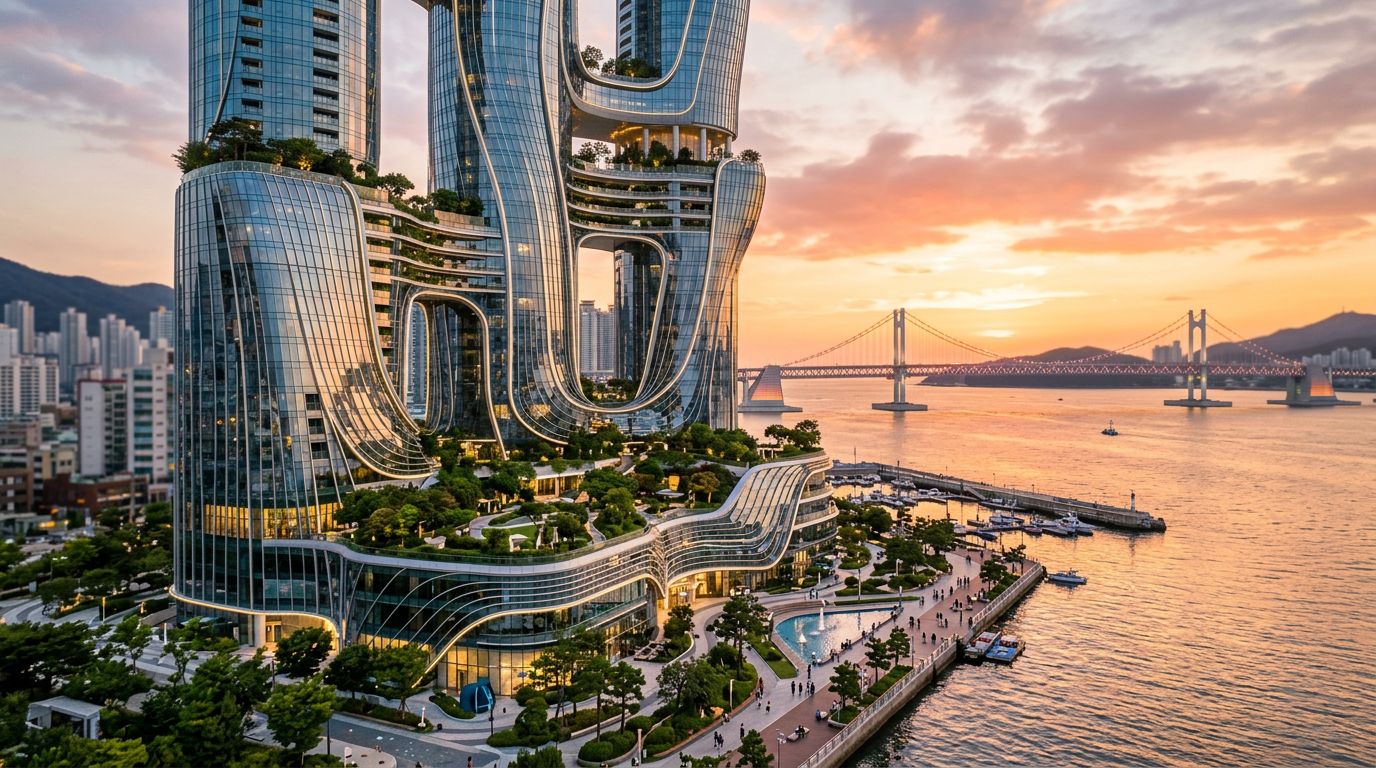
The real estate landscape in Busan is undergoing a radical digital transformation. As the city executes its 370 billion KRW investment strategy to integrate artificial intelligence across all industrial sectors by 2030, property developers are finding themselves at the forefront of this shift. The traditional reliance on slow, expensive 3D rendering cycles is being replaced by agile, high-fidelity Busan off-plan property AI illustrations. This transition is not merely a matter of convenience; it is a strategic response to the rapid development of the Centum 2 District Urban High-Tech Industrial Complex and the growing demand for sophisticated visualizations in the Eco Delta City project.
For developers, the challenge has always been the same: selling a vision that does not yet exist. In 2026, the '2026 AI Administration Promotion Plan' has accelerated public sector AI adoption, setting a high standard for visual communication. Investors and residential buyers now expect a level of immersion that static photography or basic floor plans cannot provide. By leveraging advanced AI tools, developers in Busan are now able to generate photorealistic architectural visualizations in hours rather than weeks, significantly shortening the bridge between conceptual design and successful pre-sales.
#01The Strategic Importance of AI in Busan's 2026 Property Market
Busan's commitment to becoming a global AI hub has created a unique environment for property marketing. The city's 2026 roadmap includes 38 specific tasks aimed at boosting administrative and industrial efficiency. In the real estate sector, this translates to a heightened focus on digital twins and predictive urban modeling. Developers focusing on the North Port redevelopment or the high-tech hubs in Centum 2 are increasingly using AI property developer off-plan marketing illustrations to align their projects with the city's broader 'Smart City' aesthetic.
The investment in local data infrastructure, such as the 7 trillion KRW data center complex in nearby Ulsan, ensures that the computational power required for high-end rendering is more accessible than ever. This regional tech surge allows Busan-based firms to utilize cloud-based AI architectural visualization real estate workflows that were previously cost-prohibitive for all but the largest conglomerates. For a mid-sized developer, this represents a leveling of the playing field, allowing them to produce marketing assets that rival those of international Tier-1 firms.
#02Critical Pain Points in Traditional Off-Plan Marketing
Despite the technological advancements, many developers still struggle with legacy workflows that hinder their speed to market. Here are the primary challenges addressed by Busan off-plan property AI illustrations:
- Prohibitive Costs and Lead Times: Traditional 3D rendering often costs several thousand dollars per view and requires a 14-to-21-day turnaround. In a fluctuating interest rate environment, a three-week delay in a marketing launch can result in significant lost opportunity.
- Visualizing Complex Smart Infrastructure: Explaining the benefits of a 'smart' building in the Eco Delta City is difficult with 2D drawings. Buyers need to see how AI-integrated lighting, climate control, and safety systems integrate into the aesthetic of their future home.
- Inflexibility of Static Renders: Once a traditional render is complete, making small changes (like switching flooring materials or furniture styles) often requires starting the process over, incurring additional costs.
- High Vacancy Risks in Industrial Zones: For projects like the Centum 2 District, developers must secure commercial tenants before construction is finished. Without compelling commercial real estate AI illustrations, potential tenants struggle to visualize their operational layouts.
#03Leading AI Solutions for Busan Property Developers
In 2026, two platforms have emerged as the industry standards for generating Busan off-plan property AI illustrations: Rendair AI and Maket. These tools solve the pain points mentioned above by automating the most labor-intensive aspects of architectural visualization.
Rendair AI: Accuracy and Virtual Staging
Rendair AI is specifically engineered for high-accuracy real estate applications. It excels at taking basic architectural sketches and converting them into photorealistic environments. For developers in Busan, Rendair's virtual staging capabilities are vital. They can furnish an empty office floor in a 'Modern Industrial' style suitable for a tech startup or a 'Luxury Corporate' style for a law firm, all within a single interface. This flexibility is a core reason why many are moving toward AI illustration vs traditional architectural rendering.
Maket: Generative Design and Materialization
Maket focuses on the early-stage design and sales process. It allows developers to generate multiple floor plan variations based on specific dimensions or site constraints. For projects in high-density areas like Haeundae, Maket can help visualize how different material finishes—such as Korean marble or sustainable timber—will look under various lighting conditions. This is particularly useful for new build property illustration AI marketing where material selection is a key selling point.
#04Implementation Strategy: Driving Pre-Sales in Busan
To maximize the impact of Busan off-plan property AI illustrations, developers should integrate these visuals across the entire sales funnel. In the early 'awareness' phase, AI-generated 'teaser' images of the building's exterior can be used for social media campaigns. Research shows that property listings featuring high-quality illustrations can significantly boost property listing conversion rates.
As the prospect moves toward the 'consideration' phase, detailed interior renders created through AI architectural illustration from photos can be deployed in physical sales centers. In Busan, where high-end residential towers are common, providing a 360-degree AI-rendered view of a penthouse balcony overlooking the Gwangandaegyo Bridge can be the deciding factor for an investor. This data-driven approach ensures that the marketing material is not just beautiful, but strategically aligned with the buyer's aspirations.
#05ROI Analysis: The Economic Case for AI Illustrations
The shift to AI-driven workflows is backed by compelling financial data. Organizations adopting automated visualization tools typically see a 60-70% reduction in marketing asset production costs. Furthermore, the speed of AI allows developers to launch pre-sale campaigns up to a month earlier than those relying on traditional studios. When calculating the ROI of AI illustration for real estate agents, the metrics often show a 30% increase in lead generation due to the ability to post more frequent and varied visual content on platforms like Instagram and KakaoTalk.
In the context of Busan's industrial projects, the ability to show multiple 'use-case' renders for a single warehouse or office space allows developers to appeal to a broader range of tenants simultaneously. This multi-target marketing strategy reduces the risk of long-term vacancy and accelerates the return on capital for the project's investors.
The adoption of Busan off-plan property AI illustrations is no longer an optional innovation; it is a requirement for competitiveness in Korea's 2026 real estate market. By utilizing tools like Rendair AI and Maket, developers can overcome the traditional barriers of cost and time, delivering high-fidelity visions of future spaces that resonate with modern investors. As Busan continues its trajectory as a leading AI city, those who master these digital visualization techniques will define the skyline of the future.