Tiny Home AI Illustration Marketing for Real Estate
April 12, 2026
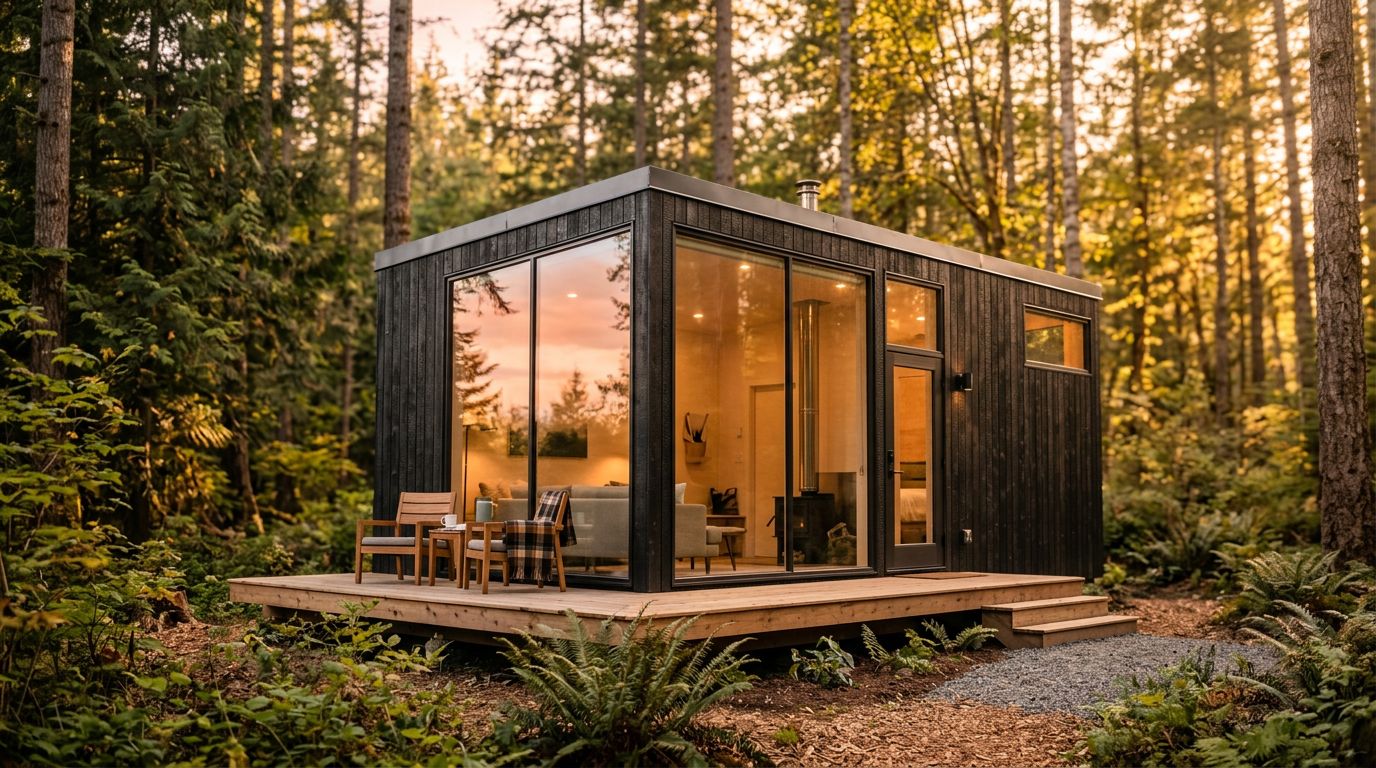
The global tiny homes market is growing fast and is expected to reach a value of $14 billion in 2026. This expansion follows a compound annual growth rate (CAGR) of 6.4% as demand for modular and eco-friendly homes rises. For real estate professionals, success in this market means moving past traditional photography and using smart tiny home AI illustration marketing real estate strategies. High-quality visuals are the main way to attract buyers who care about design and efficient technology. Traditional marketing often makes small houses look crowded in wide-angle photos. By using AI architectural illustrations, agents and builders can show the quality of a home while removing the visual mess of a real-world site. This change to high-resolution rendering creates a clear story, showing tiny homes as premium architectural projects instead of just small houses.
#01The 2026 Tiny Home Market and Projections
Research indicates the tiny home sector will reach $17.73 billion by 2030, and 2026 is an important year for new technology. The growth comes from better modular construction and AI design tools. In this market, companies that do not use advanced visuals may lose customers to tech-focused rivals who create marketing materials instantly. Many groups now focus on automated visuals to get listings live faster after buying a property. Platforms like HomViz offer AI tools for quick style changes. These tools let agents change a home's look for different buyers, such as those wanting a quiet retreat or a city home. This customization used to be too expensive for small builders, but AI tools now allow smaller companies to compete with large corporations.
#02Changing the View of Manufactured Housing
A major problem for tiny homes is the old idea that "prefab" means low quality. Experts at Viral.Properties say the way to succeed in 2026 is to build trust by proving quality. This is done by showing factory precision and energy efficiency. Tiny home AI illustration marketing real estate helps by creating a clean and professional look that photos often lack. Digital renders show the strength and smart features of a home better than a regular photo. By removing messy backgrounds and focusing on the building's lines, these images show clear design intent. This helps buyers see the house as a piece of modern engineering. With tools like HouseIllustrator, agents can turn a photo into a villa sketch or a clean line drawing, which increases the home's value and fits a luxury brand.
#03AI in the Listing Process
AI is now a standard part of how real estate works. Data from AI Magicx shows that over 45% of agents use AI for staging, writing, and visuals. This is common for tiny homes where every inch of space matters. A guide on AI Powered Real Estate Illustrations explains how these tools simplify the work starting with the photo and ending with the brochure. HouseIllustrator helps with this by offering fast transformations. Instead of waiting for a designer, agents can upload a photo and get high-quality illustrations in seconds. This speed allows for fast marketing where a home can appear on social media in several styles within an hour. This speed is vital for new developments where finding leads quickly affects profit.
#04Custom Renders and the Sales Funnel
Finding buyers in 2026 requires personal campaigns across different channels. Market Wiz says the best strategy is a smooth path starting with interest and ending with a deposit. The visual is the primary draw at the top of this funnel. While tools like Tiny Easy create 3D models and renders, AI illustrations offer a way to stand out. Styles like copper linework or villa sketches help a listing look different in a busy feed. These styles create a feeling that 3D renders often lack. By adding these to brochures and ads, developers can target specific interests like off-grid living. See the Real Estate Brochure Design AI Illustrations Guide 2026 for tips on using these assets to get more sales.
#05Technical Benefits of AI Architectural Illustrations
There are also practical reasons to use tiny home AI illustration marketing real estate tools. HouseIllustrator creates high-resolution files for professional marketing. This keeps the lines of the building sharp on a phone or a large banner. The site also has a tool to compare "before" and "after" images to check for accuracy. Security is important for new properties. HouseIllustrator processes photos securely and does not store them without permission. This level of care is required for large real estate firms. These companies also benefit because they can export images in many formats for their existing sales software.
#06Comparing Industry Tools for 2026
The real estate visual market is varied. Platforms like Tiny Easy help with design and quotes, but HouseIllustrator is specifically for marketing and branding. It takes the final photo and turns it into art. This helps agents keep a steady brand across all their listings. When looking at the Best Real Estate Illustration Generators in 2025, the value comes from having many styles. A rural home might look better as a sketch, while a modern unit looks best as a line drawing. Having these styles in one tool saves money on outside designers and gives the marketing team control over the look.
As the tiny home market reaches $14 billion in 2026, listing success depends on fast and high-quality visuals. Using tiny home AI illustration marketing real estate lets professionals avoid the problems of standard photos and present homes as high-end products. HouseIllustrator offers the tools, including copper linework and high-resolution villa sketches, to turn photos into great marketing images in seconds. To improve your next listing and get more leads, use HouseIllustrator AI to create the professional illustrations that define modular living.