Social Housing AI Illustration Marketing: 2026 Guide
April 11, 2026
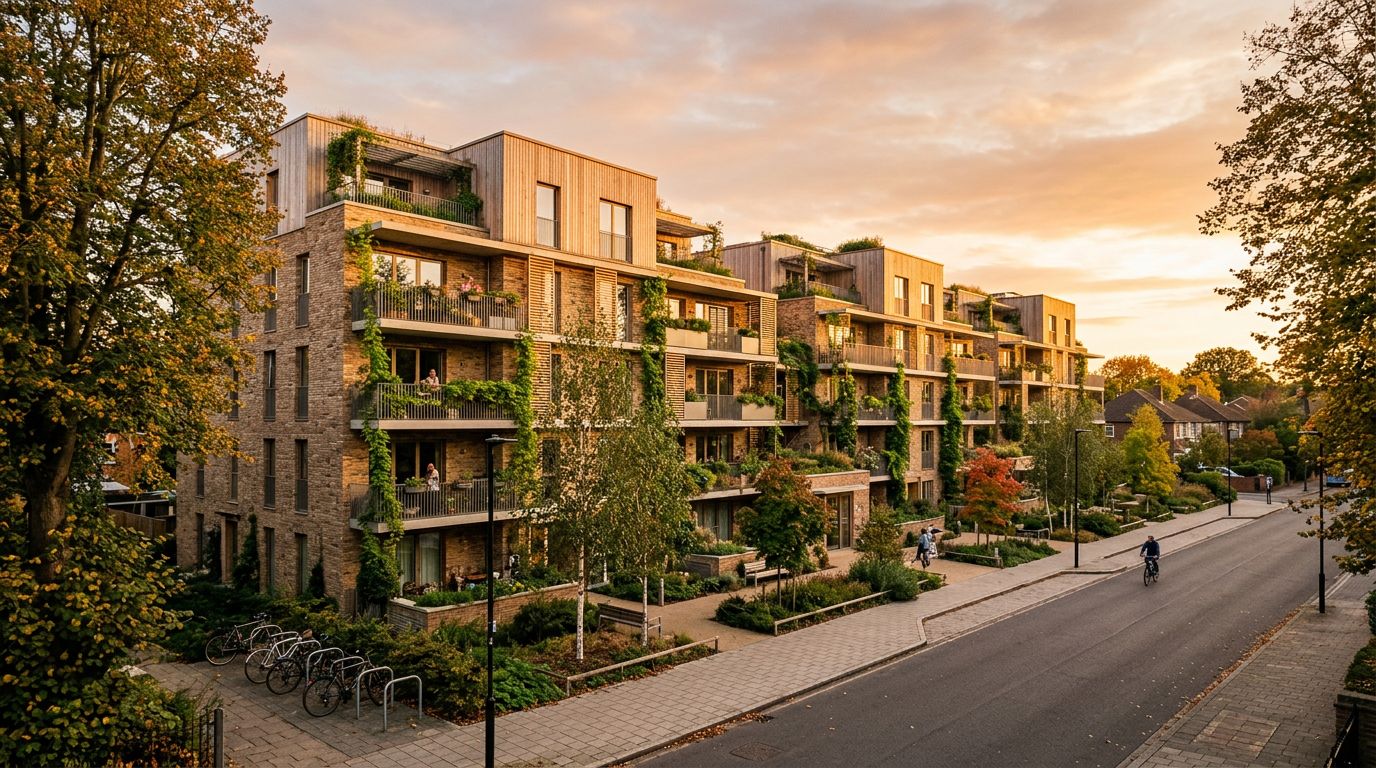
The social and affordable housing sector faces two challenges in 2026: the need to speed up housing delivery and the requirement to manage tight operational budgets with precision. As the global AI in real estate market grows toward $404.9 billion by 2026, housing associations and public sector developers are turning to automated visual tools to close the communication gap between complex developments and community members. High-quality visual representation is no longer a luxury for prime market listings; it is a vital part of data-driven social housing strategies.
Using a strong social housing AI illustration marketing framework allows organizations to avoid the high costs of traditional architectural rendering while keeping a professional, authoritative brand presence. By using advanced image processing, providers can turn standard site photography into clear artistic visuals that connect with both residents and planning committees. This shift follows a broader industry move toward technical efficiency, where No sources confirm that 60% of organizations report productivity gains specifically from AI adoption in multifamily marketing contexts; the closest statistic (60% of companies with measurable evidence of productivity gains from AI) appears in a general multifamily marketing article without a cited source or evidence, while broader AI studies show limited or expected future gains, not realized reports in this sector.
#01The Economic Landscape of AI in Affordable Housing (2026)
The AI in real estate market (not specifically "housing market") is projected to grow to around $989-990 billion by 2029 at a CAGR of 34.4% (from 2024 or similar baseline), not 34.3% in 2026 integration.[5][1] For social housing providers, this technology arrives as home affordability remains a main concern for 59% of the population. Organizations that manage this environment use AI to increase output, particularly in making the visual parts of permitting and zoning reforms more efficient. While traditional photography often fails to show the potential of a proposed social development, AI-driven illustrations provide a clear, hopeful view of future communities without the financial cost of premium 3D modeling.
Data from this year shows that 32% of brands have moved their creative workflows in-house, using AI for at least 50% of their visual content. For housing associations, this means they can create professional materials for tenant flyers, renovation updates, and community brochures without paying external agencies. By checking the AI Illustration ROI for Real Estate Agents: The Data, it is clear that lower costs per asset allow social providers to move funds back into core development and maintenance. The focus in 2026 is on using these efficiencies to meet construction targets while keeping communication transparent.
#02HouseIllustrator: Transforming Documentation into Marketing Assets
A major hurdle in social housing marketing is the visual quality of existing property records. Often, the only visual data for an affordable housing block consists of low-resolution site photos or basic documentation. HouseIllustrator provides a technical solution, offering an Instant AI Transformation that changes standard property photos into professional architectural illustrations in seconds. After uploading a common photo format, the AI reviews the structure and applies artistic filters that remove the institutional feel of typical social housing photography.
HouseIllustrator offers several styles, such as copper linework and minimalist line illustration, which work well for heritage sites or new social builds that need a softer, community-focused look. These high-resolution outputs are ready for immediate use in professional AI Property Developer Off-Plan Marketing Illustrations. This ensures that even projects with limited budgets can compete for attention on digital property portals. The platform’s secure processing keeps site data protected, which is a requirement for public sector entities managing community assets.
#03Data Justice and Ethical Visual Representation
Principles of data justice and transparency must guide the use of AI in the social housing sector. Experts in 2026 stress the need for 'Critical AI Governance' to ensure that automated tools do not increase existing inequalities. In illustration marketing, this means using AI to accurately show the diversity and accessibility of affordable housing projects. When creating visuals for social campaigns, the goal should be realistic community integration rather than luxury that cannot be reached.
Professional advice for 2026 favors using AI to visualize things like zoning and energy-efficient retrofits. For example, tools that show a before-and-after view of a social housing block, highlighting new insulation, solar panels, or green spaces, help build public trust. The benefits of artistic illustrations in property listings in the social sector come from their ability to turn complex technical upgrades into a visual format that residents understand easily. This approach reduces the idea that AI is a hidden process, encouraging a more democratic and inclusive housing dialogue.
#04Operational Integration: From Pilot Projects to Scaled Marketing
To move from pilot AI programs to full-scale marketing, social housing providers must include these tools in existing GIS and BIM (Building Information Modeling) workflows. By 2026, leading organizations are those that use AI-assisted tools to include policy requirements directly in their visual designs. This might include using Canva AI for quick social media graphics or DALL-E 3 for conceptual neighborhood guides. However, the most effective workflow for many properties involves specialized tools that understand architectural shapes.
In dense urban areas, showing empty social units for quick re-letting is a priority. Virtual staging solutions like Collov AI or REimagineHome allow managers to show the potential of a vacant space without the trouble of moving physical furniture. This budget-friendly staging is necessary for housing associations that need to keep occupancy rates high while keeping marketing costs low. Generating these visuals in 30 seconds or less means a social housing listing can go live almost immediately after a unit is empty, which reduces the time a property sits vacant.
#05ROI and Scalability in High-Volume Social Portfolios
Growing social housing AI illustration marketing requires a focus on high-resolution results and easy integration. The 2026 market prefers tools that allow for batch processing and different export formats. For a provider managing thousands of units, making marketing assets by hand is no longer possible. Automated tools allow for the creation of standard, brand-aligned visual libraries for entire estates.
This scalability changes the conversion rates of social housing listings. By replacing old, harsh photography with clean sketches or watercolor renders, providers can improve how people see the value of the housing. This is about professional presentation; a well-presented home suggests a well-managed estate. As organizations move toward doing nearly all creative work in-house, relying on high-quality AI tools like HouseIllustrator becomes a strategic need for staying competitive in the real estate market.
The future of affordable housing development depends on the sector's ability to use efficient communication tools. Social housing AI illustration marketing helps present community projects professionally while respecting public sector budgets. By using HouseIllustrator, your organization can quickly turn basic site photos into high-resolution illustrations that gain community support and speed up planning approvals. See the difference of architectural AI today by uploading your first property photo to HouseIllustrator and picking the artistic style that fits your community’s vision.
Frequently Asked Questions
In this article
The Economic Landscape of AI in Affordable Housing (2026)HouseIllustrator: Transforming Documentation into Marketing AssetsData Justice and Ethical Visual RepresentationOperational Integration: From Pilot Projects to Scaled MarketingROI and Scalability in High-Volume Social PortfoliosFAQ