Real Estate TikTok AI Illustration Content Guide
April 10, 2026
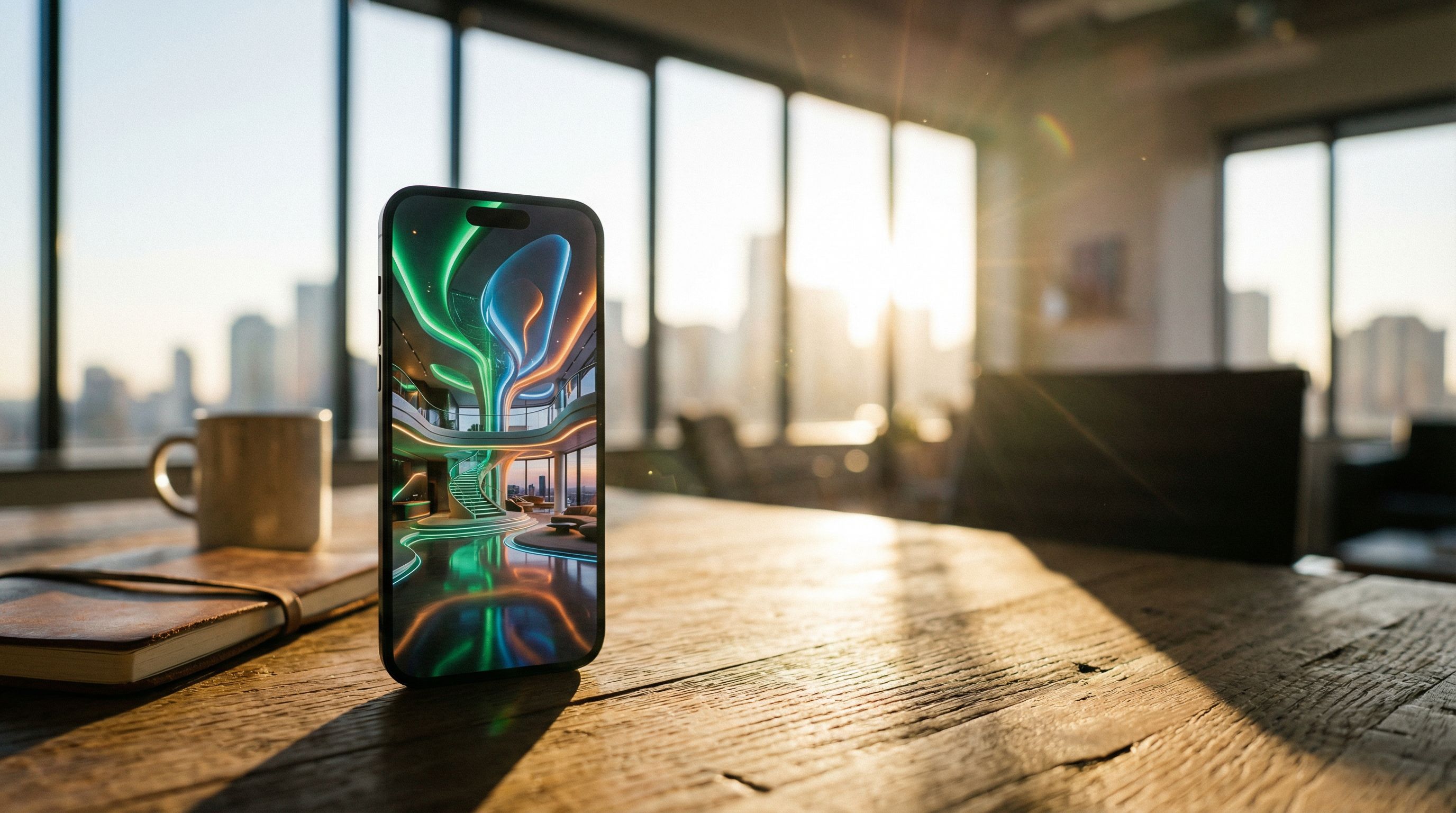
The shift toward short-form video has fundamentally altered how property data is consumed and shared. As of early 2025, TikTok reached approximately 1.6 billion monthly active users globally, with over 135 million in the United States alone. For property professionals, the platform has evolved from a secondary social channel into a primary search engine for market trends, luxury property showcases, and architectural inspiration. Central to this evolution is the integration of real estate TikTok AI illustration content, a strategy that leverages synthetic media to visualize property potential where traditional photography falls short.
Organizations utilizing advanced visualization tools are finding that static images no longer command the attention spans of a mobile-first audience. AI-generated illustrations, specifically those tailored for the vertical format, allow agents to demonstrate renovations, interior redesigns, and off-plan developments with a level of speed and cost-efficiency previously reserved for high-budget production houses. By 2026, the adoption of these tools is expected to be standard infrastructure rather than an experimental marketing tactic, with creators in this space projected to drive significant portions of the $5.7 billion in total TikTok creator revenue.
#01The Strategic Role of AI Illustrations in 2026 TikTok Marketing
In the current market landscape, authenticity and high-quality visuals are not mutually exclusive. Data suggests that 65% of agents now utilize artificial intelligence for social media content creation, often focusing on automating the more labor-intensive aspects of visual production. Real estate TikTok AI illustration content serves as a bridge between a property's current state and its future value. While traditional listing photography documents what exists, AI-powered illustrations allow prospective buyers to see what is possible. This is particularly effective for 'transformation' videos, a format that continues to dominate the platform with over 45 million total views in the real estate category.
Top-performing content in 2026 relies on curiosity-driven narratives. Instead of a simple walkthrough, agents use AI to generate 'sketch-to-render' transitions where a hand-drawn architectural line drawing morphs into a photorealistic 3D render. This satisfies the viewer's desire for process-oriented content while showcasing the technological sophistication of the brokerage. Furthermore, tools like Rendair AI allow for the rapid generation of these assets, enabling a workflow where empty rooms are virtually staged in multiple styles—such as Scandinavian, Modern, or Industrial—within seconds. This versatility ensures that a single listing can be marketed to multiple buyer personas through targeted TikTok content variations.
#02Essential AI Tools for Generating High-Performance Visuals
Selecting the right technical stack is critical for maintaining professional standards while scaling content output. Several tools have emerged as industry leaders for real estate TikTok AI illustration content due to their specific optimizations for property marketing and vertical video formats.
- Rendair AI: This platform excels in realistic virtual staging and renovation overlays. It is frequently used to furnish empty rooms or remove existing clutter via inpainting. For TikTok, its 'sketch-to-render' capability is a primary driver of engagement, allowing agents to show the architectural bones of a property before revealing the finished interior. Pricing typically starts around $19 per month, making it an accessible entry point for individual agents.
- Canva Magic Studio: While more generalized, Canva remains indispensable for rapid social graphics. Its 'Magic Expand' feature is particularly useful for real estate, as it can take horizontal listing photos and intelligently fill in the top and bottom to create a seamless vertical image for TikTok Stories or background plates. At roughly $15 per month, it provides a robust suite for adding branded overlays and 'Just Sold' graphics.
- AutoReel: Specifically designed for the photo-to-video workflow, AutoReel uses AI to convert static listing photos into TikTok-ready videos. It utilizes property storytelling templates that are reportedly 10x cheaper than hiring a traditional marketing agency, making it a favorite for high-volume listing teams in competitive markets like Arizona and Florida.
- Nano Banana: Favored by creative directors, this tool is used for more stylized property upgrades. It allows for iterative prompting to generate highly engaging, artistic renders that stand out against the sea of standard architectural photos.
#03Top Content Formats: Before/After Reveals and Market Stat Animations
To maximize the ROI of real estate TikTok AI illustration content, agents must align their visuals with the platform's viral formats. The 'Before and After' reveal remains the gold standard for engagement. By using AI to stage a dilapidated or empty space, agents can create a dramatic visual hook within the first three seconds of the video. The sudden shift from a bare room to a luxuriously furnished environment triggers the 'curiosity gap' that the TikTok algorithm rewards.
Another highly effective format involves animated market statistics. In 2026, AI tools can analyze live data—such as median price shifts or inventory levels—and instantly generate branded infographics or short animated clips. These videos position the agent as a data-driven expert rather than just a salesperson. When these animations are paired with AI-generated voiceovers that provide local context, they become powerful tools for building authority. Experts recommend a 90/10 production split: allow AI to handle 90% of the visual generation and data collation, but ensure the final 10% involves human curation, local insights, and personal narration to maintain a trustworthy brand voice.
#04Technical Workflow: From Listing Photo to Viral Clip
Implementing a professional-grade workflow for real estate TikTok AI illustration content requires a multi-step approach. The process typically begins with a high-quality base photo, which is then processed through a tool like Rendair AI to create various staged versions or renovation renders. These images provide the visual substance of the video.
Once the visuals are secured, agents use ChatGPT or similar LLMs to script the narration. However, caution is advised against using raw AI scripts; experts warn that the 2026 algorithm increasingly penalizes 'low-effort' AI content that feels generic. The script should be edited to include specific neighborhood facts or recent local sales data. Next, tools like Opus Clip are used to repurpose longer property tours into short, punchy vertical clips. These tools automatically add captions and reframe the footage to keep the subject centered. The final step involves polishing in a tool like Canva or CapCut, where trending music and high-contrast thumbnails are added to ensure the content is optimized for the 'For You' page. This integrated workflow allows a single listing to produce a week's worth of unique social content in under an hour of active work.
#05Geographic Customization: Tailoring Visuals for Specific Markets
The effectiveness of real estate TikTok AI illustration content often depends on its relevance to specific geographic trends. In high-stakes markets like London or New York, the visual style must match the local architectural vernacular. For example, AI illustrations for Victorian-era renovations in London require different lighting and texture parameters than a luxury villa render in Dubai. Agents are increasingly using AI to create hyper-targeted content; a property in Mayfair might be rendered in a classic, heritage-inspired style to appeal to international investors, while a loft in Brooklyn might be staged with an industrial-modern aesthetic.
Furthermore, regional performance data shows that TikTok users in different cities engage with different content lengths. Market-specific AI tools now analyze these localized trends to suggest optimal video durations and caption keywords. For instance, 'prime London property' hashtags often perform better with slightly longer, more educational voiceovers, whereas luxury markets in Florida or California see higher engagement with fast-paced, music-driven montages. By utilizing localized data, agents can ensure their AI-generated illustrations resonate with the specific buyer pool of that region.
#06The Authenticity Oasis: Balancing AI Polish with Human Energy
As AI-generated content becomes more prevalent, a trend known as 'AI fatigue' has begun to emerge. In response, TikTok's 2026 algorithm has been updated to favor content that provides an 'authenticity oasis.' This means that while the visuals can be high-end AI illustrations, the delivery should feel human and unpolished. Experts like creator strategist Gigi Robinson suggest that 'unpolished energy'—such as an agent filming a quick intro on their phone before cutting to a high-end AI render—outperforms glossy, fully synthetic videos.
Trust is the primary currency in real estate. Organizations that disclose their use of AI—for example, by adding a small caption stating 'Virtually staged with AI to show potential'—actually report higher levels of user trust and engagement. This transparency prevents the feeling of a 'bait and switch' when a buyer views the property in person. The goal of real estate TikTok AI illustration content should be to accelerate creativity and visualize possibilities, not to deceive. By blending the precision of AI visuals with the warmth of a local expert's personality, agents can create a social presence that is both technologically advanced and deeply relatable.
#07Measuring ROI and Conversion in the Short-Form Video Space
Ultimately, the success of real estate TikTok AI illustration content is measured by its impact on the bottom line. Data from 2025 and 2026 indicates that properties marketed with a combination of traditional photos and AI-illustrated videos see a significantly higher inquiry rate. Short-form video has been shown to outperform static posts in terms of both click-through rates and lead quality. Prospective buyers who have viewed a 3D-staged TikTok tour are often further along in the decision-making process because they have already visualized themselves living in the space.
For developers and agents selling off-plan properties, the ROI is even more pronounced. Being able to showcase a finished luxury residence before a single brick is laid is invaluable for pre-selling units. Tools like AutoReel provide detailed analytics, allowing agents to see exactly which frames of their AI content are causing viewers to drop off or click the 'link in bio.' This level of granular data allows for constant iteration, ensuring that marketing budgets are spent on the content formats that drive the highest number of qualified leads. In the competitive landscape of 2026, the ability to rapidly produce and refine high-quality visual content is the key differentiator for top-performing real estate professionals.
Mastering real estate TikTok AI illustration content is no longer optional for professionals seeking to dominate the short-form video space. By integrating specialized tools like Rendair AI and AutoReel into a human-centric marketing strategy, agents can produce high-impact visuals that drive engagement and convert viewers into clients. The key to success lies in balancing technical precision with local authenticity, ensuring that every AI-generated frame serves to build trust and highlight property potential. As the platform continues to grow, those who leverage these automated workflows will maintain a significant competitive advantage in the 2026 property market.
Frequently Asked Questions
In this article
The Strategic Role of AI Illustrations in 2026 TikTok MarketingEssential AI Tools for Generating High-Performance VisualsTop Content Formats: Before/After Reveals and Market Stat AnimationsTechnical Workflow: From Listing Photo to Viral ClipGeographic Customization: Tailoring Visuals for Specific MarketsThe Authenticity Oasis: Balancing AI Polish with Human EnergyMeasuring ROI and Conversion in the Short-Form Video SpaceFAQ