AI Illustrations for Prefab Housing Marketing
April 12, 2026
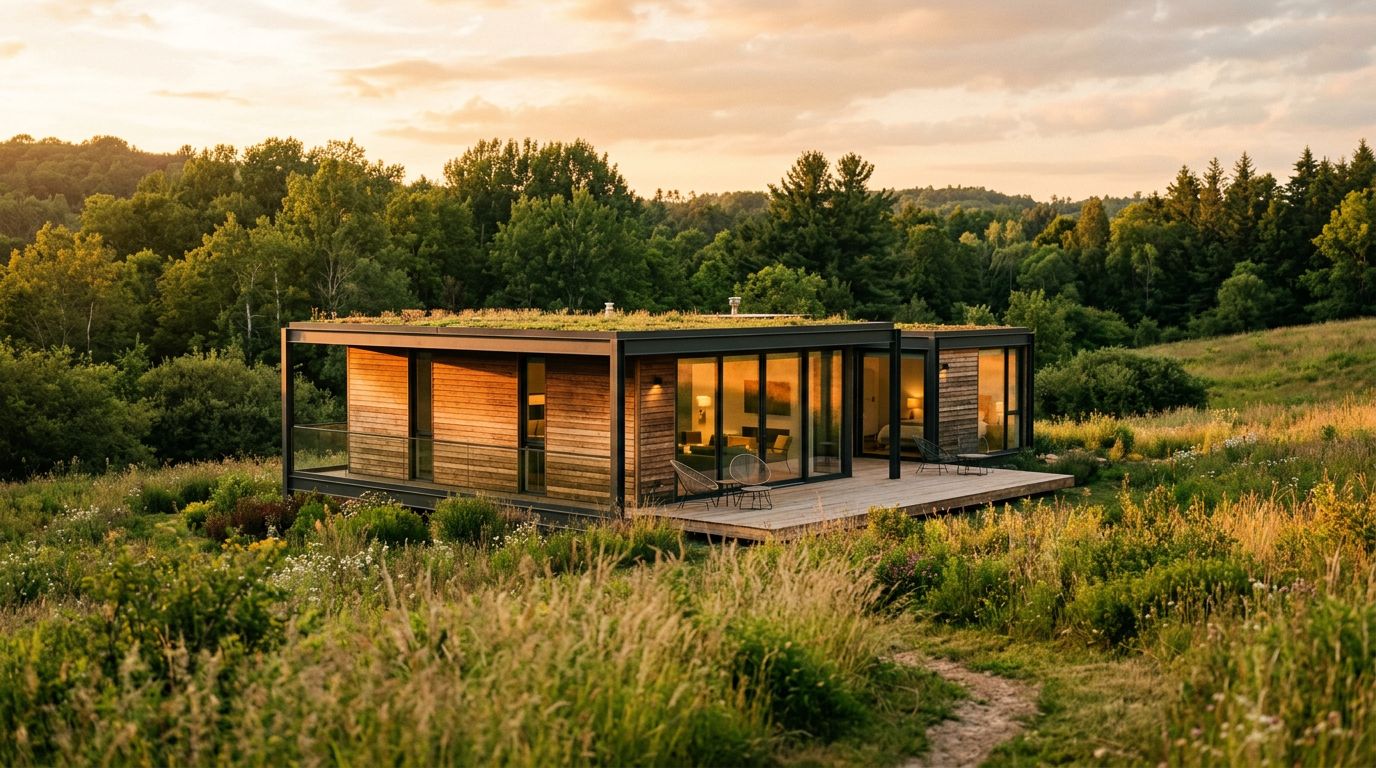
The global prefabricated housing sector is seeing a major structural shift, with market valuations projected to hit USD 153.79 billion by 2026. This growth is supported by a compound annual growth rate (CAGR) of 7.6%, driven by the need for sustainable and cost-effective homes. However, as the industry grows, developers and real estate professionals face a challenge: overcoming the old stigma attached to modular construction. Standard photography often fails to show the architectural detail of modern prefab units, frequently appearing sterile in raw site photos.
To fix this, industry leaders are adopting prefab housing AI illustration marketing. By using advanced image synthesis, firms can turn property photographs into artistic renders that focus on design intent instead of the construction method. Tools like HouseIllustrator allow marketing teams to create high-resolution illustrations in seconds. This provides a versatile alternative to expensive 3D modeling. This approach lets developers present a lifestyle vision, using artistic styles to build an emotional connection with buyers that technical specs cannot achieve alone.
#01The Strategic Shift to AI-Driven Visualization in 2026
By 2026, the market for manufactured housing will demand more than standard digital listings. Business leads and marketing directors are moving toward immersive virtual experiences to set their inventory apart. Data from Research and Markets shows that the rise in prefabricated construction is tied to digital-first marketing. The goal is no longer to simply show a structure; it is about building trust through high-quality visual storytelling.
Experts recommend AI-driven design and production to match marketing with modern manufacturing. For example, companies like XHOME use robotic assembly and AI-driven design to lower costs. This technical progress should be reflected in marketing materials. High-resolution illustrations provide a polished look that site photography often lacks. By using benefits of artistic illustrations in property listings, developers can hide unattractive site elements while showing the clean lines and materials of the modular unit. This shift ensures marketing assets are as modern as the housing they represent.
#02Overcoming Modular Stigmas Through Artistic Rendering
The 'trailer home' or 'temporary' reputation remains a hurdle for the prefab industry. In 2026, successful marketing strategies focus on rebranding modular homes as high-end, sustainable, and architecturally significant. Prefab housing AI illustration marketing helps by removing the 'factory' feel and replacing it with an 'architectural' look. When a photo of a new module is processed through HouseIllustrator, it can become a classic villa sketch or a minimalist line drawing. These styles suggest custom craftsmanship and permanence.
Techniques like copper linework or charcoal renders move the viewer's attention from the assembly method to the design and environment. This change is important for luxury prefab developers targeting eco-conscious, high-net-worth buyers. Instead of showing a buyer a box on a truck, marketers present a piece of art representing a future home. This change in perspective helps speed up sales and supports higher prices in the modular sector.
#03Technical Implementation: From Site Photos to Marketing Renders
The technical process for prefab housing AI illustration marketing is now much faster. In the past, creating high-quality architectural renders took weeks of work from specialized agencies. In 2026, the process is almost instant. The work starts with a photo upload of a prototype or a finished unit. HouseIllustrator's AI looks at the structure, lighting, and depth of the image to recreate it in a chosen artistic style.
This technology is useful for developers managing AI property developer off-plan marketing illustrations. By changing a basic photo of a display home into different illustrations, such as watercolor or oil painting styles, marketing teams can create a month of social media and brochure content in one afternoon. High-resolution output keeps these visuals sharp on digital screens and in print. Also, secure and private processing ensures that designs stay protected during the change, which is a requirement for technical leads in construction.
#04Cost-Efficiency and Scalability in Modular Marketing
Standard architectural visualization often costs hundreds or thousands of dollars per image. For a developer with many modular designs, these costs are too high. Modern AI tools have changed this pricing model. Solutions like Nano Banana 2 have shown that realistic renders can be made for $0.30 per image with 30-second turnaround times. While those tools focus on realism, prefab housing AI illustration marketing focuses on branding and style, offering similar speed.
HouseIllustrator allows marketing departments to work quickly. Instead of waiting for a 3D artist to change a scene, a user can instantly change styles. They can move from a minimalist line drawing for a studio to a classic villa sketch for a family home. This speed is helpful for following market trends or updating catalogs. When production costs drop, the return on investment for marketing increases. Teams can test different visual styles on landing pages to see which artistic render gets the best results from their audience.
#05Omnichannel Content Strategy for Prefab Developers
Consistent visuals are the base of brand authority. Prefab housing AI illustration marketing allows for a unified look across all channels, from digital newsletters to site signs. Adding these illustrations to AI illustration for real estate email campaigns provides a break from text-heavy and photo-cluttered emails. An elegant line drawing of a prefab unit often gets more clicks because it looks like 'designed' content rather than a basic sales pitch.
On-site, developers can use these high-resolution illustrations for billboards and window displays. This creates a single story from the first time a prospect sees the site until they get a brochure. The 'Before/After' tool on HouseIllustrator can also be used in sales centers to show buyers how a module can look like a piece of architecture. This transparency helps build trust by showing that while construction is efficient and factory-made, the final result is an artistic achievement. By using high-quality AI illustrations in social media, email, and print, prefab brands can lead the 2026 housing market.
The future of manufactured housing depends on the quality of its marketing. As the market hit the $153 billion mark in 2026, the organizations that grow will be those that use prefab housing AI illustration marketing to change how the public sees them. By going beyond basic photography and using the artistic potential of AI, developers can turn modular units into desirable lifestyle products. To see how your property photos can be turned into professional architectural artwork, try the transformation features of HouseIllustrator today to improve your next modular development campaign.