Munich Property Marketing AI Illustrations: 2026 Guide
April 11, 2026
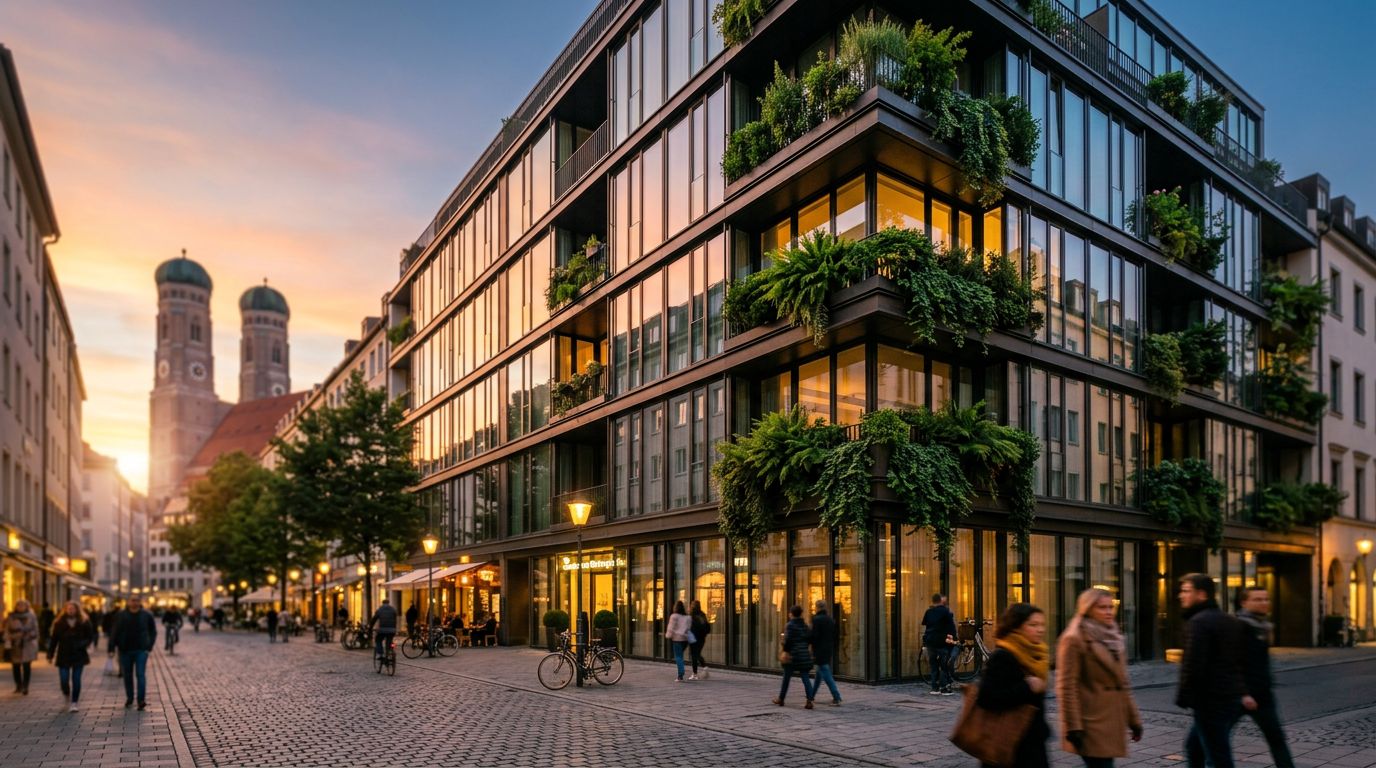
The Munich real estate sector remains one of the most competitive markets in Europe, driven by its status as a global hub for technology, automotive manufacturing, and finance. During 2026, the demand for high-quality visual assets has shifted from standard photography toward more evocative, artistic representations. Real estate professionals are increasingly adopting Munich property marketing AI illustrations to present their listings in a crowded field where traditional imagery often fails to capture the unique architectural style of the city’s various districts, including the historic charm of Altstadt-Lehel and the modern lines of Maxvorstadt.
Technological advancements have moved beyond simple filters to advanced AI-powered transformation tools. Organizations using these automated systems are seeing improvements in engagement metrics and lead quality. By converting standard property photographs into high-end architectural drawings, agents can present a vision of a property that resonates emotionally with high-net-worth buyers and investors. This guide examines the technical, legal, and strategic frameworks for implementing AI-driven illustrations in the Munich market.
#01The Evolution of Property Visualization in Munich’s 2026 Market
In 2023, Munich's AI startup ecosystem attracted €280 million in funding, signaling a large shift toward automated creative solutions. By 2026, this investment has matured into a strong collection of specialized tools for the real estate industry. Munich property marketing AI illustrations are no longer a niche curiosity and have become a standard component of the modern agent's toolkit. The German real estate AI sector, which generated €110 million in revenue back in 2023, has expanded as firms prioritize marketing automation that drives results.
Modern marketing executives work in an environment where 68% of CMOs prioritize AI as their primary focus. In Munich, this manifests as a move away from pure photography, which can often look cold or fail to hide minor aesthetic imperfections. Instead, tools like HouseIllustrator allow agents to take an existing photo and apply styles such as classic villa sketches or minimalist line illustrations. This process helps buyers focus on the structure and potential of a property rather than the current furniture or decor. These high-resolution outputs are essential for the high-gloss brochures and large-scale signage common in the luxury developments of Bogenhausen and Nymphenburg.
#02Managing the EU AI Act and Transparency Requirements
Operating within the European Union in 2026 requires strict adherence to the EU AI Act. For real estate professionals using Munich property marketing AI illustrations, transparency is mandatory. Article 50 of the Act, along with the Code of Practice finalized in late 2025, requires that AI-generated or manipulated content be clearly labeled. This is particularly important in consumer-facing real estate advertisements to prevent misleading potential buyers.
Technical leads must ensure that all AI-generated visuals include machine-readable metadata that identifies the content as AI-augmented. Experts recommend embedding detectable markers directly into the property illustrations. Furthermore, while AI can automate the heavy lifting of image transformation, the Munich Local Court has established clear precedents regarding copyright. Purely AI-generated outputs often lack legal protection under German law. To secure intellectual property rights, the workflow must involve significant human creative input. Using HouseIllustrator as a subordinate tool, where a human selects specific artistic styles like copper linework and performs post-generation edits, is the recommended path to ensuring both compliance and copyrightability.
#03Strategic Integration of HouseIllustrator in the Marketing Stack
For a Munich-based agency, the most effective marketing stack combines specialized AI tools to increase efficiency. HouseIllustrator is a key component by offering instant AI transformation of property photos into professional-quality illustrations. This replaces the need for expensive, time-consuming hand-drawn architectural renders which previously took weeks to produce. The tool’s three-step workflow of uploading, choosing a style, and downloading allows marketing teams to move from photo capture to brochure-ready asset in seconds.
When integrated with other platforms, the benefits are clear. For instance, an agent might use Matterport to create a 3D digital twin for remote viewings, while simultaneously using HouseIllustrator to generate an elegant architectural illustration from photos for the cover of a physical marketing brochure. This multi-channel approach caters to different buyer personas, such as the data-driven investor who wants the 3D tour and the emotive buyer who is drawn to the artistic sketch. The ability to choose from multiple styles, such as 'Classic Villa Sketch' or 'Minimalist Line Illustration', ensures that the visual output matches the specific branding of the agency and the character of the property.
#04Economic Impact and ROI of AI-Driven Visuals
The financial argument for adopting Munich property marketing AI illustrations is strong. Data from Munich-based AI agencies suggests that personalized content generation and visual automation can yield an ROI of up to 544% over a three-year period. In the context of real estate, this return is driven by reduced production costs and faster sales cycles. Traditional architectural rendering for a single property can cost thousands of Euros and involve multiple feedback loops. In contrast, AI projects for marketing illustrations typically range from €5,000 to €20,000 for large-scale enterprise deployments, while SaaS solutions provide even more cost-effective access for individual agents.
By using AI property developer off-plan marketing illustrations, developers in Munich can pre-sell units more effectively. An artistic render often feels more attainable and dream-like than a cold 3D CAD drawing, making it a powerful tool for off-plan sales in areas like the Werksviertel. The high-resolution output provided by tools like HouseIllustrator ensures these images remain crisp even when printed on site hoarding or large-scale billboards, maximizing the visibility of the development during the construction phase.
#05Authenticity and the Munich Style in AI Design
A common critique of AI in creative fields is the loss of local authenticity. In Munich, where residents are protective of their city’s aesthetic, as seen in the 2026 debates over AI use in Oktoberfest poster competitions, it is vital to blend AI efficiency with local market understanding. Effective Munich property marketing AI illustrations should not look generic. They must reflect the specific light, materials, and architectural styles prevalent in the region.
Using the style selection features in HouseIllustrator, agents can choose linework and textures that complement the Bavarian context. For a historic manor on the outskirts of the city, a 'Classic Villa Sketch' provides a sense of heritage and permanence. For a sleek new apartment in Schwabing, a 'Minimalist Line Illustration' emphasizes modern urban living. This level of customization prevents the uncanny valley effect and ensures that the marketing materials feel grounded in the local environment. Agents should use the interactive before and after comparison tools to ensure that the AI transformation maintains the structural integrity of the property while improving its artistic appeal.
#06Technical Best Practices for 2026 Real Estate Professionals
To achieve the best results with Munich property marketing AI illustrations, technical leads should follow established industry best practices. First, the quality of the input photo remains a priority. Although HouseIllustrator uses AI to analyze and transform images, high-resolution source files lead to superior artistic outputs. Second, secure and private processing must be a priority. Using platforms that process photos securely ensures that sensitive property data is protected, which is a key requirement for high-end luxury real estate marketing illustrations.
Finally, professionals should attend industry events like the MTM SPECIAL AI & MEDIA conference in Munich to stay updated on the latest trends in German media and real estate tech. As the market projected for AI in Germany reaches €37 billion by 2031, staying ahead in tool selection and workflow optimization is essential. Implementing a standardized workflow where photos are uploaded, transformed into specific brand-aligned styles, and exported for various marketing channels allows an agency to scale its content production without increasing its headcount.
The integration of Munich property marketing AI illustrations is a strategic necessity for real estate professionals looking to maintain a competitive edge in 2026. By balancing the speed and efficiency of AI with the creative oversight required by German law and the EU AI Act, agencies can produce superior marketing assets that drive real business results. HouseIllustrator provides the ideal platform for this transformation, offering a secure, high-resolution, and style-diverse solution that turns standard property photos into compelling architectural art. To improve your Munich property listings and create brochures that stand out in a sophisticated market, explore the transformation capabilities of HouseIllustrator today.
Frequently Asked Questions
In this article
The Evolution of Property Visualization in Munich’s 2026 MarketManaging the EU AI Act and Transparency RequirementsStrategic Integration of HouseIllustrator in the Marketing StackEconomic Impact and ROI of AI-Driven VisualsAuthenticity and the Munich Style in AI DesignTechnical Best Practices for 2026 Real Estate ProfessionalsFAQ