HMO Property Marketing: AI Illustration Guide
April 15, 2026
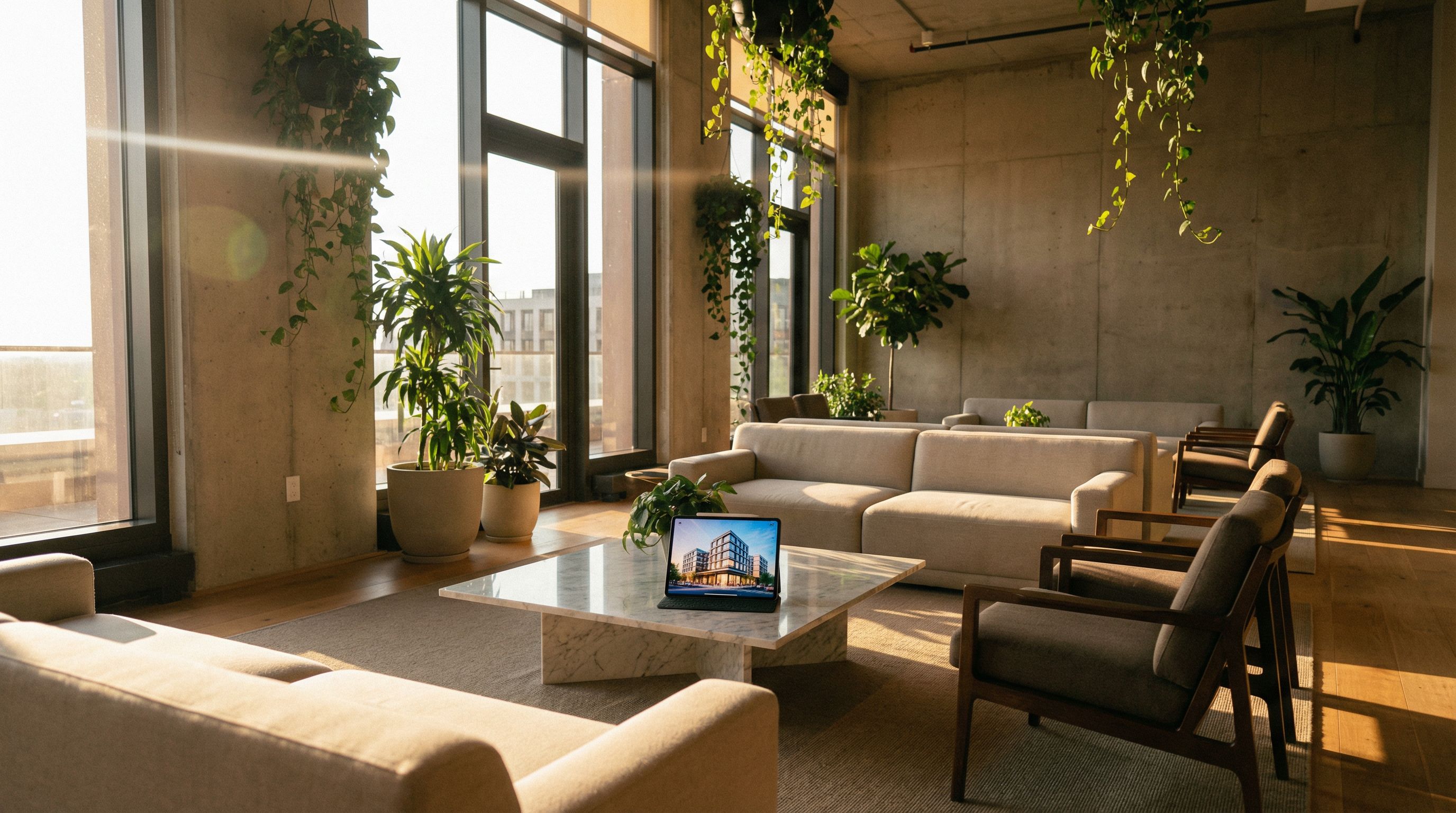
The market for Houses in Multiple Occupation (HMO) and co-living sectors now operates in a visual-first economy. As of 2026, success in high-density rental markets depends on the ability to distinguish assets within crowded digital portals. Traditional photography often fails to capture the lifestyle potential of professional HMOs, especially when existing tenant clutter or ongoing renovations hide the architectural value. HMO property marketing AI illustration is now a requirement for landlords and portfolio managers.
Organizations using automated visualization tools report clear efficiency gains, including a 25% reduction in marketing costs and a 12% increase in property management revenue. By changing standard property photos into high-quality architectural illustrations, owners can present a high-end brand style that attracts both premium tenants and investors. This guide looks at the technical applications, market data, and plans for using AI-driven illustrations in the HMO sector.
#01The Strategic Shift: AI Adoption in 2026 Property Marketing
Market data from early 2026 shows a rapid increase in AI use across the real estate sector. AI adoption in property marketing rose from 20% in 2024 to 58% by 2025, driven by the need for affordable, fast content creation. For HMO operators, this change is important. The high turnover in room-by-room rentals requires a constant supply of fresh media that standard photography cannot always provide at scale.
Professional HMO landlords are moving away from basic virtual staging toward stylized illustrations. While the choice between AI virtual staging and architectural illustration remains a common topic, the artistic approach offers a unique branding advantage. Illustrations remove the clinical feel of empty rooms, replacing them with a style that shows structural potential without the high costs of physical staging. Expert data suggests that photorealistic furnished images created via AI tools enable agents to produce content in under sixty seconds, a pace that traditional rendering firms cannot match.
This efficiency involves both speed and market positioning. In cities like London, Manchester, and Dubai, where the HMO market is competitive, an illustrated portfolio shows a level of professionalism and attention to detail that sets a developer apart. The 'Age of the AI Agent' is now a functional reality where visuals dictate lead volume.
#02Maximizing Investor ROI with AI-Generated Visuals
For HMO developers seeking capital or selling turnkey assets, the quality of the investment prospectus is the main priority. Technical leads and business owners need clear, high-resolution visuals that reflect the project's scale. HouseIllustrator provides the high-quality output needed for professional pitch decks and physical marketing materials, ensuring that every detail of a property’s exterior and layout is presented clearly.
Data from recent case studies, such as the Ohana Hills campaign, shows the power of AI-driven marketing, which resulted in an 800% increase in sales-qualified leads (SQLs) within six months. While that specific project focused on luxury developments, the principle applies to the HMO sector. By using HMO property marketing AI illustration to create clean linework or classic villa sketches, landlords can build trust with investors. These illustrations show the potential of a finished, high-yield asset even when the starting point is a derelict purchase.
Using AI tools also leads to a more predictable ROI. Traditional architectural rendering can cost thousands of dollars per project and take weeks. In contrast, AI software allows for the fast creation of multiple styles, such as minimalist line or charcoal ink, at a lower cost. This allows developers to test different branding styles on social media and property portals to see which one attracts their target demographic.
#03Technical Workflow: Creating Professional Illustrations from Photos
Adding AI illustrations into a property marketing process requires a clear plan. The process starts with high-quality source photography. While AI can improve and change images, the architectural lines must be clear for the best results. Tools like HouseIllustrator use a simple three-step process where users upload a photo, select a style, and download the image. This simplicity is important for property managers who need to update many room listings at once.
Once a photo is uploaded, the AI analyzes the structure and depth. Users can then choose from various artistic styles, including classic villa sketches or minimalist line illustrations, to match their brand identity. For a professional co-living space, a minimalist line style might suggest a modern, clean atmosphere. A student HMO in a heritage building might benefit from a style that emphasizes the property’s history and character.
Security is a priority for technical leads. When choosing a platform, it is important to use services that provide secure and private processing. HouseIllustrator ensures that property photos are processed safely and never stored without permission, addressing privacy concerns associated with cloud-based AI tools. The ability to perform a before/after comparison via an interactive slider also helps marketing teams check the accuracy of the image before downloading the high-resolution file for serviced apartment marketing and HMO brochures.
#04Optimizing Listing Conversion on Global Property Portals
Portals like Rightmove, Zillow, and PropertyFinder are full of low-quality, wide-angle photography that often misrepresents small HMO rooms. HMO property marketing AI illustration provides a way to stand out. By using an artistic render as the main image on a portal listing, landlords can capture the attention of users who ignore standard room photos.
Best practices for 2026 involve a combined approach. While internal room photos provide transparency, the main image should be a high-impact illustration showing the building's facade or a stylized floor plan. This approach has been shown to increase click-through rates (CTR) by providing a high-quality feel to basic rental listings. Experts recommend combining these AI-generated visuals with automated descriptions and multi-channel strategies for a smooth user experience.
This is very effective for off-plan HMO developments. When a building is still under construction, there are no photos to show. AI tools can take a builder’s snapshot or a basic CAD drawing and change it into a beautiful illustration that helps pre-let the building months before completion. For more information, refer to our AI architectural illustration guide.
#05Market Overview: Top Tools for HMO Visuals in 2026
The market for property visualization has matured, with several companies offering tools for different needs. HouseIllustrator is a leader for those looking to change existing photos into artistic illustrations. Its variety of styles and high-resolution output make it a standard choice for premium property brochures.
Other notable tools in the 2026 market include Canvora, which provides a platform for on-brand visuals across many formats, and Calico AI, which focuses on generating marketing content and AI avatars for property videos. PropertyBox offers a suite for estate agents to quickly deploy enhanced photography and floor plans.
For HMO landlords, the choice of tool depends on the marketing goal. To create a consistent, branded look across a large portfolio, HouseIllustrator’s simple integration and artistic styles offer a path to a professional look. Pricing structures for these tools vary, as some offer flexible content creation without upfront costs, so decision-makers should evaluate tools based on their specific high-resolution requirements for print and digital campaigns.
#06The Future of HMO Branding: Trends for 2026 and Beyond
As we look toward the end of 2026, the trend in HMO marketing is moving toward personalization. AI now creates specific images tailored for specific audiences. For example, an HMO landlord might use a minimalist line illustration for a LinkedIn campaign targeting young professionals and a watercolor style for a Facebook ad aimed at students.
Predictive analytics are also starting to play a role. By analyzing which styles result in the highest conversion rates for specific property types, AI tools can suggest a visual strategy before a listing goes live. This data-driven approach removes guesswork, allowing for more profitable portfolio growth.
Automation will continue to improve the process from listing to lead. Platforms are increasingly using AI to automate descriptions and generate social media content directly from the illustrations. The focus has shifted from simply having a photo to finding the right visual asset for every part of the tenant journey. This results in an efficient process that requires less manual work and delivers higher quality results.
The use of HMO property marketing AI illustration is an essential part of a competitive real estate strategy in 2026. By using HouseIllustrator to change standard property photos into high-quality architectural artwork, HMO operators can reduce marketing costs, increase revenue, and attract high-quality tenants and investors. To improve your portfolio and simplify your visual marketing, begin using HouseIllustrator's AI tool today to see how professional illustrations can change your property's market presence.
Frequently Asked Questions
In this article
The Strategic Shift: AI Adoption in 2026 Property MarketingMaximizing Investor ROI with AI-Generated VisualsTechnical Workflow: Creating Professional Illustrations from PhotosOptimizing Listing Conversion on Global Property PortalsMarket Overview: Top Tools for HMO Visuals in 2026The Future of HMO Branding: Trends for 2026 and BeyondFAQ