Geneva Property Marketing AI Illustrations: 2026 Guide
April 11, 2026
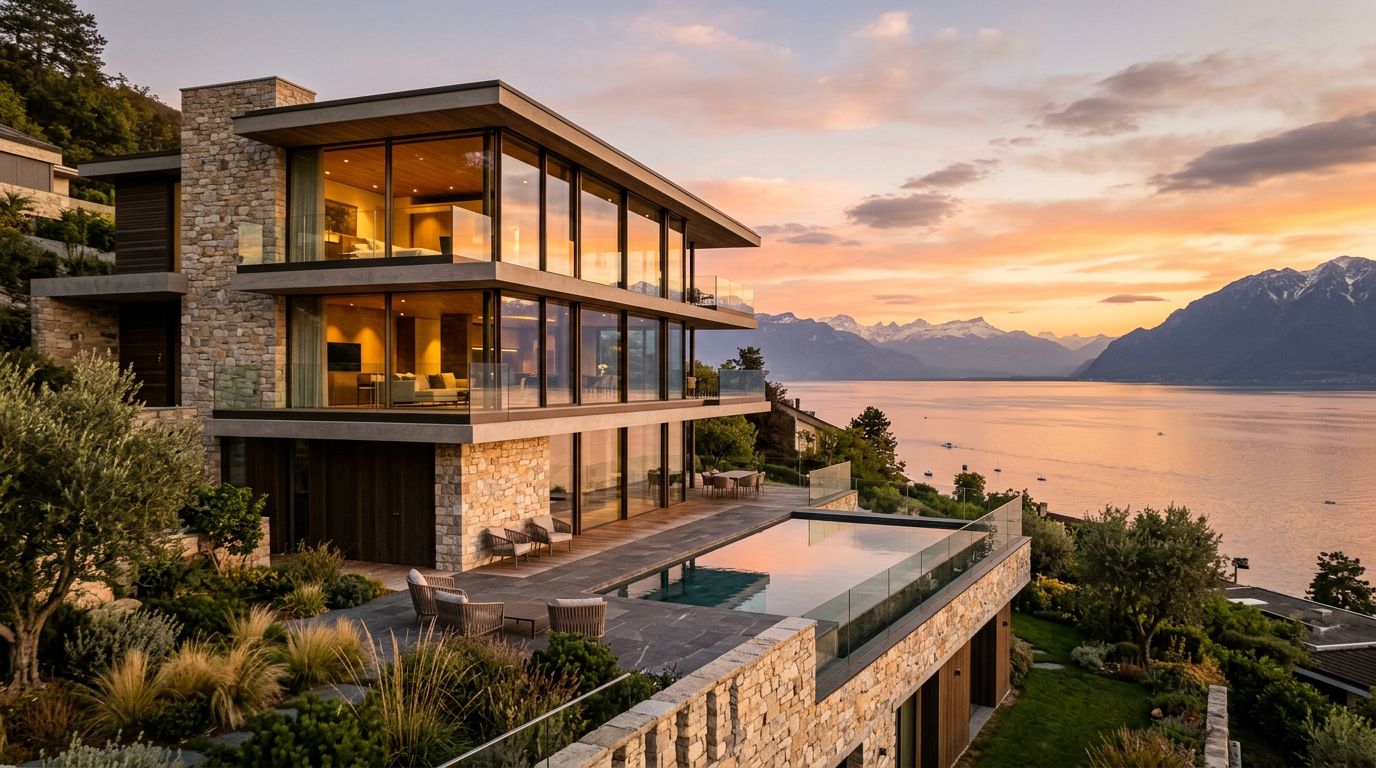
The real estate sector in Geneva is undergoing a rapid digital transformation, with an AI adoption rate of 67% among local small and medium-sized enterprises as of 2024. This integration places the city's property market at the forefront of European innovation, trailing only financial services and IT in technical implementation. For agencies operating in high-value districts such as Cologny or the Old Town, the use of Geneva property marketing AI illustrations has moved from a niche aesthetic choice to a core strategic requirement for capturing international investor attention.
While 98% of real estate professionals continue to prioritize professional photography, the saturation of high-quality imagery has created a need for visual differentiation. Property marketing in 2026 requires more than clear photos. It demands a narrative that helps prospective buyers visualize the potential of a space. Statistics indicate that listings featuring advanced visualizations receive 40% more online views, an important metric in a market as competitive as Switzerland.
However, a significant hurdle remains: approximately 40% of Geneva-based firms report a lack of internal technical resources to manage complex AI systems. This gap has created a demand for simple, accessible tools that allow agents to generate artistic architectural illustrations without requiring specialized design training. By converting standard property photos into artistic renders, firms can bridge the gap between traditional listing methods and the expectations of modern high-net-worth buyers.
#01The Evolution of Visual Marketing in the Geneva Luxury Sector
Geneva's property market is defined by its exclusivity and the architectural diversity of its inventory, including modern apartments in Eaux-Vives and historic villas along the lakefront. To market these properties effectively, agents are increasingly turning to luxury real estate marketing illustrations: 2026 guide to provide a sense of timelessness and prestige. AI-driven illustrations strip away the distracting clutter of current interiors, focusing instead on the structural elegance and potential of the property.
In the luxury segment, the ability to present a property in multiple artistic styles (such as a classic villa sketch or a minimalist line illustration) allows marketers to tailor the visual identity of a listing to specific buyer personas. A historic property in the Swiss countryside may benefit from a copper linework style that emphasizes heritage, whereas a new penthouse development near the Jet d’Eau requires a clean, modern vector aesthetic. Data shows that 83% of buyers' agents believe these visualizations help clients see a property as a future home, reducing the emotional barrier to purchase.
#02Technical Applications of AI Illustrations for Property Brochures
The creation of physical and digital collateral remains a central part of Swiss real estate sales. Geneva property marketing AI illustrations are now standard components of high-end portfolios. Using tools like HouseIllustrator, agents can instantly transform standard RAW or JPEG photos into high-resolution artistic renders suitable for large-format print marketing. This process bypasses the long lead times traditionally associated with hand-drawn architectural sketches.
When designing these materials, following a real estate brochure design AI illustrations guide 2026 ensures that the artistic style aligns with the brand’s positioning. For instance, HouseIllustrator offers a variety of styles, including copper linework and minimalist line illustrations, which can be integrated into brochure layouts to provide a cohesive visual narrative. The technical advantage of using AI for these illustrations lies in the consistency of lighting and perspective, which are automatically analyzed and preserved during the transformation process, ensuring the final render remains grounded in reality while achieving a superior artistic finish.
#03Comparing AI Illustrations and Traditional Virtual Staging
While virtual staging remains a popular tool for filling empty rooms, there is a distinct difference between photorealistic staging and architectural illustration. A detailed AI virtual staging vs architectural illustration comparison reveals that illustrations often perform better in the initial 'dreaming' phase of a buyer's journey. Staging attempts to mimic reality, whereas illustration interprets it, creating an aspirational quality that is less susceptible to the 'uncanny valley' effect sometimes found in budget-friendly 3D renders.
For Geneva agencies, the efficiency gain is measurable. Virtually staged or illustrated properties sell up to 73% faster than their unstaged counterparts, often spending only 24 days on the market compared to the average 90 days for traditional listings. HouseIllustrator helps this speed by offering an easy three-step workflow involving uploading images, choosing a style, and downloading the result. This rapid turnaround is necessary in the fast-moving Geneva rental and sales markets, where delays in listing a property can result in lost revenue.
#04Operational Efficiency and the Skills Gap in Swiss Real Estate
As noted in recent market surveys, 40% of Geneva SMEs struggle with the implementation of AI due to a lack of specialized staff. This makes user-friendly platforms important for making high-end marketing tools accessible. HouseIllustrator addresses this by providing an interface that requires no technical background in graphic design or prompt engineering. The platform uses a secure and private processing model, ensuring that property photos, which are often sensitive assets in the private banking and luxury real estate sectors, are handled with the necessary confidentiality.
The inclusion of an interactive before/after comparison tool allows agents to verify the accuracy of the AI transformation before finalizing the marketing assets. This ensures that the structural integrity of the Geneva property is maintained while the aesthetic is improved. By automating the creation of these visuals, boutique agencies can compete with larger international firms, producing the same quality of marketing materials without the need for a dedicated in-house design department.
#05Regulatory Compliance and Ethical Disclosure in 2026
With the rise of generative AI in European real estate, transparency has become a focal point for Swiss regulators. While Switzerland does not always mirror EU directives exactly, the general movement toward consumer protection requires that any AI-altered image be clearly labeled. This prevents 'bait-and-switch' scenarios where a buyer might feel misled by the difference between an illustration and the physical reality of a property.
Ethical marketing in Geneva involves using AI illustrations as a supplementary tool rather than a replacement for factual representation. Professionals recommend using these illustrations in the secondary pages of a listing or as the cover of a brochure to set a mood, while maintaining a gallery of accurate, unedited photographs. HouseIllustrator assists in this balanced approach by providing high-quality artistic renders that are clearly distinct from photography, making the distinction obvious to the Swiss consumer. Clear labeling, such as 'Architectural AI Render,' is the industry standard in 2026 to ensure full compliance with evolving local transparency expectations.
The strategic deployment of Geneva property marketing AI illustrations is a vital part of a successful real estate business. By using HouseIllustrator, Geneva agents can overcome the local skills gap and produce high-resolution, professional-grade illustrations that drive engagement and accelerate sales. For those marketing a contemporary lakeside development or a historic estate, the ability to instantly transform property photos into elegant artwork sets listings apart. Start improving your Geneva property marketing today by uploading your first photo to HouseIllustrator and choosing from our range of signature artistic styles.
Frequently Asked Questions
In this article
The Evolution of Visual Marketing in the Geneva Luxury SectorTechnical Applications of AI Illustrations for Property BrochuresComparing AI Illustrations and Traditional Virtual StagingOperational Efficiency and the Skills Gap in Swiss Real EstateRegulatory Compliance and Ethical Disclosure in 2026FAQ