Convert Property Photo to Illustration with AI: 2026 Guide
April 16, 2026
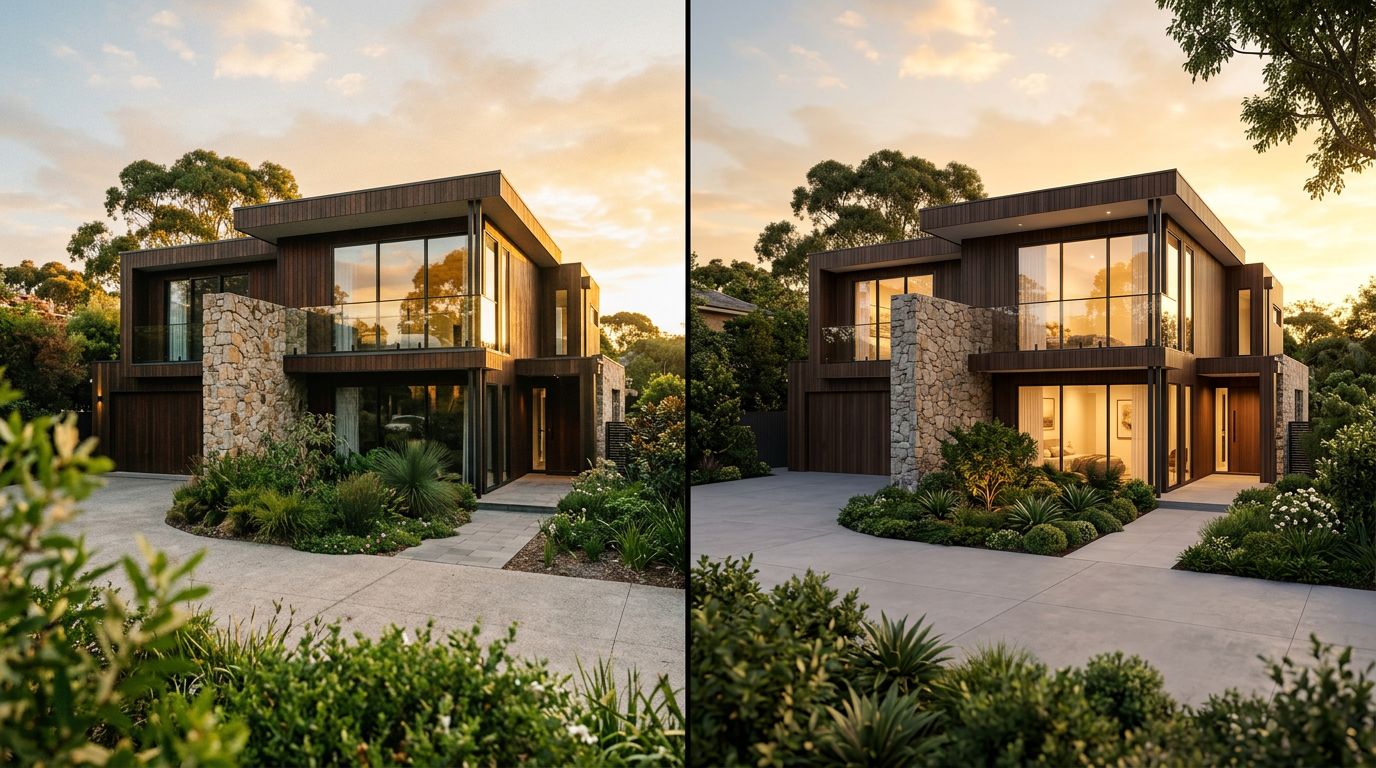
Real estate marketing in 2026 relies on visual differentiation. As property portals fill with high-definition photography, leading organizations are moving toward artistic visualization to get buyer attention. Recent market data shows that professionally enhanced listings, including those using AI-generated illustrations, get 40% more views and sales cycles that are 32% faster than standard listings. This shift happens because agents need to create emotional connections while keeping property presentations technically accurate.
Converting a property photo to an illustration used to require weeks of manual labor from artists or expensive architectural firms. Now, the virtual staging and illustration market is worth $1.33 billion, with projections reaching $10.8 billion by 2033. This growth comes from AI tools that let real estate professionals change standard photos into professional sketches and paintings in seconds. By using these automated workflows, firms cut visualization costs by 95% to 99% compared to physical staging or manual rendering.
This guide explains the technical process and strategic use of AI-driven illustration tools. For decision-makers, understanding how to convert property photos to illustrations is essential for staying competitive in luxury marketing and off-plan development sales. With advanced neural networks, standard JPEG and PNG files are the basis for high-end brand assets in modern property brochures.
#01The Strategic ROI of Property Illustrations in 2026
The main goal of architectural illustration is to go beyond a literal image of a building to highlight its design. In a fast market, artistic renders have two purposes: they avoid the 'banner blindness' of stock property photography and let agents show a vision of a home instead of just its current state. Data-driven marketing strategies now use these visuals for pre-sale campaigns and luxury listings where brand identity matters most.
Using architectural illustrations for real estate marketing is common for firms targeting wealthy individuals. The abstract style of an illustration lets potential buyers imagine their own lifestyle in the property, a psychological effect known as 'mental ownership.' Unlike standard photography, which shows every small flaw or seasonal issue, a digital illustration can focus on the architectural shape and perfect lighting regardless of when the original photo was taken.
The financial effects are also clear. Physical staging often costs thousands of dollars for furniture rentals and logistics. Instead, converting a photo into a stylized illustration via AI meets similar marketing goals at a much lower cost. Organizations using these tools report higher prices, as the 'artistic' style makes the property look like a unique asset rather than a commodity. This is very effective for historic homes or properties needing renovation where the current look does not show the final value.
#02Technical Workflow: How to Convert Property Photo to Illustration
Converting a photograph into a high-quality architectural illustration involves several layers of AI analysis. Modern platforms use computer vision to find structural boundaries, vanishing points, and depth cues in a 2D image. This analysis makes sure the resulting illustration keeps the correct proportions and architectural details of the original building. To get professional results, users should follow a three-step workflow that focuses on quality and brand consistency.
First, the source photograph needs to be chosen carefully. High-resolution images in formats like JPEG, PNG, or WEBP help the AI see small details. While the AI can fix minor lighting issues, a clear view of the property's exterior or interior structure produces the most precise line work. Second, the user picks a specific artistic style. AI platforms like HouseIllustrator provide styles such as copper linework or classic villa sketches, which let the agent match the visual output to the property’s era or the agency's brand rules.
For a detailed look at the underlying technology, see our AI architectural illustration from photos: complete guide. The final phase involves the transformation and export. Advanced AI tools look at the textures and shapes in the photo, applying digital brushes to create the look of real art. Once the change is complete, the high-resolution file is ready to download for print brochures or digital listings. This automated system removes the need for manual editing, letting a marketing lead handle entire portfolios in very little time.
#03Artistic Styles and Brand Alignment
One big advantage of using AI to convert property photos to illustrations is keeping a steady look across many listings. In 2026, brand recognition is a main factor for top real estate teams. Using different artistic styles lets agents match their marketing materials to the specific feel of a property. For example, a modern home might look best with a clean line drawing, while a heritage estate works better with a textured villa sketch.
HouseIllustrator provides styles made specifically for real estate. These include copper linework for a sophisticated feel and minimalist line illustrations for urban apartments. These styles are not just filters, they are complex redrawings of the property’s geometry. By picking a style, the agent ensures that all marketing, from the website to physical signs, looks professional and unified.
Industry experts suggest testing different styles with comparison tools. HouseIllustrator has a before-and-after tool that lets users switch between the original photo and the artistic version. This helps with quality control, ensuring that while the image is artistic, it stays a truthful representation of the building. This honesty builds trust with buyers while still providing the high-end look needed for premium brochures.
#04Comparative Analysis: AI vs. Traditional Architectural Rendering
When looking at the move toward AI-based illustration, it is important to check the cost-benefit ratio compared to traditional 3D architectural rendering. In the past, creating a high-quality illustration required a 3D artist to build a model from scratch using blueprints or photos. This took days or weeks and cost hundreds of dollars per image. In contrast, AI tools that convert property photos to illustrations skip the modeling phase by using the existing photo as the geometric map.
According to research on AI property illustration cost vs traditional rendering, delivery speed is the most important factor. AI tools provide instant results, while traditional agencies often have long wait times. This speed is vital in a market where how fast a listing goes up affects how long it stays on the market. Also, the accuracy of AI transformation is often higher for existing buildings because it uses actual photographic evidence rather than an artist's interpretation.
Market experts in 2026 also point out how easy these tools are to use. Modern AI platforms are built for real estate agents and marketing staff who do not have technical skills in graphic design or 3D software. This allows smaller agencies to compete with global firms by making the same quality of marketing materials at a lower price. Processing images in batches also helps large developers managing hundreds of units.
#05Security and Workflow Integration for Modern Agencies
As real estate firms adopt AI tools, data security and workflow speed are main concerns for technical leads. Professional tools focus on secure and private processing of property data. For example, HouseIllustrator ensures that property photos are processed safely and are never stored without permission. This level of data management is necessary for firms handling high-profile listings where privacy is part of the contract.
Direct integration with existing marketing software is another feature of the 2026 real estate market. The illustrations must work with many outputs, from email campaigns to high-resolution print for property signs. By exporting in professional, high-resolution formats, agents ensure their artistic renders stay sharp even when used on billboards or window displays.
The efficiency of a simple three-step workflow (upload, choose style, download) is very high. This simple approach lets agencies change their marketing strategy quickly. If a property is not getting attention with regular photos, the marketing team can quickly convert the main image into an illustration to refresh the listing on sites like Zillow or Rightmove. This flexibility helps maximize the return on investment for every listing in a digital environment.
The ability to convert a property photo to an illustration has moved from a luxury service to a basic marketing requirement. Listings that use these advanced visuals get more engagement and faster sales. HouseIllustrator provides an efficient AI-powered tool for this task, giving real estate professionals instant, high-resolution architectural illustrations in many styles. To improve your next listing and see the effect of professional property illustrations, visit HouseIllustrator for your first transformation.