Amsterdam Real Estate AI Illustration Tools Guide
April 11, 2026
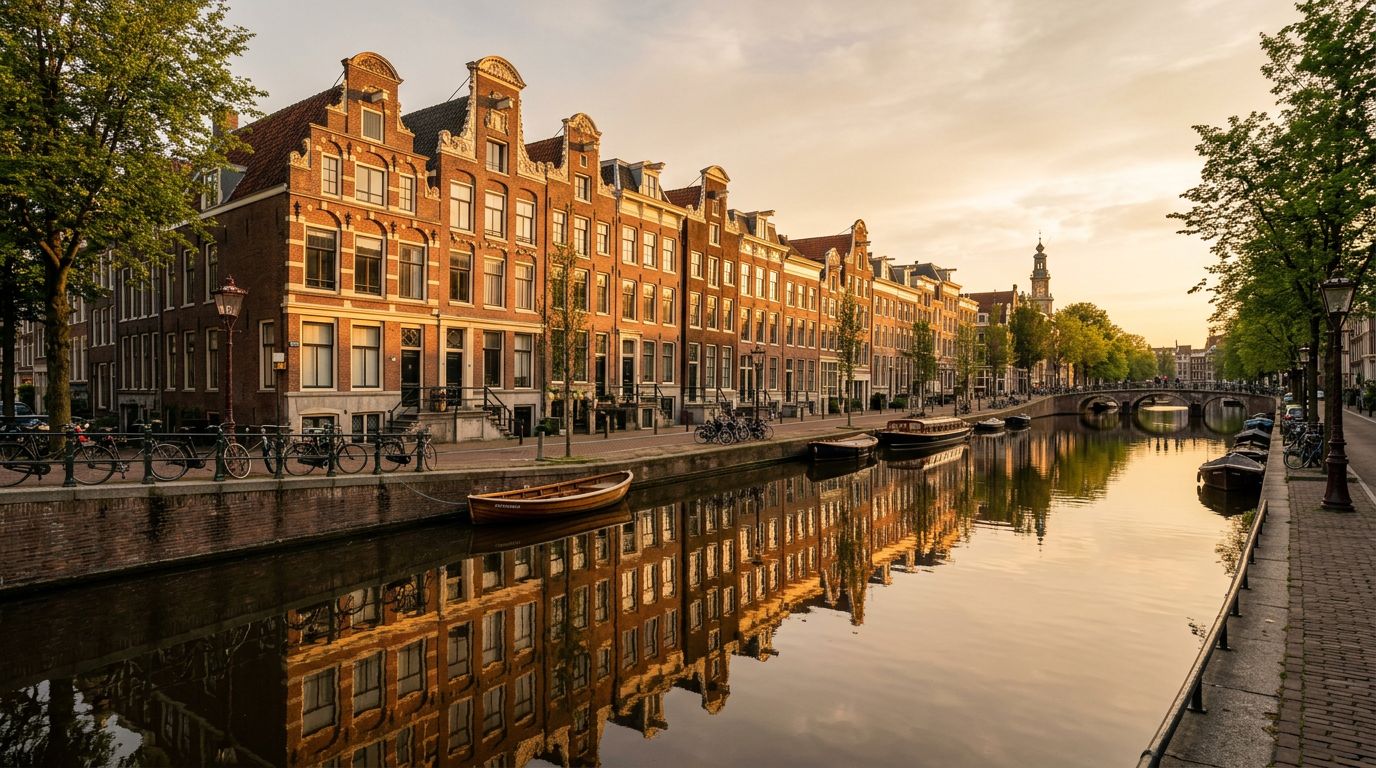
Amsterdam's real estate market is changing as artificial intelligence moves from experiments to core operations. With the global AI real estate sector valued at USD 404.9 billion in 2026 and growing at 33.9% annually, Dutch professionals use automated visualization tools to manage listings in one of Europe’s most competitive cities. High-quality property presentation is now a standard requirement rather than a luxury.
Agents managing historic canal houses or Zuidas developments must capture buyer attention in a crowded market. Amsterdam real estate AI illustration tools solve this by turning standard photos into artistic assets. These tools let brokers display a property's potential, for both new-builds and renovations, while meeting Dutch professional standards.
#01The 2026 State of Amsterdam Real Estate AI
The real estate AI market grew 34.3% from 2025 to 2026, supported by strong infrastructure in the Netherlands. Amsterdam holds over one-third of the country's AI data center market and passed the 500 MW milestone in 2024. This local computing power allows generative models to process high-resolution data quickly. This growth includes visualization, market analysis, automated engagement, and property management systems.
Virtual staging and image enhancement are now the most effective tools for daily brokerage work. Zillow Group’s purchase of Virtual Staging AI shows a trend toward adding these features to listing platforms. In Amsterdam, where many properties cost millions, the accuracy of these AI tools is vital. Companies that use these systems report better transparency and a simpler process for international investors who cannot visit in person.
#02Leading AI Illustration Technologies for Urban Markets
Three platforms are industry standards in 2026: Rendair AI, REimagineHome, and Canva’s Magic Studio. Rendair AI is known for realistic virtual staging and renovation overlays. It works well for Amsterdam's dense listings because its sketch-to-render feature helps agents show floor plan changes or interior updates in old buildings. REimagineHome uses conversational AI to furnish rooms or create landscapes in less than a minute, making it cheaper than physical staging.
Canva Magic Studio is a main tool for Dutch agents' marketing. Features like Magic Grab and Magic Expand let users move objects or change image sizes quickly. These tools help create flyers and social media posts without graphic design training. In 2026, the industry focuses on specialized tools that fit into workflows rather than generic filters, keeping visuals compliant with local regulations.
#03HouseIllustrator: Transforming Property Photography into Art
Realism matters, but many luxury Amsterdam agencies use artistic renders to create a unique brand. HouseIllustrator offers an AI platform that turns property photos into illustrations in seconds. HouseIllustrator lets real estate pros change standard photos into styles like copper linework, villa sketches, or minimalist lines. This works well for historic Grachtenpanden because architectural drawings can show prestige better than a photo.
For more on these strategies, see our Artistic Property Renders for Agents: A Marketing Guide. HouseIllustrator makes marketing materials through a private three-step process: upload, choose style, and download. The platform produces high-resolution files for print brochures and websites. An interactive before/after slider helps users check that the property's structure remains accurate while using a better artistic look.
#04Optimizing the Listing Launch Workflow
To stay efficient in 2026, experts suggest a combined workflow. This starts with cleaning and staging images via Rendair AI or REimagineHome. After setting the core visuals, agents use HouseIllustrator for artistic assets that make listings stand out. This approach gives agents a realistic view of the property and a striking render to catch buyers' eyes.
Agents finish the workflow by writing descriptions with language models and finalizing designs in Canva. This reduces the time needed to list a property. For those worried about costs, our guide on Maximizing Property Listing Illustration ROI in 2026 shows how these tools speed up sales. Small agencies in Amsterdam can grow their marketing affordably, as monthly tool costs usually total $20 to $50. This saves money on physical staging and leads to faster signatures.
#05Regulatory Compliance and Disclosure in the Netherlands
Amsterdam has strict rules for AI-enhanced visuals. In 2026, any AI-modified image (including virtual staging or artistic illustrations) must be clearly labeled. Transparency is vital to keep trust in the MLS and avoid legal issues over property descriptions. Agents must choose between the speed and cost of AI versus the accuracy of traditional design.
For more detail on these differences, read our analysis of AI Illustration vs Traditional Architectural Rendering. AI tools help buyers see a property's potential value, which is important in competitive markets. However, agents should test these tools on local property types, like narrow houses and steep roofs, before using them for every listing. HouseIllustrator keeps the artistic version tied to the original photo's dimensions, balancing creative marketing with factual accuracy.
Amsterdam real estate AI illustration tools are now a necessity for property marketing. As Dutch infrastructure supports AI development, agents who use these tools will have an advantage in attracting buyers. To improve your marketing with professional artistic renders, visit HouseIllustrator today. Turn your standard photos into high-resolution illustrations in seconds and make your listings stand out in the Amsterdam market.