AI Illustration for Real Estate Window Display
April 10, 2026
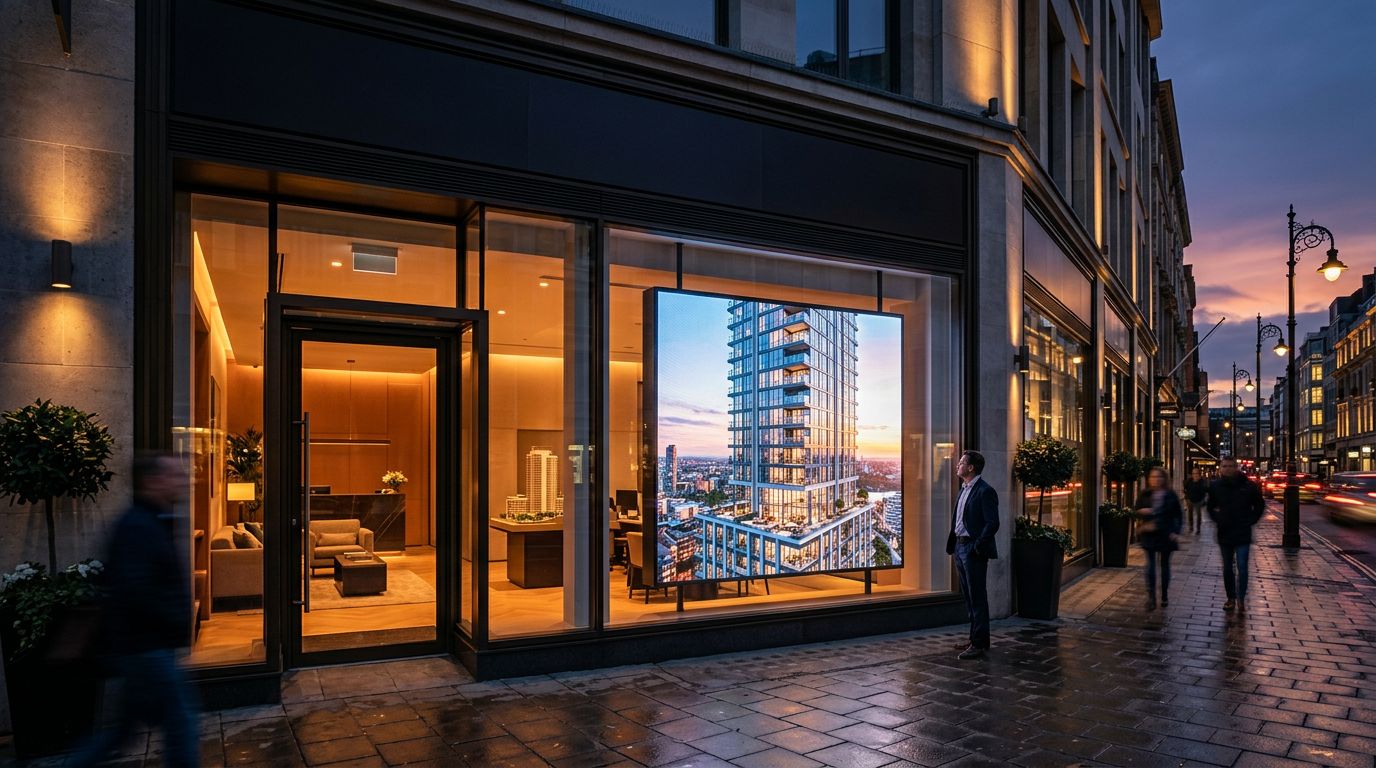
High-street property agencies are changing their marketing approach by moving away from static, low-resolution photos in favor of high-impact visual storytelling. Using AI illustration for real estate window displays has moved from an experimental tactic to a core requirement for agencies managing vacant or off-plan listings. By 2026, the global digital signage market is expected to reach $35.2 billion, mostly because of AI-powered content which now makes up 41% of all displayed media. This change allows brokers to show a property’s future potential to people on the street, effectively turning empty storefronts into active sales galleries.
Buyer attention is hard to get, so the precision and speed of generative tools provide a clear advantage. Traditional physical staging for a single listing can cost over $2,000, a price that is too high for a large portfolio. Instead, AI illustrations allow for the fast creation of realistic interiors and exterior renders that work for large window vinyls or bright LED displays. Our Store provides the specific tools necessary for agents to turn site photos into these assets, ensuring every window display works as a lead generation tool.
#01The Economic Impact of AI Content in Physical Signage
The financial reason to adopt AI visuals is based on the improvement of Return on Investment (ROI). Data from the State of Digital Signage 2026 report shows that the average ROI for property displays has reached 42%, which is a four-point increase from last year. This growth is linked to the rise of connected displays, which now total 75 million units globally. Agencies that use AI illustration for real estate window displays can update their marketing materials much more often. Instead of leaving a faded photograph in a window for months, agents can swap seasonal staging or different interior design styles to reach different types of buyers.
Using AI also reduces the time it takes to get to market by up to 100x compared to traditional architectural rendering services. In fast-moving city markets, launching a window campaign within hours of a listing agreement can be the difference between a quick sale and a property that sits on the market. Tools like Rendair AI and REimagineHome provide business-ready results without needing technical design skills. For those looking to understand these technologies, our Best Real Estate Illustration Generators in 2025 provides a list of the software currently leading the industry. By automating the visual process, firms can move their marketing budgets from production costs to strategy and managing leads.
#02Maintaining Trust Through Structural Integrity and Accuracy
A major challenge in AI real estate marketing is keeping architectural accuracy. General AI generators often create structural details that are not real, such as adding windows or changing ceiling heights. In a window display, these errors can damage buyer trust during a property tour. To prevent this, industry leaders in 2026 use 'Structural Lock' technology. This method keeps the permanent architectural parts of a photo the same while the AI only changes the style, such as furniture, flooring, and walls.
Professional platforms focus on this accuracy to ensure that the AI illustration for a real estate window display is a truthful look at the space. This is especially important for properties that need work or empty commercial units where the goal is to show potential without being misleading. Our Store uses these precise workflows, allowing agents to create visuals that show current state and future value. Keeping this balance is an important part of professional standards. For more on how these visualizations are used in the industry, see our AI Architectural Visualization Real Estate Guide, which covers the technical needs for high-quality property renders.
#03Virtual Staging Strategies for Large-Format Displays
Window displays need a level of detail and resolution that is much higher than what is needed for social media. When a person stands close to a life-sized window vinyl, the quality of the virtual staging must be perfect. Modern AI tools now offer specific styles, such as Scandinavian, Modern, or Industrial, which let agents match the property to the neighborhood. Virtual Staging AI is a main solution for this, as it can remove clutter and replace empty spaces with high-resolution furniture in seconds.
This is very useful for investment properties. By showing a high-resolution render of a renovated interior next to a 'before' photo of the current shell, agents can explain the investment value instantly. This visual difference is a strong trigger in real estate sales. However, it is important to separate these artistic renders from traditional virtual staging. Our comparison of AI Virtual Staging vs Architectural Illustration shows how different visual styles change how buyers see a property. For window displays, a mix of realism and artistic style is often the best way to get attention while staying professional.
#04The Sketch-to-Render Workflow for Off-Plan Marketing
For new developments and off-plan sales, window displays often have to use images of things that do not exist yet. The sketch-to-render workflow is the most efficient way to create these assets. Developers can take basic screenshots or hand-drawn ideas and use AI rendering engines to create realistic exteriors and street views. This allows for high-impact signage long before construction begins. This fast process lets developers test different colors or landscaping in their window marketing to see what gets the most interest.
Speed is a key advantage in this sector. The old way of sending sketches to a rendering company and waiting days for a change is too slow in 2026. With the tools at Our Store, these changes can happen instantly during a meeting. This keeps the signage updated with the latest project details. Also, the use of generative tools like Canva Magic Studio lets agents take these AI renders and format them for print-ready posters with brand kits and QR codes, making the move from digital file to physical display very simple.
#05Optimizing Content for Digital Window Displays
The increase in connected digital displays, totaling over 75 million units in 2026, has changed the needs for AI-generated images. Digital window displays often need bright colors that stand out in sunlight. AI illustrations for real estate window displays can be improved for these bright screens by changing contrast and saturation during the creation process. Additionally, creating multiple versions of a single property, such as at sunset, in the morning, or in winter, allows for a display that changes throughout the day.
This sophistication helps reach the 42% ROI mentioned earlier. When a display is seen as active and relevant, engagement goes up. Modern agencies use AI for the properties, neighborhood guides, and banners that go around the listing information. This creates a full visual setup in the office window. By using the AI tools at Our Store, agencies can ensure their digital signage content is always high-resolution and professional, meeting the needs of a market where 81% of leaders see technology as the main reason for growth.
Using AI illustration for real estate window displays is now a standard requirement for modern agencies. By using 2026 technology to create accurate and attractive signage, real estate professionals can lower costs while getting more leads from their physical locations. Our Store offers the specific AI tools needed to turn property photos into professional window assets. Visit Our Store today to start creating the visuals for your next listing campaign.