AI Architectural Illustration From Photos: Complete Guide
April 20, 2026
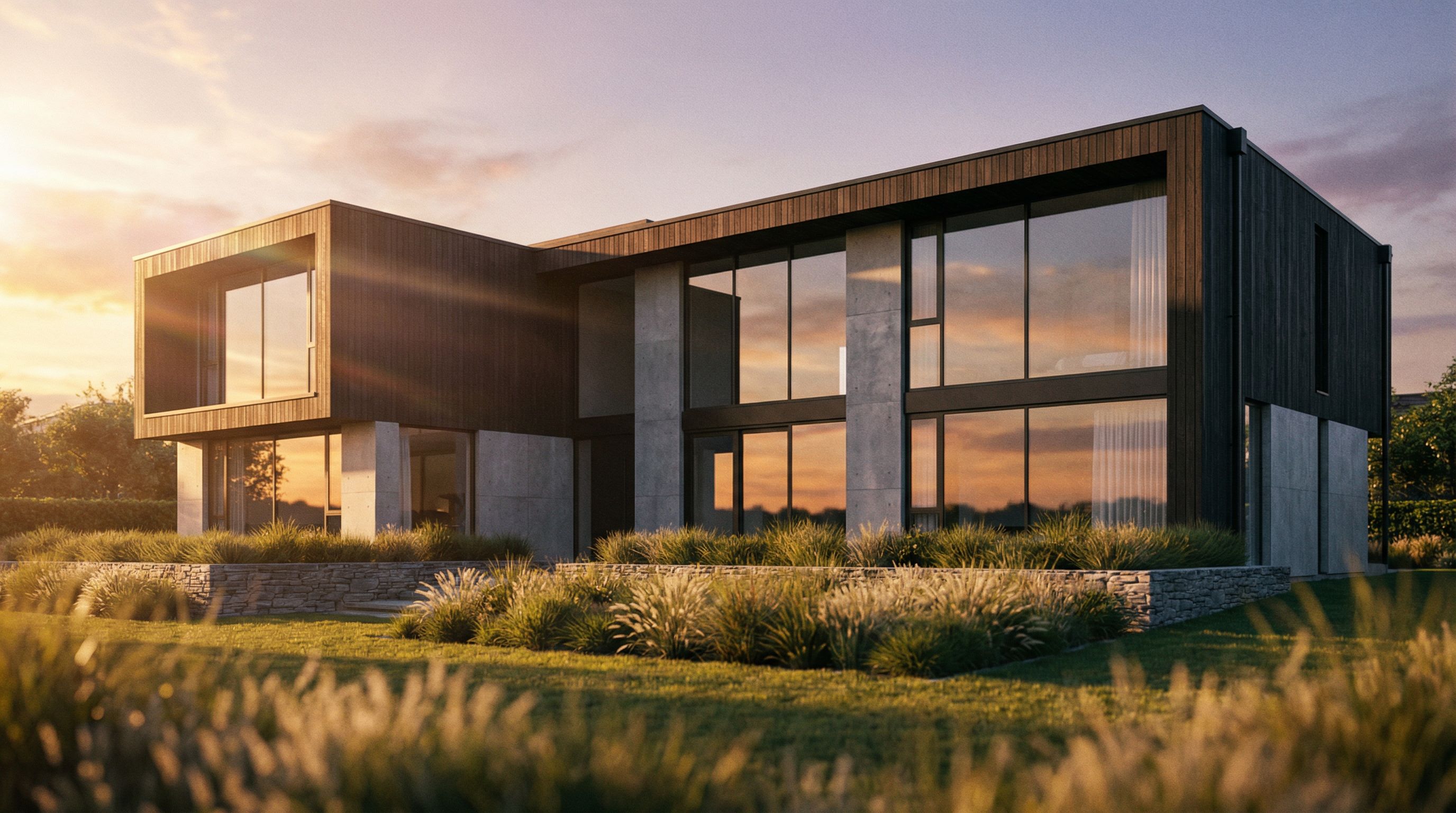
A real estate agent in London uploads a photo of a Victorian terrace at 9am. By 9:01am, she has a copper linework illustration ready for the property brochure. No designer briefed, no 48-hour turnaround, no invoice from a rendering studio.
That workflow is now standard, not exceptional. AI architectural illustration from photos has moved from niche experiment to practical production tool. The global AI for architecture design market is projected to grow at a CAGR of 57.4% from 2026 to 2030 (Infinity Market Research, 2026), and over 75% of architectural professionals now incorporate AI-powered image generation into their workflows (Chaos Blog, 2026). The speed gap between traditional rendering and AI-generated illustration is no longer hours versus days. It's seconds versus days.
This guide covers how the technology works, which tools produce the best results in 2026, where AI illustration beats traditional rendering, and how to build a production workflow that generates professional-quality visuals without specialist software or hardware. If you're a real estate agent building listing materials, the mechanics here apply directly to your work. Same goes for developers visualizing off-plan stock and architects preparing client pitches.
#01How AI converts a property photo into an illustration
The core technology behind AI architectural illustration from photos is the diffusion model. A diffusion model is trained on millions of architectural images, learning the visual grammar of buildings: proportions, materials, shadow direction, perspective, line weight, and style conventions. When you feed it a property photograph, it does not simply apply a filter. It interprets spatial relationships, identifies structural elements like rooflines and window openings, and regenerates the image in a target style.
Here is the actual process in plain terms. The model encodes the input photo into a compressed latent representation, stripping away photographic noise. A denoising network then iteratively reconstructs the image in the style you specify, guided by a text prompt or a style preset. The output is not a traced version of your photo. It is a new image that preserves the building's geometry while expressing it through a chosen visual language, whether that is a minimalist line illustration, a watercolor render, or a copper linework drawing.
Three components drive output quality. First, the quality of the source photo: sharp images with clear architectural geometry produce cleaner results than blurry or heavily shadowed shots. Second, the specificity of the style prompt: vague instructions produce generic outputs; detailed prompts referencing material, line weight, and mood produce consistent, branded illustrations. Third, the model's training data: tools trained on architectural imagery outperform general-purpose image generators on property subjects.
This matters practically. A general-purpose AI image tool trained on broad internet imagery will struggle with accurate perspective on a complex facade. A model fine-tuned on architectural photography and technical drawings handles the same image without geometric distortion. Vizcraft's 2026 analysis of diffusion-model-based visualization tools confirms that domain-specific training is the single largest driver of output accuracy for architectural subjects (Vizcraft, 2026).
For real estate professionals, the implication is direct: choose tools built for architecture, not general image stylizers repurposed for property use.
#02The real cost difference: AI illustration versus traditional rendering
Traditional architectural rendering from a professional studio runs between $150 and $800 per image, depending on complexity, the number of revision rounds, and studio location. Turnaround time is typically two to five business days. For a developer marketing a 20-unit scheme, that means $3,000 to $16,000 in visualization costs before a single brochure is printed.
AI architectural illustration from photos changes the unit economics entirely. Image2Image.ai reports rendering costs as low as $0.30 per image using AI workflows, compared to hundreds of dollars for traditional methods (Image2Image.ai, 2026). Turnaround drops from days to seconds. That is not a marginal efficiency improvement. It is a structural change in how visualization budgets work.
The quality gap, which was the traditional rendering studio's main defence, has also narrowed faster than most practitioners expected. Tools like Architect AI now produce photorealistic exterior renders from uploaded photos in under ten seconds, with material customization and environment controls that previously required specialist 3D software (XLLab, 2026). Archilip, powered by Google's Gemini Pro model, generates style-consistent renders in seconds with detailed prompt control (Archilip, 2026).
That said, AI illustration from photos is not a full replacement for every traditional rendering use case. Complex masterplan visualizations, detailed interior cross-sections, and highly technical construction documentation still benefit from dedicated 3D modeling and rendering pipelines. The correct position is not "AI replaces everything" but rather "AI handles the majority of visualization needs at a fraction of the cost, freeing specialist rendering budget for genuinely complex work."
For agents and developers, the practical threshold is clear. If you need a compelling exterior illustration for a listing, a brochure cover, or a social media post, AI architectural illustration from photos is faster, cheaper, and now qualitatively competitive with mid-tier studio work. See our AI Property Illustration Cost vs Traditional Rendering breakdown for a full cost comparison.
#03The 2026 tool landscape: what actually works
The market for AI architectural illustration tools has matured. The platforms worth using share three characteristics: they are cloud-based, they use diffusion models trained on architectural imagery, and they offer style controls that go beyond a single preset.
HouseIllustrator is built for real estate marketing. It converts property photos into architectural illustrations in multiple artistic styles, including copper linework, classic villa sketch, and minimalist line illustration. The workflow is three steps: upload the photo, choose a style, download the result. Output is high-resolution, ready for print brochures, websites, and marketing materials. The processing is secure and private, with photos not stored without permission. For agents who need illustrations that match a consistent brand aesthetic across a portfolio of listings, HouseIllustrator's style presets deliver that consistency without requiring any design skill.
Architect AI focuses on photorealistic exterior renders, with environment controls and material customization that suit pre-construction marketing (XLLab, 2026). ZSky AI offers free credits for generating interior and exterior visualizations from sketches or photos, making it a low-barrier entry point for smaller firms (ZSky AI, 2026). Archfine positions itself as instant photorealistic visualization with no credit card required at entry level (Archfine, 2026).
For real estate professionals, the differentiator is not raw rendering quality. It is the illustration style. Photorealistic renders of existing properties often look identical to the original photograph, which defeats the purpose. Artistic illustration styles, the kind HouseIllustrator specializes in, create visual distinction that photographs cannot. They make a standard terrace house look like a premium piece of marketing material. That visual differentiation is what drives engagement on listing portals and in print brochures.
Two tools to avoid: general-purpose AI image generators like standard Midjourney or DALL-E 3 applied to architectural subjects without fine-tuning. They produce visually impressive results that frequently distort window proportions, misplace structural elements, and introduce architectural details that do not exist on the actual building. For marketing materials where accuracy matters, domain-specific tools are the only viable option. See our comparison of Midjourney alternatives for real estate renders for specifics.
#04Where AI illustration outperforms photography in real estate marketing
Property photography has a practical ceiling. A photograph shows what a building looks like on the day the photographer visits: overcast sky, bins on the pavement, neighbours' cars blocking the frontage, scaffolding on the adjacent property. The illustration strips all of that away and shows the architectural character of the building instead.
This matters most in four scenarios.
First, off-plan and pre-construction marketing. If the building does not exist yet, photography is impossible. AI architectural illustration from photos of the site, existing structures, or architectural drawings fills that gap at a cost no traditional rendering studio can match.
Second, properties with temporary visual problems. A house undergoing minor renovation, a garden in winter, a facade with scaffolding. The illustration shows the property as it should be seen, not as it happens to look on a specific Tuesday in February.
Third, premium and luxury listings. High-end buyers respond to materials that signal craft and attention. An architectural illustration communicates that the agent or developer has invested in the presentation. It reads as premium in a way that a standard photograph does not.
Fourth, print marketing and brochures. Photographs degrade in print at certain sizes and with certain paper stocks. High-resolution illustrations from HouseIllustrator hold detail at large format, making them more versatile across print production contexts.
The data supports this positioning. Real estate listings using distinctive visual materials outperform standard photography listings on engagement metrics. Properties using architectural illustrations in brochures and digital marketing show measurable increases in inquiry rates (Chaos Blog, 2026). The illustration is doing marketing work that a photograph cannot do: it frames the property as desirable rather than simply documenting that it exists.
For agents building a personal brand or a consistent portfolio presentation, the cumulative effect is real. Every listing presented with a consistent illustration style reinforces the agent's positioning as detail-oriented and premium-focused. See our guide on benefits of artistic illustrations in property listings for more on the engagement mechanics.
#05Building a production workflow: from photo to illustration in three steps
The biggest adoption barrier is not cost or quality. It is uncertainty about workflow. Most agents who have not used AI architectural illustration from photos imagine a complex technical process. The actual workflow takes under five minutes once set up.
Step one: photograph selection and preparation. The source photo determines output quality. Use the best exterior photograph you have: sharp focus, even lighting where possible, minimal obstructions. You do not need a professional architectural photographer, but you do need a photo where the building's main facade is clearly visible and in focus. A 3-megapixel smartphone photo in good light will produce better results than a blurry DSLR shot in poor conditions.
Step two: style selection. This is the decision that shapes the marketing outcome, not the technical output. Match the illustration style to the property type and the target buyer. A minimalist line illustration suits a modern apartment targeting professional buyers. A classic villa sketch suits a period property targeting family buyers with traditional tastes. Copper linework works across categories and reads as premium. HouseIllustrator's style presets are designed around these use cases, so the selection process is a creative decision rather than a technical one.
Step three: output and integration. Download the high-resolution illustration and drop it into your existing brochure template, listing upload, or social media post. HouseIllustrator outputs in multiple formats to fit different production contexts.
The before/after comparison tool built into HouseIllustrator is useful at the client presentation stage. Show the seller the original photo and the resulting illustration side by side. That single interaction demonstrates the value of the marketing investment and justifies the premium presentation approach without requiring any explanation of how AI works.
The workflow for a typical single-family listing: photograph the exterior, upload to HouseIllustrator, select the style that matches the property's character, download the illustration, and add it to the brochure. Total active time: under three minutes. The AI processes the photo in seconds.
For developers managing larger portfolios, batch processing becomes relevant. If you are marketing a scheme of 40 units with varying facade types, the ability to generate consistent illustrations across all unit types in a single session is a real production advantage over briefing a rendering studio for each variant.
#06Why 64% of architects are already using AI tools (and what the holdouts are missing)
About 64% of architects are now experimenting with AI tools in their workflows, and 43% report AI affecting early design and concept development (ArchDaily, 2026). The holdouts cite concerns about output quality, client trust, and professional authenticity. These concerns are real in specific contexts and not real in others.
Output quality concerns are valid for highly technical documentation. An AI illustration from a photo is not a substitute for a measured survey drawing or a detailed construction elevation. It is a marketing and communication tool. Conflating the two use cases is the source of most quality objections.
Client trust concerns are diminishing rapidly. The majority of property buyers do not distinguish between an AI-generated illustration and a traditionally rendered one, provided the output quality is high. What buyers respond to is whether the visual makes them want to see the property. Illustration provenance is not part of that decision.
Professional authenticity concerns are the most defensible, and the most context-dependent. For architects presenting design intent to planning authorities or construction teams, technical accuracy is non-negotiable. For real estate agents presenting a property to buyers, the goal is desire, not documentation. Different tools for different jobs.
The firms and agents currently gaining competitive advantage are those who have resolved this distinction quickly and deployed AI illustration for marketing purposes without waiting for the tools to become perfect for every possible use case. The AI art market alone is forecast to reach $9.85 billion by 2030 (WifiTalents, 2026). The practitioners building fluency with these tools now will operate from a structural cost and speed advantage over those who wait.
One concrete example: specialized AI tools now generate photorealistic visualizations from photos within seconds. Professionals using these platforms report reducing visualization time from hours to under a minute per image. The time saving is not incremental. It is categorical.
#07Red flags: when AI illustration gets it wrong
AI architectural illustration from photos is not infallible. Knowing where it fails protects you from using a flawed output in a client-facing context.
The most common failure mode is geometric distortion. When a diffusion model misreads the perspective of a complex facade, it can output windows of inconsistent size, a roofline that does not match the actual building geometry, or structural elements that appear to float. This happens most often with photos taken at steep angles, photos of highly irregular building forms, or photos where significant portions of the facade are obscured.
The fix is straightforward: photograph the building from a direct frontal or three-quarter angle with as much of the facade visible as possible. Avoid extreme wide-angle shots that distort straight lines.
The second failure mode is stylistic inconsistency across a portfolio. If you use different tools or style settings for different properties in the same development, the resulting illustrations will not read as a coherent marketing suite. Buyers and investors notice visual inconsistency even if they cannot articulate why. Choose a single style per campaign and apply it uniformly.
The third failure mode is over-processing. Some AI tools, particularly those with aggressive artistic style settings, produce illustrations that bear little resemblance to the actual building. This creates a misrepresentation risk, particularly in regulated real estate markets where marketing materials are expected to accurately represent the property. Use style settings that enhance and interpret the building rather than reinvent it.
The practical rule: always run the output illustration against the source photo before using it in marketing materials. Verify that the building's proportions, key architectural features, and material character are accurately represented. HouseIllustrator's built-in before/after comparison slider makes this verification step a natural part of the workflow rather than an additional quality check.
For off-plan marketing where the building does not yet exist, the accuracy standard shifts from matching a photo to matching the approved architectural drawings. In that context, the illustration is communicating design intent, and the accuracy benchmark is whether it correctly represents the scheme as designed.
#08The illustration styles that convert: matching style to property type
Not all illustration styles work for all properties. The choice of style is a marketing decision with direct consequences for buyer perception and inquiry conversion.
Minimalist line illustration works best for contemporary properties targeting urban professional buyers. The clean, precise line work signals modernity and restraint. It reads well in digital contexts, on listing portal thumbnails, and in minimalist brochure designs. For a new-build apartment block in a city centre, a minimalist line illustration positions the property correctly in the market.
Classic villa sketch suits period properties, rural homes, and premium country houses. The style has heritage associations that reinforce the character of older buildings. A Georgian townhouse rendered in a classic sketch style communicates a different kind of value than the same building shown in a photorealistic render. It emphasizes architectural lineage rather than contemporary specification.
Copper linework is a premium-positioned style that works across property types. The warm tone of the copper palette reads as high-end across digital and print contexts. It is the safest choice for agents who want a consistent premium aesthetic across a mixed portfolio without having to make style decisions property by property. HouseIllustrator includes copper linework as a primary style preset because of its cross-category versatility.
Watercolor renders suit lifestyle-oriented properties: coastal homes, country retreats, vacation properties. The soft, painterly quality of watercolor illustration communicates aspiration and atmosphere rather than architectural precision. For a property where the emotional appeal is the primary sales driver, watercolor is frequently the most effective choice. See the full breakdown in our watercolor architectural renders real estate guide.
Oil painting styles suit ultra-high-net-worth markets where heritage, craft, and provenance are the implicit signals buyers are responding to. A Mayfair townhouse rendered in an oil painting style is communicating something specific about the tier of buyer it expects to attract.
Match the style to the buyer, not to your personal preference. The illustration exists to trigger a response in a specific target audience, and the style is the primary carrier of that signal.
AI architectural illustration from photos is not an experimental technology you should be keeping an eye on. It is a production tool that reduces visualization costs from hundreds of dollars to cents per image, cuts turnaround from days to seconds, and consistently outperforms standard photography in premium marketing contexts.
The firms and agents who have deployed it are already operating with a structural cost advantage. Every brochure, listing portal upload, social media post, and print advertisement is being produced faster and at lower cost than their competitors using traditional methods.
If you have not yet run a property photo through an AI illustration tool, start with HouseIllustrator. Upload one exterior photograph from your current listings, select a style that matches the property type, and compare the output to your existing marketing material using the built-in before/after slider. That single test will tell you more about the practical capability of AI architectural illustration from photos than any amount of reading about it. The illustration will be ready before you finish this sentence.
Frequently Asked Questions
In this article
How AI converts a property photo into an illustrationThe real cost difference: AI illustration versus traditional renderingThe 2026 tool landscape: what actually worksWhere AI illustration outperforms photography in real estate marketingBuilding a production workflow: from photo to illustration in three stepsWhy 64% of architects are already using AI tools (and what the holdouts are missing)Red flags: when AI illustration gets it wrongThe illustration styles that convert: matching style to property typeFAQ