AI Architectural Illustration From Photos: Guide
April 19, 2026
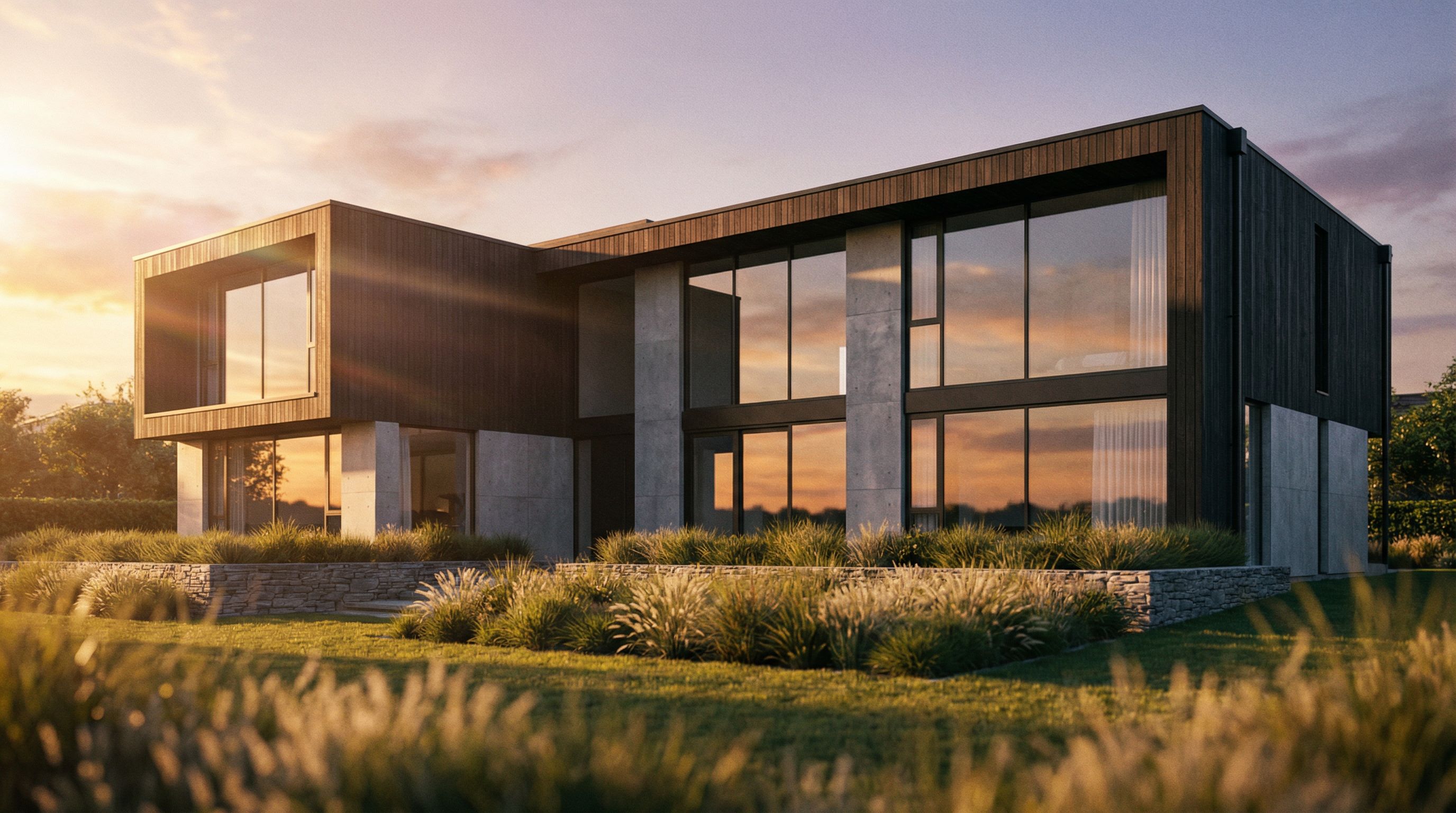
A real estate photographer uploads a photo of a terraced house on a grey Tuesday morning and receives a copper-linework architectural illustration back in under ten seconds. No designer, no briefing, no waiting. That is what AI architectural illustration from photos looks like in 2026, and it is not a novelty anymore.
The global AI for architecture design market is projected to grow at a CAGR of 57.4% from 2026 to 2030 (Infinity Market Research, 2026). Over 75% of architectural professionals now incorporate AI-powered image generation into their workflows (Chaos Blog, 2026). These numbers reflect something real: the cost to produce a single photorealistic render has dropped from hundreds of dollars to as low as $0.30, and turnaround time has collapsed from days to seconds (Image2Image.ai, 2026). The economics no longer favor traditional rendering for most property marketing use cases.
This guide covers converting property photographs into architectural illustrations using AI: how the technology works, which tools lead the market in 2026, what styles are available, where these illustrations perform best in marketing, and how to build a repeatable workflow. If you are a real estate agent producing listing materials, the information here applies directly to your work.
#01How AI converts a photo into an architectural illustration
The mechanism behind AI architectural illustration from photos is not magic. It is diffusion models, trained on vast libraries of architectural imagery, that learn to map the structural information in a photograph onto a target visual style.
Here is what actually happens when you upload a property photo:
- A convolutional neural network analyzes the image and extracts spatial relationships: roofline, window positions, facade proportions, depth cues, and material textures.
- A diffusion model takes those structural signals and iteratively generates pixels that match a target style, whether that is a pencil sketch, a watercolor wash, a copper linework illustration, or a photorealistic architectural render.
- A conditioning layer keeps the output anchored to the original building's geometry so the result looks like that specific property, not a generic house.
This is why the output differs from simple image filters. A filter applies a texture across the whole image uniformly. A diffusion-based architectural AI understands that a window frame has different properties than a brick wall, and renders each accordingly.
Diffusion models trained on architectural imagery produce far better results than general-purpose image generators for this task (Vizcraft, 2026). General models like Midjourney can produce beautiful images, but they hallucinate architectural details and ignore the specific geometry of the input photo. Purpose-built tools stay faithful to the source building while applying the style transformation. That fidelity matters for property marketing, where buyers are looking at a real building they might purchase.
The conditioning can also incorporate additional inputs: style prompts, material preferences, environment settings like time of day or season, and resolution targets. Tools like Architect AI allow users to set environment controls and material customization on top of the photo input, generating exterior renders in under 10 seconds (XLLab, 2026). That level of control, at that speed, was simply not available to most real estate professionals three years ago.
#02The illustration styles worth knowing in 2026
Not all illustration styles perform equally well across different marketing contexts. Choosing the wrong style for a brochure or a social post is a genuine mistake, not just an aesthetic preference.
Here are the styles that matter most in current property marketing:
Linework and sketch styles work well for print materials, including brochures, window cards, and direct mail. A classic villa sketch or minimalist line illustration reads as considered and tasteful. It signals that a professional took time with the property, even when AI produced the result in seconds. HouseIllustrator offers copper linework and classic villa sketch among its style options, both of which perform well in luxury and mid-market print contexts.
Watercolor styles read as warm and aspirational. They work for lifestyle-oriented marketing: holiday lets, countryside properties, and coastal homes. A watercolor render of a beachfront property communicates something a photograph often cannot, specifically the feeling of owning that home on a summer afternoon. See the watercolor architectural renders real estate guide for a full breakdown of where these styles convert best.
Photorealistic architectural renders are the standard for off-plan and new build marketing. When a building does not yet exist, or when a renovation is planned, a photorealistic AI render from a sketch or early photo bridges the gap between concept and buyer imagination.
Impressionist and painterly styles are newer to property marketing but gaining traction in the luxury segment. An oil painting style render of a Mayfair townhouse or a Hamptons estate positions the property differently than a standard photograph. The oil painting style real estate AI guide covers when this approach adds measurable value.
Choose style based on the property type, the marketing channel, and the buyer profile. A minimalist line illustration that works brilliantly in a Notting Hill agent's window will underperform for a suburban new build where buyers want to see finishes and materials.
#03The tools leading the market right now
The AI architectural illustration tool market has consolidated quickly. Dozens of tools launched between 2023 and 2025, but the ones that survived did so by solving real workflow problems rather than just generating pretty images.
HouseIllustrator focuses on the real estate marketing use case. Upload a property photo, select a style (options include copper linework, classic villa sketch, and minimalist line illustration), and download a high-resolution illustration ready for brochures, websites, and marketing materials. The workflow is three steps. The output is professional-quality. For agents and developers who want a purpose-built tool rather than a general architectural renderer, HouseIllustrator is the direct solution.
Architect AI (XLLab) generates photorealistic exterior renders from photos or sketches in under 10 seconds, with style presets, environment controls, and material customization (XLLab, 2026). It targets architects and visualization professionals who need render-quality output.
Archilip uses Google's Gemini Pro to generate high-quality renders with style consistency and detailed prompt support (Archilip, 2026). It suits teams that need to maintain visual consistency across multiple properties.
ZSky AI offers free credits for generating interior and exterior visualizations from photos or sketches, making it accessible for smaller firms that need to control costs (ZSky AI, 2026).
Image2Image.ai focuses on blueprint-to-render and sketch-to-render workflows, converting inputs into detailed architectural visuals within seconds (Image2Image.ai, 2026).
Pricing models vary. Some tools charge per image, others use monthly subscriptions, and several offer free tiers with limited credits. HouseIllustrator does not publicly list pricing on its own site, so contact them directly for current rates. For a broader comparison of available options, the best real estate illustration generators in 2025 covers the competitive field in detail.
#04Where architectural illustrations outperform photographs in marketing
Property photographs are not going away. But there are specific situations where an AI architectural illustration from photos delivers better marketing outcomes than a photo alone.
Off-plan and pre-construction sales are the clearest case. You cannot photograph a building that does not exist. Traditional developers spent $2,000 to $10,000 per CGI render for brochures and sales suites. AI illustration tools now produce comparable outputs for a fraction of that cost, in minutes rather than weeks. The pre-sell homes with architectural illustrations guide covers the full strategy.
Listed and heritage properties benefit from illustration styles that complement their character. A Georgian townhouse in Edinburgh or a Victorian terrace in Bristol often looks more compelling in a classical architectural illustration than in a standard wide-angle lens photograph. The illustration strips out unflattering photography conditions (flat grey skies, cluttered foregrounds, parked cars) and presents the building as its architecture deserves.
Print and brochure materials have different requirements than digital listings. High-resolution illustrations scale to A3 and larger without quality loss. They print cleanly in black and white or full color. They look considered rather than rushed. Agents producing premium brochures for luxury properties are increasingly using AI architectural illustration from photos as the centerpiece visual rather than a photography crop.
Social media differentiation is a newer use case. Most property listings on Instagram and Facebook look identical: a front-facing photograph, slightly brightened in Lightroom. An architectural illustration stops the scroll. The real estate social media AI illustrations guide documents engagement data from agents who have tested this approach.
Renovation and potential visualization is an emerging application. Take a photo of an existing property, generate an illustration that shows the proposed renovation outcome, and use that illustration in the listing or investor presentation. AI tools that interpret spatial relationships from the original photo can produce plausible renovation visualizations without requiring a full architectural brief.
#05Building a repeatable AI illustration workflow
Most agents and developers who fail with AI illustration tools fail at the workflow level, not the technology level. They generate one illustration, are satisfied or disappointed, and stop. A systematic workflow produces consistent results and compounds over time.
Here is a workflow that works:
Step 1: Photo selection and preparation. Not every property photo makes a good illustration input. Front elevations with clear geometry work best. Avoid photos taken at heavily oblique angles, in very low light, or with significant foreground obstructions. The AI can only interpret what is visible in the photo. Feed it a clear, well-composed input and the output quality rises sharply.
Step 2: Style matching to context. Decide before you generate. What channel will this illustration appear on? Brochure print needs a different style than an Instagram post. A luxury property warrants a different treatment than a buy-to-let studio flat. Match the style to the end use, not to personal preference.
Step 3: Batch generation and comparison. Most tools allow you to generate multiple style variations from a single photo. Do this. Generate three to five variations, compare them against the property type and marketing context, and select the best performer. HouseIllustrator's before/after comparison slider makes this evaluation step direct: you can toggle between the original photo and the illustration output to confirm fidelity to the actual building.
Step 4: Output formatting for channel. Download in the resolution appropriate for the output channel. High-resolution files for print. Web-optimized files for digital listings. Match the format to the platform requirements before distribution.
Step 5: Test and measure. If you use illustrations in email campaigns or social posts, track engagement against comparable campaigns using only photography. The property listing conversion rate AI illustrations article covers the data on what to measure.
A workflow like this takes under fifteen minutes per property once it is established. That time investment is recoverable in the first listing that generates a faster sale or a higher offer.
#06The adoption data you should not ignore
Sixty-four percent of architects are experimenting with AI tools in their workflows as of 2026, and 43% report AI affecting early design and concept development (Chaos Blog, 2026; ArchDaily, 2026). These are not early adopters anymore. This is the mainstream of a profession adopting a technology because it works.
For real estate specifically, the cost reduction numbers are the most compelling signal. Rendering costs that once ran to hundreds of dollars per image are now as low as $0.30 in some workflows (Image2Image.ai, 2026). Turnaround time has moved from days to seconds. These are not incremental improvements. They are the kind of efficiency shifts that restructure how a profession operates.
The AI art market as a whole is projected to reach $9.85 billion by 2030 (WifiTalents, 2026). The architectural visualization segment is one of the highest-value applications within that market because the output has direct commercial utility. An illustration that helps sell a property faster or at a higher price has measurable ROI. That is different from AI art produced for aesthetic reasons alone.
For agents evaluating whether to adopt AI architectural illustration from photos now or wait, consider this: the agents in your market who adopt first will establish a visual standard that you will be compared against. Once buyers have seen architectural illustrations in competing listings, photograph-only listings look like a lower-effort option. The window to use this as a differentiator is still open in most markets, but it is closing.
#07Limitations and honest trade-offs
AI architectural illustration from photos is not a solution to every visualization problem. There are genuine limitations to account for before building a workflow around any tool.
Interior spaces require different inputs. Most AI illustration tools are optimized for exterior elevations. Interior visualizations are possible (ZSky AI handles both, for example) but the results are less consistent than exterior renders, particularly in rooms with complex furniture arrangements or unusual lighting conditions. The AI interior illustration from photos guide covers the specific considerations for interior use cases.
Structural accuracy degrades with complex geometry. Simple facades, rectangular windows, and symmetrical rooflines are where AI illustration tools perform best. Highly irregular architecture, complex additions, or properties with significant occlusion in the source photo will produce less reliable outputs. Always verify the illustration against the source photo before using it in client-facing materials.
Style fidelity varies across tools. A tool that produces excellent watercolor illustrations may produce mediocre linework results. Test any tool across multiple styles with your actual property photo types before committing to it for production use.
AI does not replace architectural judgment. For planning applications, construction documentation, or technical drawings that require dimensional accuracy, AI illustration tools are not appropriate. They produce marketing-quality visuals, not technical drawings. The distinction matters.
Pricing transparency is inconsistent. Several tools in the market, including HouseIllustrator, do not publicly list their pricing. Contact the tool provider directly to confirm current rates before building cost projections.
These are real constraints, not reasons to avoid the technology. Knowing them means you deploy AI architectural illustration from photos in the contexts where it excels and rely on other methods where it does not.
#082026 trends shaping where this technology goes next
The current generation of AI architectural illustration tools is already fast and capable. The next generation will be integrated and real-time.
Predictions for 2026 and 2027 consistently point toward AI illustration tools integrating directly with real-time rendering engines and design software (XLLab, 2026). The implication: architects and agents will generate multiple illustration options during a client meeting, adjusting style, season, and material choices in real time rather than waiting for batch outputs.
Sketch-to-render workflows are advancing faster than photo-to-illustration workflows right now. AI models that can convert hand-drawn sketches or basic 3D models into photorealistic images within seconds are creating new possibilities for early-stage design communication (XLLab, 2026). For developers selling off-plan, this means moving from concept sketch to buyer-facing illustration in the same meeting.
Cloud-based platforms are winning against desktop software for this use case. The processing demands of diffusion models make cloud infrastructure the practical choice for most firms. Accessibility is improving as a result: a real estate agent with a laptop and internet access can now produce the same quality illustrations that previously required a specialist visualization studio with dedicated hardware.
Costs will continue to fall. The AI art market is competitive and tooling costs for diffusion inference are dropping as hardware improves. Professional-grade architectural illustrations will likely cost less than a coffee per image within the next two years at current trajectories (Infinity Market Research, 2026).
For real estate professionals, the strategic question is not whether to use AI architectural illustration from photos. The technology is here, it works, and it is getting cheaper. The question is which tools to adopt, for which property types, and in which marketing channels. Get specific on those three questions and you will get ahead of competitors who are still debating the premise.
The property marketing professionals who will benefit most from AI architectural illustration from photos are not the ones who wait for the technology to mature further. It is mature enough now. The gap between what a professional illustration workflow produces today and what buyers respond to is already closed.
If you are producing listing materials for residential properties, start with HouseIllustrator. Upload a front elevation photograph, select a style that matches the property type (copper linework for a period home, minimalist line for a contemporary apartment), and download a high-resolution illustration ready for your brochure or listing in seconds. Run the before/after comparison the site provides, confirm the illustration is faithful to the building, and use it in your next print or digital campaign. Then track engagement against your previous photography-only listings. The data will tell you what to do next.
Frequently Asked Questions
In this article
How AI converts a photo into an architectural illustrationThe illustration styles worth knowing in 2026The tools leading the market right nowWhere architectural illustrations outperform photographs in marketingBuilding a repeatable AI illustration workflowThe adoption data you should not ignoreLimitations and honest trade-offs2026 trends shaping where this technology goes nextFAQ